Author Archives: Frank Moraes

Frank Moraes is a freelance writer and editor online and in print. He is educated as a scientist with a PhD in Atmospheric Physics. He has worked in climate science, remote sensing, throughout the computer industry, and as a college physics instructor. Find out more at About Frank Moraes.

Troma and Economic Inequality

Troma and Economic Inequality

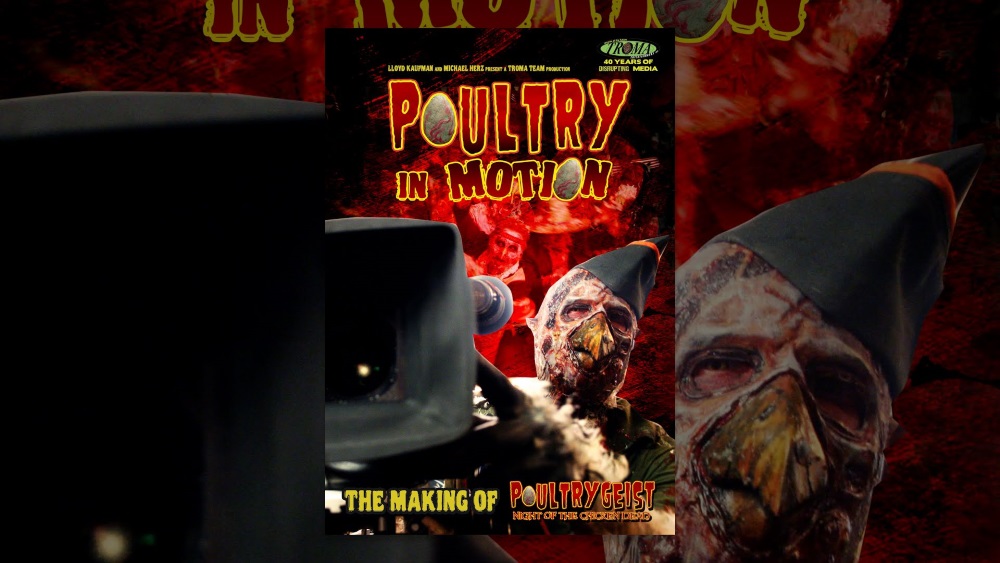
I’m preparing a page on perhaps Troma’s best film, Poultrygeist: Night of the Chicken Dead (and one that is, well, not). And I happened upon a “making of” documentary, Poultry in Motion: Truth is Stranger than Chicken. And it was awful to watch. For one thing, it made me hate Lloyd Kaufman.

But it’s funny, because even though the documentary is hard on Kaufman, it is especially hard on the cinematographer, Brendan C Flynt. But I didn’t see it that way at all. Flynt just thought they were making a professional film. And Troma doesn’t really make professional films. (Not that Flynt doesn’t seem to have the same kind of annoying arrogance that I’ve noticed in everyone I’ve ever met who has “made it” in Hollywood.) The end result of Troma might be of professional quality. But the company depends upon a lot of naive young people to work for free under terrible conditions with people like Kaufman abusing them.

Don’t get me wrong. If some struggling filmmaker came to me, I would be happy to be their production manager or extra or whatever for free. But when a company that has made many dozens of successful films is making millions of dollars, getting 200 young people to pay to go to the shoot, work for free, and live under terrible conditions, it’s wrong.

Troma’s Volunteers Don’t Know What They Are Getting Into

And the documentary makes clear that most of the volunteers had no idea what they were getting into. Even the star of the film was paid only $900. The secondary star was paid $1,800 — I assume because she did much of the film topless. Regardless, this isn’t non-union work. This is exploitation.

But sure: that’s what “exploitation film” means: the producers exploit whatever they have. But in general, that means nudity, gore, a great location, and countless other things. It also means exploiting free labor. But at some point, you grow up. Exploiting massive amounts of free labor is the main part of Troma’s business plan. The company is almost 45 years old and it is still doing this. It’s not just that it’s pathetic. It’s that it ought to be illegal.

Some Friendly Advice

So let me give you all some advice: there are filmmakers everywhere trying to get their stories told. If you want to have the experience of being on a film set, help one of them out. Don’t help out Troma! Don’t help a guy sitting on at least $5 million make yet another film so much like every other film he’s made. He’s not an artist; he’s a businessman. That’s who you are giving your summer up for.

The funny thing is that when I was trying to make my own film, there were always people who glommed onto the production. But they never did anything. I did have a cinematographer, but he was there mostly because it gave him a chance to work with a camera that was better than anything he had ever used. (And he was relentless in not doing what I asked for — something I would only find out after paying a fortune for development and work print.) Otherwise, it seemed to be me: I was the director, assistant director, production manager, gaffer, and anything else that was necessary. I got tired of it after a while.

People love to be on film sets. I don’t get it, actually. Even before I started trying to make a film, I knew that it was incredibly boring. It’s mostly a bunch of people waiting for something to happen. If you shoot two minutes of film in a day, you’re doing well.

But people weren’t working for me because I wasn’t a tyrant. If I produced the Troma way, everyone would have been working.

How Troma Works

On Troma’s FAQ, they say:

Unpaid Enterprise Observer/Volunteer positions are almost always available at Troma…

Now “observer” doesn’t sound that bad. But they put that in because they know they will be able to badger anyone around into doing something. And I have little doubt they get young women who would never imagine doing it to be in their films topless. I don’t know that, of course. That just seems to be the Troma way.

(I should point out that the lower level Troma employees seem pretty nice. But they also seem to know that what they are doing is wrong.)

But again: my point is that you have this super successful film company. And their business depends upon tricking people into giving them huge amounts of money in unpaid work.

Troma Doesn’t Look Good Compared to Other Companies

At the same time, more reputable production companies will often advertise for extras on Craig’s List. If you happen to get into a big budget movie, the money’s not bad. A friend of mine was an extra for Peggy Sue Got Married (1986). She worked for 3 days and was paid $50 per day. That would be over $110 today — for mostly sitting around.

Troma Should Be Put Out of Business

If Troma can’t produce films with all paid people by now, I don’t think they should be in business.

If you get a chance, watch Poultry in Motion: Truth is Stranger than Chicken, because there is a lot more to hate about Troma. Of course, the documentary is a Troma film too. So they are proud of this.

Blood Feast and the Brilliance of Paucity

Blood Feast and the Brilliance of PaucityI recently bought a fantastic book, Regional Horror Films, 1958 – 1990. The truth is that I’ve been fairly stuck in California. Even when you talk about the films of Ed Wood, they were still made in Los Angeles. They look like Los Angeles. And this is at a time when different parts of the country really did look different. But my interest is more about how these films got made. And as the author, Brian Albright, notes: much of what makes these films shocking is that the filmmakers are making the best of their limited resources.

I’ve noticed this very often in literature. I don’t consider William S Burroughs a great writer. Junkie and Queer show him to be a competent pulp writer — on par with Ed Wood but certainly not as good as Jim Thompson. (I should admit that I’m something of a Thompson fanatic. And I believe that Pop 1280 is one of the great novels of the 20th century.)

William S Burroughs Accidentally Produces Greatness

Then Burroughs comes out with Naked Lunch — one of the great novels of the 20th century. Burroughs was so high on alcohol and opioids that he has no memory writing it. Many of the pages were spattered with blood. And it was a mess. If it weren’t for Jack Kerouac‘s exquisite editing of the manuscript, it would have been nothing more than the ravings of a madman. I personally think that Kerouac’s greatest literary contribution to the 20th century was this editing and not his books, which I find rather dull. (His poetry is better.)

It was Burroughs’ lack of traditional literary skill that made Naked Lunch a masterpiece. I remember my mother (who was only happy when reading) trying to read the book and finding it impenetrable. So I sat down with her and went sentence by sentence explaining exactly what this madman was saying. She eventually grokked it, and was able to read the rest. It’s one of my favorite memories of my mother.

Filmmaking Is Harder Than Writing

The situation is so much worse with film. I am not a great writer. But I can write a competent novel. If you want, I can write in the style of Fitzgerald or Stein. But to make a film — a short one, not even a feature length — is beyond me. I’ve tried. For one thing, making a film is something that is almost impossible for one person to do. And I don’t have a lot of friends.

Blood Feast is, in many ways, an amateurish film. It looks much like the first couple of films of John Waters. Yet it is one of the most important films ever made. It invented the splatter picture. Yet most viewers couldn’t tell that. No violence is ever done on screen. For example, the villain rips the tongue out of a woman. But all we see is (in reality) a sheep’s tongue in the hand of the villain.

Shocking Then, Tame Now

It’s tame stuff by today’s standards, but it was shocking for 1963. And it was the result of a lack of resources. All the filmmakers had that would attract an audience was young women in their underwear and blood. And they used those to the best of their ability. And they scored. According to Wikipedia (no reference), the film cost $24,500 to make ($200,000 today) and made $4 million ($33 million today) without the aid of any home rentals.

The producers also used William Castle style promotion. For example, they took out a lawsuit against it in Florida claiming it was obscene. The point was to get publicity, which worked very well.

Professionalism Can Be Limiting

But after Blood Feast, many imitators came along. In fact, after their third splatter picture, the producers decided not to make any more because the genre was getting too crowded (and thus unlucrative). But the point is that no Hollywood production would have made such a film. They didn’t have to. They had good writers and actors and lots of money. The producers of Blood Feast (basically Herschell Gordon Lewis — a psychotronic icon — and David F Friedman) didn’t have these things. They didn’t even have much talent. But they managed to make a film and create a genre.

This is one of main reasons I love psychotronic film. Professionalism is often the death of creativity. How many romantic comedies have you seen? Is any one of them much different than any others? No. That’s not to say I don’t like them. I’m very fond of It Happened One Night and French Kiss, although those two films are so similar (separated by over 60 years) it’s almost embarrassing.

Even with all the copies of Blood Feast, I’ve never seen a film quite like it. And I’m glad. Because I find it more disturbing than the technically better films that came later. It’s easy for me to laugh along with Dead Snow. Blood Feast seems almost like a documentary compared to it. And that’s why (as much as I like it) Dead Snow will be forgotten, and Blood Feast will be studied by film students fifty years from now.

Afterword

You can find this film on Daily Motion with lots of commercials. I’ve just ordered the special edition DVD and will create a page for it. At this point, I haven’t watched it enough and don’t know enough about it to write a page for it. I’m using it here only as an example of how a lack of resources can produce brilliance.

Subtitles Suck

The Bicycle Thieves - Subtitles SuckI’m a big fan of foreign films — especially French comedy and Japanese action. But I hate subtitles. Most film fanatics feel the opposite way. Actually, in my experience, most all Americans feel the opposite way. They think that dubbing somehow destroys the the integrity of the film. Leave it to Americans to be simultaneously ignorant and arrogant.
Don’t misunderstand. I don’t always prefer a dubbed films. As I noted about Bloody Mallory, the English language voice acting was so weak that you are pretty much required to watch it in French.

And there are times when so little care is taken with the technical side of dubbing that it is distracting (but not nearly as big a problem as bad acting). But this is rarely the case. I think dubbing got a bad reputation when cheap Japanese monster movies from Toho and Daiei were quickly dubbed with both bad technique and bad acting were dumped onto the American market.

The Technical Side of Dubbing

Good technical dubbing, where the dubbed voices match the actors’ lips has been easily accomplished since at least the 1940s. And with the advent of digital sound, it’s been trivial. I was shocked just recently to see how well Dead Snow was dubbed into English. As I noted when writing about Dead Snow: Red vs Dead, I think very few American film-goers would even notice that the film had been dubbed.

There are two parts to the technical side of dubbing:

  1. The dialog has to be translate in such a way that it fits what was said in the original language. There is far more than making the dubbed language last as long as the original. Sounds like “B” and “P” need to be lined up as much as possible. Doing this is a great art, and it can take a translator a long time to do it. I remember hearing an interview with a translator of The Good, the Bad, and the Ugly where he said it took him over a day to get one particularly important line translated.

  2. The dialog must be matched to the film. This is where digital audio really helps. Maybe you have a 4 second line, but the voice actor says it in 4.5 seconds. In the old days, it might take a long time to get that right. Now you can digitally compress the line and the actor can be home by 5:00.

Obviously, if you don’t care, you can just throw it all together. And really, if you’re watching a Gamera film, good dubbing probably doesn’t matter that much.

Voice Acting

To me, good voice acting is far more important. When I’m watching a film, I see the big picture. I don’t pay much attention to lip movements. And the best situation is where the original actor does the English dub. But that’s hardly necessary. There are a lot of great American voice actors. The problem with them is that they tend to cost more than actors in other nations.

One funny thing is that Italian films were, for decades, shot without sync sound. The recorded sound would then be used for reference in the studio to dub the film. A great example of this is from 1948’s The Bicycle Thieves, where the Italian voice actor was not even the actor on the screen. So if you see the film, it will be dubbed. If you want to watch it dubbed in Italian and read English scrolling on the bottom of the screen, do ahead. You’ll be an idiot, but it’s your right. I don’t know if the same actor dubbed the original English or not, but that was common in the Italian film industry.

Film Is a Visual Art Form

Everyone knows that film is a visual art. You go to see a film, not to read it. So subtitles really detract from the experience of watching a film. I often watch films with my father who is hard of hearing. As a result of this, I put on the English subtitles, even though the film is in English. And still, I find myself having my eyes move down to the words.

So if English words are blinking at the bottom of the screen when I do not know the language being spoken, it’s even worse. At best I get half the view of the film that I do when I don’t have subtitles to deal with.

Film lovers should hate subtitles. They degrade films. And since we can now create good subtitles easily, we should get rid of them.

Film Length and the Death of Entertainment

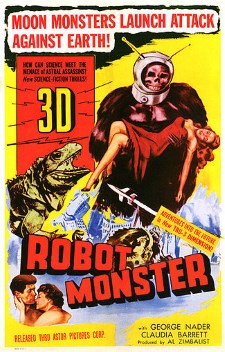
Robot MonsterWhen it comes to psychotronic films, you will often find short films. For example, Robot Monster, which is just 62 minutes or Bride of the Gorilla, which is 70 minutes. But this is unusual. When The Reduced Shakespeare Company got their first contract, their act was one hour long and the company that was going to be booking them told them that they had to make the show at least 90 minutes. That’s the key. If people are going to pay for a play, they expect at least an hour and a half.
But things used to be different at the movies. You go into the theater. You see a newsreal. Then there’s a cartoon. Next comes the B feature and then the A feature. That’s entertainmaint! That’s perhaps three hours of entertainment. It sure beats what you get today: one or more commercials, as if you hadn’t paid $8.50 to get into the theater and then paid $7.00 for some stale popcorn. Then you get a bunch of trailers for movies you don’t want to see. And finally, the “feature presentation” — as if there were any presentation other than ads.

So in the 1950s, you could get away with an hour long film, because there would be two of them. Today, you just get one film. And it isn’t just one and a half hours long. Sometimes it is two and a half hours. Sometimes it is four hours.

Okay, sometimes it’s worth it. Schindler’s List was over three hours long, and that’s not even counting the ten minutes you sit in the theater seat sobbing. Long films can be great! But usually it is something more like Marvel’s The Avengers, two and a half hour green screen action that is hard to follow and pointless if you do manage.

Brief Introduction to Dramatic Structure

Regardless of how you chop a film up, it has three acts. (Forget Shakespeare and five acts; they could all be divided into three acts.) The first act sets up what’s going to happen. The second act is just wasting time because you don’t want the story too short. And the third act resolves everything.

In an hour and a half film, that comes down to this:

  • First act: 20 minutes
  • Second act: 60 minutes
  • Third act: 10 minutes

I’m sure you see the problem. That second act is way too long. A good writer will make it interesting. But generally, a whole hour to fill is dull.

But look at how it is for an hour long film:

  • First act: 20 minutes
  • Second act: 30 minutes
  • Third act: 10 minutes

Now you only have a half hour to fill with the characters running around looking for an ending. You sit in the theater and before you know it, the film is over! Something goes wrong, the characters have to overcome it, and the film ends. With the hour and a half film, there has to to be two, three, maybe even four unbelievable conflicts that have to be overcome. If you came to the theater tired, you slept through at least a third of act two. And if you’re unlucky, it was the last third and you missed the end of film. Hopefully, you came to the film with a friend who can explain the whole thing.

I love short films because they get on with the story. Longer films go on for no reason. Especially in an action film, I don’t need to see another fight scene. And I certainly don’t need to see a 15 minute fight scene when a 2 minute scene would do. (I’m talking to you John Woo!) Because I like a little reality in my films.

Usually, in real life, something goes wrong, you deal with it, and then you move on. Real life isn’t: something goes wrong, you deal with it, but then something else goes wrong, so you deal with it. But then something else goes wrong. That kind of writing is designed to justify the ridiculously large budgets of modern films that you don’t want to see anyway.

A New Movie Experience

If I had my druthers, I would go back to the old days. Start with a 10-minute documentary on something — anything. Then a cartoon — maybe one with that animal and an acorn (those never get tired). And then a low-budget hour-long film. And then an hour long film with some stars. I’d pay $15.00 for that. I’d certainly pay $15.00 for it before I would Avengers: Infinity War in 3-D.

–Frank Moraes

The Incredible Hulk as Tragedy

The Incredible Hulk as TragedyI was just over at my sister’s house and so I saw a bit of television. In this case, an episode of The Incredible Hulk episode “The Psychic.”

It was the same as every other episode of The Incredible Hulk: David Banner gets involved in a situation, he turns into the Hulk twice, and at the end of the episode David is walking out of town.

But in this episode there is a psychic who can tell the future of people she touches. At the end, the psychic hugs David before she gets on the bus. And as they hug, we know she sees his future. And she cries. Because David Banner is a tragic character. There is no happy ending for him.

This is interesting because the show implicitly promises that he will eventually find a fix to his problem. But this episode shows that this is not the case. He will be fighting with the Incredible Hulk for the rest of his life. He will die still trying to solve his problem.

There Is No One-Armed Man

This is why The Incredible Hulk is more interesting than The Fugitive. There is no solution. David Banner is a cursed man. And it is tired conceit of the show that The Incredible Hulk will never kill because David Banner would never kill. We all know that under the right circumstances, we would kill. And we would be right!

Time and again, the Hulk doesn’t kill people who deserve to be killed. The show has roughly a Jainist approach to life. The truth is that his id would kill anyone who did him wrong, regardless of how innocent they might be. If a man who worked for Physicians for Social Responsibility and had saved thousands of innocent people sucker punched me, causing me to turn into The Incredible Hulk, I would mess him up — if not kill him. That’s the way the brain works.

This is why Kung Fu works better as a series than The Incredible Hulk.

And don’t get me wrong: I believe in that approach to life. I don’t believe that killing one person will make up for the death of another. But the theme of The Incredible Hulk doesn’t make much sense. Caine is in control. When he fights, it isn’t the result of his id taking control.

The Incredible Hulk Is a Matter of Control

David Banner loses control of his ego and his negative id takes over. But it never kills people who are clearly deserving. Caine would never do that.

So David Banner is a tragic character. The show may always find a way to make The Incredible Hulk (David Banner’s negative id) blameless for any harm (particularly death), it makes no sense. The show must keep up the pretense that The Incredible Hulk would never kill because David Banner never would. You have to ask yourself, “If you didn’t have your ego to stop your id, wouldn’t you kill some people — especially the villainous people that David Banner ran into week after week?”

I love The Incredible Hulk. It was a great show that was a lot of fun. But it was never a show that one should think about too much.

Afterword

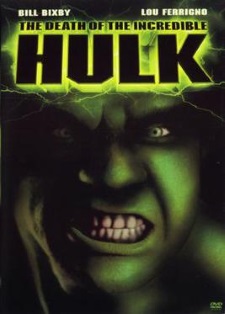
In the last television movie of the Incredible Hulk, The Death of the Incredible Hulk, David Banner does indeed die. So ultimately, even the creators knew they were making a tragedy.

The Supposed Blade Runner Controversy

The Supposed Blade Runner ControversyI came upon a short video, The Ending Of Blade Runner Explained. You can go watch it, if you like. I didn’t embed it because I think it is stupid. Basically, it tries to answer the question, “Is Deckard a replicant?”

To start with, this question is very much like the question that most people obsess about after seeing The Conversation, “Where is the microphone?!” The whole point of the story is that it doesn’t matter. It doesn’t matter that Harry Caul is the greatest bugger in the world. And it doesn’t matter all that he does to protect himself. If someone wants to track you, they will. The reason most of us don’t have to worry about it is that no one cares about us.

Silly Questions About Movies

In Blade Runner you have the same issue. Deckard could be a human or a replicant, but it just doesn’t matter. The video puts this idea in the mouth of Philip K Dick, who wrote the novel Blade Runner is based on, Do Androids Dream of Electric Sheep? The problem is that Dick never said that. Much of his work deals with the question of what it means to be human. But in the novel, there is no question but that Deckard is human.

It is true that director Ridley Scott decided that Deckard was a replicant. I did learn from the video that Harrison Ford (who plays Deckard) believes that the character is human. But as I’ve been writing for many years, meaning does not come from artistic creators but rather from artistic consumers. So Deckard is a replicant for Scott, and a human for Ford and Dick. But I’m going to explain why Deckard is a human.

Looking for Clues

The big problem with the “Deckard is a replicant” camp is that they base their arguments on tiny details like the unicorn origami left at the end. And since Deckard had a dream about a unicorn, that must mean that Gaff could somehow read Deckard’s dream. First: how? The technology to do this without touching him doesn’t exist in the film. But more to the point, why does Decker know about the standard memory implants in Rachael, but somehow doesn’t know about them in himself? If he’s a replicant, he can’t think he’s a human.

I’ve always seen the ending in a much more simpler: Gaff left it there as a message to Deckard: he wasn’t going to kill Rachael and he was going to allow them to get away. Unicorns are symbols of freedom and the possible. So it is just a coincidence that the dream has a unicorn and Gaff’s final piece is a unicorn.

Don’t get me wrong: I know that Scott put it in there so he could imply that Deckard was a replicant. But then he leaves huge parts of the film indicating that he’s human. Scott is a good director, but he’s not a writer. So I suspect that Scott had Hampton Fancher and David Peoples (who were both involved in the final rewrites) to cram in little bits to imply this. I doubt seriously that they were in early versions of the screenplay.

The Most Trivial Conspiracy Theory

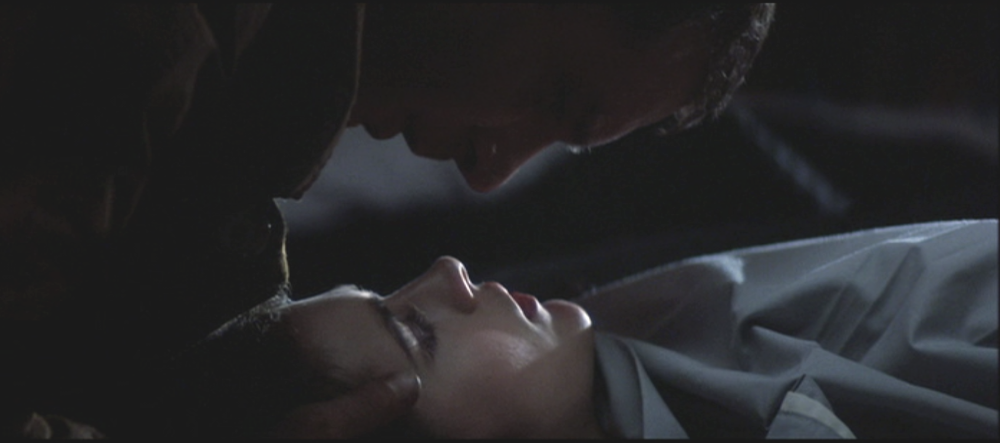
Consider the scene just before the unicorn scene. Deckard asks Rachael, “Do you love me?” She responds, “I love you.” That’s a far more interesting scene if one of them is a replicant and one a human.

Another thing that the video claims is that Deckard, in his battle with Roy is able to deal with his beating whereas a real human would die. Have they not seen a modern film? What Deckard goes through is pretty typical action star stuff. And Deckard shows great pain. Meanwhile, Roy shoves his head through a wall and doesn’t seem to feel any pain at all.

People who make claims for Deckard being a replicant sound very much like conspiracy theorists. They ignore major features of the film, and focus on tiny issues to make their argument.

Do you love me? I love you.

The Issue of Empathy

The one thing that really distinguishes humans from replicants is empathy. This raises a problem, because not all humans have empathy. Lack of empathy is more or less the definition of psychopathy. And if ever there were a job that would be helped by a lack of empathy, it is a bounty hunter. Whereas a prosecutor is supposed to look for the truth (which they don’t), a bounty hunter is only supposed to hunt down people. It’s like in that great scene in The Fugitive where Dr Kimble says he didn’t kill his wife and US Marshal Gerard replies, “I don’t care.”

And this makes the ending of the film quite interesting. As Roy (Rutger Hauer) gains empathy, he saves Deckard. But if the roles were reversed, Deckard would not have done the same. That gets to the issue of empathy as a continuum. Clearly, when empathy came to Roy, it came in full measure — a measure that probably doesn’t exist in humans. Is it possible that the replicants are destine to be more human than we are? After all, how empathic is a four year old child? And I wonder if the humans who mandate that replicants only live four years don’t do so because it would be only too clear who are the better creatures.

How Do You Know You Aren’t a Replicant?

Regardless of this, the question remains: other than empathy, how would any human know that they were not a replicant? After all, our memories are nothing but chemical storage. The only thing that we can be certain of is that we exist in this moment. Everything else is just a phantom: a construct of what we call time. But I’ve long been suspicious of time. It seems to me just our primitive way of experiencing the totality of the universe. And in that way, Roy is wrong in his final speech:

I’ve seen things you people wouldn’t believe. Attack ships on fire off the shoulder of Orion. I watched C-Beams glitter in the dark near the Tannhäuser Gate. All those moments will be lost in time, like tears in the rain. Time to die.

There are only two ways to look at it. It could be that time is an illusion. All our memories are effectively implants. There is only an eternal now. The past is a lie we tell ourselves to explain what is happening now. Or it could be that time is just our limited view of a larger cosmos: we are stuck seeing the three-dimensional world from our perspective in Flatland.

I remember reading that scorpions — some of them anyway — have no ability to create memories. It strikes me that memory is a necessary condition for an animal to develop empathy. So I think that the ideas of identity and empathy are really bound up in the notion of memory. Whether memory has some actual basis in past events hardly matters. And maybe this is why Rachael in the movie seems to have empathy: because she was given memories. Roy was not. Imagine what a great creature he would have been with a longer life.

Blade Runner Is a Mess of a Script

And what most annoys me is that the video thinks that Ridley Scott and Harrison Ford and Philip K Dick can somehow better tell us the answer to this question because they were involved in the making of the film (to one extent or another). But this is really stupid when you consider how different the film and novel are.

I like Blade Runner quite a lot. But it really is a mess of a film that you can make anything of that you like.

Is This a Real Snake?

Movie Gets Mixed Up With Novel

Consider how the novel gets mixed up in the film. In the book, robotic animals are cheap. The sign of affluence is being able to afford a real animal. In the book, Deckard’s wife is unhappy because they can’t afford any real animals. So when Deckard gets a reward for blowing away a bunch of replicants in a single day, he buys his wife a living goat. And she is distraught when Rachael kills the goat.

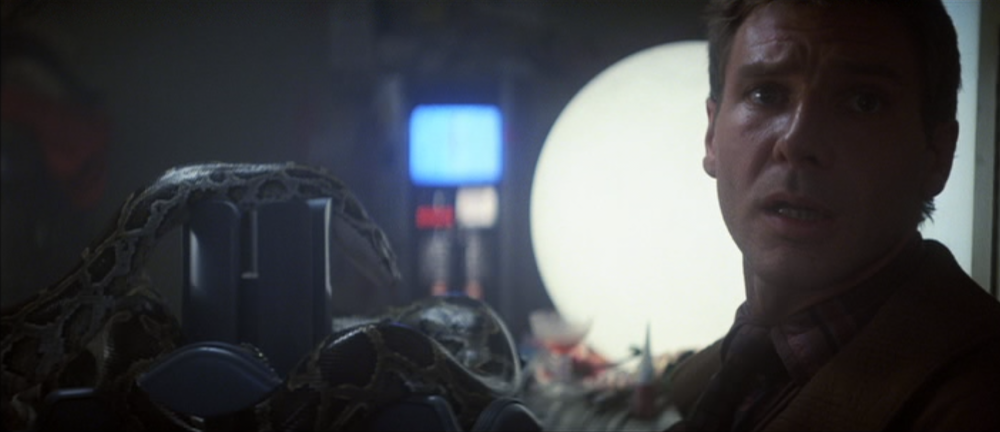
In the film, Rachael talks about how expensive the manufactured owl is — implying that manufactured creatures are very expensive. Later, when Deckard confronts the replicant dancer, Zhora, he asks, “Is this a real snake?” She replies, “Of course it’s not real! Do you think I’d be working in a place like this if I could afford a real snake?”

Another example is all the exposition that poor old M Emmet Walsh (Bryant) is forced to spew when Deckard is brought to the police station. Replicants only have a four year life span. But is that all replicants or just this version? If it’s all replicants (which is implied), this is something that Deckard would surely know given that he is such a hot shot replicant “retirer.”

Tears in the Rain

Blade Runner Is a Better Film If Deckard Is Human

Ultimately, Deckard is a human because the film is more interesting if he is. The film ends in a very ambiguous way. What’s going to happen to these two characters who we have come to like? It doesn’t need more ambiguity about who the characters even are.

Blade Runner is an interesting film. I enjoy watching it. But it isn’t some great work of art that has deep lessons to teach us. It’s an action film made for thoughtful people. And that’s more than enough for me to own it and repeatedly watch it.

The Unfortunate Beginning of Psychotronic Film

The Fifty Worst Films of All Time - The Unfortunate Beginning of Psychotronic Film

There have long been admires of the strange and incompetent in film. But as a definable thing, we really have to go back to 1978 and Harry Medved’s The Fifty Worst Films of All Time. Note that these were not primarily psychotronic films. Medved is a film lover (and I dare say a psychotronic film lover), so he didn’t primarily go after low budget films. Many of them were big budget films like the 1973 musical version of Lost Horizon. And others were smash successes like Airport 1975. There’s not one Ed Wood film in the book, although it does have a fair share of independent cheapies.

But Medved writes in the introduction of the book:

At this point, we might as well come clean and make an embarrassing confession: we get a kick out of bad films. What’s more, we’re convinced we’re not alone. How else can you possibly explain the continued popularity of TV’s “Late Late Shows” unless you assume there are hundreds of thousands of people out there who take a perverse pleasure in particularly ludicrous entertainments?

Those who know me, will know that I shudder a few times reading even that small quote. But I believe that Harry Medved was about 16-years-old when he wrote it. And I can’t but think that he has matured in his thinking, even if he hasn’t reached my point of understanding that in these supposedly bad films, there are things to love.

Attack of The Golden Turkey Awards

Sadly, two years later, Harry Medved hooked up with his older brother Michael Medved to write The Golden Turkey Awards. It makes sense that Michael would go on to be a professional reviewer, because he has all the arrogance and lack of creativity that is required in a film “critic.” This book is far less academic than the first, and goes after low budget films much more. Most sad of all, The Golden Turkey Awards was much more successful than The Fifty Worst Films of All Time.

The book even attacks Attack of the 50 Foot Woman, a classic. If you can’t see the art in that film, I’m afraid that you are hopeless. I will doubtless discuss the book more later, but I simply can’t find my copy at the moment.

How Plan 9 From Outer Space Got Smeared

This led to everyone “knowing” that Ed Wood was the worst director of all time and that Plan 9 From Outer Space was the worst film. These aren’t even debatable claims; they are simply wrong. The main thing Wood lacked was a second unit director. And Plan 9 From Outer Space is actually a fairly enjoyable film if you just sit down and watch it. I suspect 90 percent of the people who complain about Plan 9 have only ever seen what was in Ed Wood.

But the main thing to remember about The Golden Turkey Awards is that it was hugely influential. Although Michael Weldon’s Psychotronic TV (started in 1980) was not based on it, it’s clear that the Medved brothers had opened a niche in film criticism. The fact that they did it in a grotesque way doesn’t really matter.

The Defining of Psychotronic Film

Although the Medveds made their money, it is Michael Weldon who stands as the king of the genre because his approach was the opposite of theirs. He appreciated them — warts and all — and sometimes because of the warts.

I do sometimes get a chuckle out of something going terribly wrong. When I watch Plan 9 and the headstones tip because the grass carpet is pulled, I always smile. But I also remember what Wood says in the movie Ed Wood when one of the backers complains about this, “Nobody will ever notice that. Filmmaking is not about the tiny details. It’s about the big picture!”

He’s right. When I first saw the film, I didn’t notice this or any number of other problems. That’s because I was involved with the story. And 90 percent of viewers are the same way. This is why films panned by “critics” are often huge successes. And anyone who listens to “critics” is a fool.

Most people will enjoy Plan 9 much more than Die Wand. I love them both. But most people will find Die Wand very slow — and too intellectual. Plan 9 From Outer Space, on the other hand, is action-packed. It is filled with that 1950s American plucky optimism, even while the theme of the film is subversive. But you’d have a hard time finding a professional “critic” recommending Plan 9 over Die Wand.

“Oh, the Pain”

It’s sad that psychotronic film as a genre had such unfortunate beginnings. This is especially true because most people are still stuck in The Golden Turkey Awards way of looking at these films. I, always tending toward messianic behavior, want to see that change. With it’s disreputable beginnings with the Medved brothers (although I understand that they weren’t focusing on psychotronic film, since the concept hadn’t even been invented yet), it is amazing that psychotronic film has come so far.

Here is a quote from Bill Warren in Flying Saucers Over Hollywood (available in some versions of Plan 9 From Outer Space) about the film that the Medveds would have us believe is the worst film ever made:

It’s interesting all the way through and that’s more than you can say about a lot of pictures, because the biggest sin a film can commit is being dull. And Plan 9, whatever it is, is not dull.

(Warren also says, “The fact that he made these pictures against all odds, including his total lack of talent as a filmmaker, I think is what speaks the best of him. I mean, he really wanted to do this. And he did it. And the big difference between Ed Wood and his detractors like the Medveds and other people who really put him down and said he was not just a bad filmmaker but a worthless filmmaker — which is two different things — is that he actually made these movies by God.”)

When a person laughs at poor quality filmmaking, it is usually a sign that they know nothing about how movies are made. But laugh at these films all you like — as long as you also respect them. Because they deserve to be respected, as Harry Medved understood. (The less said about his brother the better.) In the same documentary, an older and wiser Harry Medved reflects on Ed Wood’s later life, “I think that it really broke him, the fact that he ended up directing super-8 movies for some porno series called The Encyclopedia of Sex. This is not a job for a guy who made such classics as Plan 9 and Bride of the Monster and Glen or Glenda.”

Afterword: Ed Wood Box Set

Ed Wood BoxCheck it out: The Ed Wood Box. It contains a film that I haven’t seen (although I’m not a huge Ed Wood fan). This looks like a collection that every psychotronic film lover should own. It includes: Glen or Genda, Jail Bait, Bride of the Monster, Plan 9 From Outer Space, Night of the Ghouls, and The Haunted World of Ed Wood (more a special features disc than a documentary).

Old Dracula and the Stupidity of Critics Like Roger Ebert

Old DraculaOld Dracula is a 1974 British horror comedy.

It was originally released as Vampira. The reason for that name is that Vampira[1] (Teresa Graves) is Dracula’s old flame, who is now dead. Well, I guess she was dead before, but now she’s dead dead or in a coma. I didn’t see the beginning of the film.

Dracula (David Niven) wants her back. Old age is so lonely. So he gets blood from a number of Playboy playmates. But this turns Vampira into a black-skinned woman. So the film is about Dracula’s attempt to turn Vimpira white. In the end, Dracula is turned black.

Racial Politics In 1970s Film

This was 1974, after all, and inter-racial couples were still taboo. Although they were not all that unusual, they were certainly not something seen in mainstream films. So it’s a happy ending, even if David Niven looks ridiculous in black face.

Shortly after Vampira was released, Young Frankenstein was released and became a huge hit. It was the fourth highest grossing movie of 1974, even though it was released on 15 December.

Roger Ebert Pretends He Doesn’t Know How Films Are Made

So when the distributor took the film to the US in 1975, they called it Old Dracula, hoping to goose the film with the similar title. It doesn’t make much sense to me, because it took me forever to connect “Old Dracula” with “Young Frankenstein.”

The films couldn’t be more different. Old Dracula is a very British comedy — more droll than exquisitely silly like Young Frankenstein[2].

So the distributor changed the name. This led the supposedly good film “critic” Roger Ebert to write, “The movie’s obviously intended as a rip-off of Young Frankenstein, right down to the artwork in the ads.

Old Dracula Was Released Before Young Frankenstein

Young FrankensteinBut Old Dracula was released before it. It was doubtless also conceived and produced before it. Ebert knows how movies are made. He can’t possibly have thought that the producers of Old Dracula saw Young Frankenstein doing so well at the very end of 1974, got the money and casting set, had a screenplay (that is clearly not targeting the same audience) written, shot, edited, and released it within a year.

But there he is. He gives the film one star and calls it incoherent. I haven’t created a page for the film, because I’ve only been able to see the last half of the film, and I had no problem following it.

What’s more, major film “critics” get a whole package on the films they are going to review. That’s how, in the days before Wikipedia and IMDb, film “critics” knew lots of inside information about the films, including the names of minor actors.

How Roger Ebert Could Have Liked Old Dracula

But let’s face it. If Young Frankenstein had never been produced, Ebert would have given the film a chance. (He spends two paragraphs trying to convince us that he did give it a chance because of Niven and director Clive Donner. In a 5 paragraph review, that screams, “I went into this film determined to pan it!”)

I’m not suggesting that Ebert would have loved the film. From what I saw, I’d guess he would have given it 2 and a half or 3 stars. Or maybe only 2 stars. But not one. Not with this movie.

In the quote above, Ebert says the artwork was meant to rip-off Young Frankenstein. I’ve included the images of both posters. Could any objective person say one was trying to rip-off the other?

Film “Critics” Suck

I’m so tired of film “critics.” And it’s particularly bad when you consider that popular music criticism is actually pretty good. Yet people continue to listen to these film blowhards.

Look forward to a full page on the film. I’m hoping I can rent it, because it sells for $20, and I’m not that interested in the film.


[1] Although spelled the same way as Maila Nurmi’s character, her name is pronounced with soft “i” — undoubtedly not wanting to associate the character with Maila Nurmi.

[2] For the record, the brilliance of Young Frankenstein is due to Gene Wilder, not Mel Brooks. From interviews, it’s clear that Brooks had very little to do with the writing. A less narcissistic director wouldn’t even have put his name on the credits. The same is largely true of Blazing Saddles where Brooks did everything he could to minimize Andrew Bergman, the brilliant comedy writer and director. I will admit that I have a very low opinion of Brooks, but it is based on everything I’ve learned over the years. Read the chapter on The Producers in Ralph Rosenblum’s book When The Shooting Stops … The Cutting Begins: A Film Editor’s Story.

The Multi-Disc-Type Rip-Off

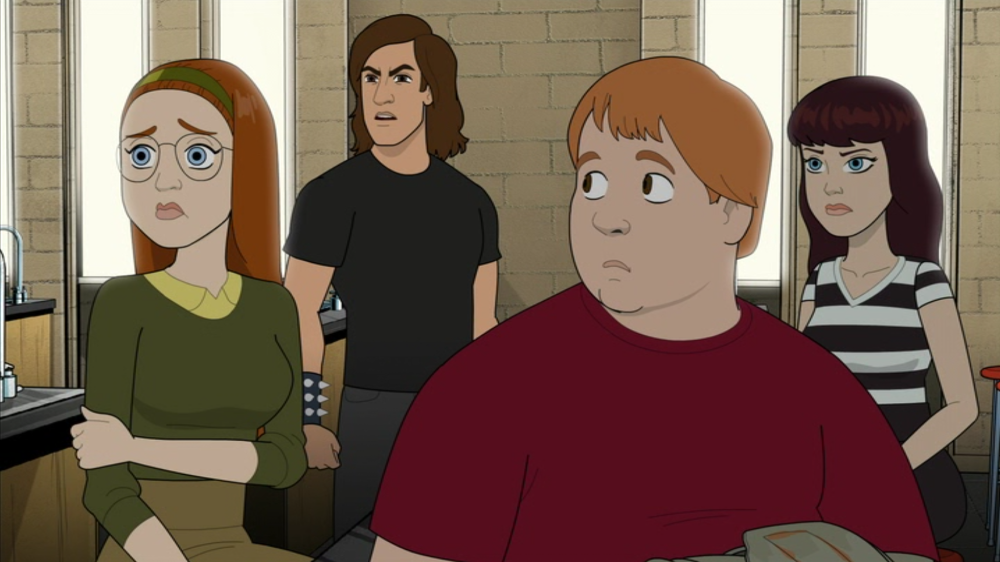
Todd and the Book of Pure EvilI recently bought Todd and the Book of Pure Evil: The End of the End. The story of buying it is interesting, and I will include it in the Afterword at the bottom of this article.

After two seasons of the television show Todd and the Book of Pure Evil, it was canceled. So the producers go money to make an animated final film to tie everything up. This was great, because more or less the same thing was promised for the series Deadwood, but it fell through and it really sucked.

It was advertised as a blu-ray set. I assumed it contained 3 blu-ray discs. The problem was that I didn’t own a blu-ray player. But I bought a blu-ray player for my computer, and shelled out $39.99 for the product — such was my desire to finish off Todd and the Book of Pure Evil.

What $39.99 Buys You

But for a product advertised as blu-ray, this was pretty short on blu-ray discs. It contained one blu-ray with extra features, a DVD that contained the audio commentary as the only interesting extra, and a CD of the soundtrack. I’ve never been much of a fan of the music on the show. It’s okay. I suffer from the problem of being a trained musician with wide taste. I can tell the difference between greatness and mediocrity in most forms of music. And Todd and the Book of Pure Evil has always featured professionally created mediocrity.

The idea that someone who wants the movie would want the soundtrack is preposterous. This is why soundtracks are sold separately from films. So the soundtrack was just added for padding. Basically, your $39.99 gets you one blu-ray disc and that it is. They threw the other two discs in to justify the price.

Todd and the Book of Pure Evil: The End of the End

Price Gouging

Think about this. Throw away the CD, and you have one DVD and one blu-ray. And the DVD is simply a subset of the blu-ray. What is the point of this? You either want a DVD or you want a blu-ray. You don’t want both. So what the distributor is doing is simply forcing you to pay an exorbitant price for an extra disc that you do not want and probably can’t even use. (Blu-ray has never taken off. Most people are perfectly happy with their DVDs.)

This is madness. It’s not as though DVDs and blu-rays are not already expensive enough. And in the case of Todd and the Book of Pure Evil all of the extras are on the Blu-ray. So if you do not have a Blu-ray player you don’t even get the full complement of extras that at are available.

It would be a trivial matter for the producers of Todd and the Book of Pure Evil to have released a single disc DVD of the film selling for 10 or $15. Or they could have had a second DVD with the extras one it and sold it for $20. But instead they have been depending upon people like me who would be willing to pay more than double the value of the set just to watch the film.

This Film Didn’t Need to Make Money

And remember that this movie was primarily financed by an Indiegogo campaign. They did not have to pay back most of their backers with money but rather gifts. Mostly, they gave backers stupid things like a Crowley High diploma or six playing cards they made up. For $25, you could get a downloadable version of the film. This was by far the biggest donation level. If you wanted a DVD, you had to donate $99.

But some of those gifts weren’t even things. For example, for just $2,500, 7 people had their likenesses used in the cartoon to be killed. That’s better than free money because otherwise, they would have had to either make up a face, or pay someone to use their likeness.

Now I know they got money from other sources, but I suspect the Indiegogo campaign was the main financing since they were only asking for $75,000 and ended up getting $123,160.

Money Grab

What I most love about psychotronic films is that they are usually made for love. Yes, their naive makers often hope they will make money. (Trust me, I know about this. I’ve had published three books published, and only one of them has made more than the advance I was given. When the first one was published, I really thought it would do well. But I have to admit that the first one I wrote is the one that actually sold pretty well — and is no on its second edition.)

So why the money grab? I really do wonder. I think blu-ray is a scam anyway. Most people do not care about the higher definition. And at least on computers they run incredibly slow slowly. Most people would prefer to simply have DVDs (with some system that made NTSC and PAL or regions the same so no one ever had to worry about it).

It’s like cassettes and 8-track players. The sound quality of both were much worse than LPs. So are CDs! But why were cassettes and 8-track players really popular once and way are CDs popular today? Because they were easy to deal with. It’s the same thing with video.

The End of the End Isn’t That Good

To make matters worse, the final episode is not nearly as good as the series was simply because it is animated. There is something very funny about watching gallons of fake blood fly everywhere in live action. Animated it’s just stupid. When The Student Body (episode of the same name) rips apart and blood flies everywhere, I could hardly stop laughing. I didn’t laugh a single equivalent sight gag in the animated film.

So I ended up paying substantially more ($39.99) for an 80 minute animated film that was mostly funded by donations than I did for 9 hours of the television show (series one and series two — less than $20 for both — as I write this, $17.68 plus tax) which was much better.

Is Todd and the Book of Pure Evil Psychotronic?

Don’t get me wrong. I’m glad that they got to make the final film and to pull it all together. And listening to the commentary it is clear that they had thought out the entire series completely before they started it. So it all works well. But this just leaves me with a very bad taste in my mouth. And it makes me seriously consider redefining the meaning of psychotronics.

But what do I expect when psychotronic film goes mainstream? I will stick to the older psychotronic films. They never break my heart.

Afterword

I see how Amazon stays in business: good customer service. Because they are a vile and manipulative, and I would even say criminal organization. I have been waiting six years for the constantly promised final end to “Todd and the Book of Pure Evil.” And finally, late last year it came out: Todd and the Book of Pure Evil: The End of the End. So I went to Amazon. It had it in blu-ray, which I didn’t want (because I didn’t have a player at that time), with three discs and all kinds of extras. But there was a little link, “DVD.” It was cheaper and came on only one DVD. But I just wanted to watch it. I didn’t need the extras. So I clicked and bought it with one click.

But I made a mistake. The DVD button didn’t take me to a one-disc DVD version of Todd and the Book of Pure Evil: The End of the End. (And note, nothing said anything like “You might also like!”) It took me to the page for the first season of the show, which I’ve owned for years.

My Mistake

Okay, my bad. I should have been more careful. But this page is clearly designed to make people do exactly what I did. So I was going to send it back. But I couldn’t just send the item back, I had to use one of their services, all of which cost $4.99 to ship. Fun Fact: it is cheaper to mail a DVD first class than media mail. Obvious conclusion of fun fact: Amazon screws its customers at every opportunity.

So okay: I blew $10. No big deal. But I wanted Amazon to know that I was unhappy. Unfortunately, there was no way to do it except if you ship it back. I wasn’t going to do that. I was just going to give it to the library. But eventually, I found their phone number and called on the off chance that I could talk to an actual person. Remember: all I want to do is say, “I think this page, and many more like it, are deceptive and I think you should stop doing it.” That’s it. I didn’t want money. I knew that Amazon would continue to screw over their customers. But I wanted to have my say.

Customer Service

I called and got to a live person almost immediately. The representative talked in a way that made me think he wasn’t listening to me. But he did. He followed me better than anyone ever has before. Apparently if you go to the trouble (the first time anyway) of calling them, they’ll do more. The representative told me keep the DVD and they would refund my money. I had them refund it to my Amazon account because I thought there was a streaming version that I could purchase. There isn’t. There’s only the $39.99, three disc set of which I only want one.

So through great customer service, they saved a customer. But I still think they are evil. I know they will continue this practice and that 99% of the people will not take the time to find their phone number and call. When most of them see the shipping rates, they will drop the whole thing. They are still an incredibly evil country that will destroy capitalism and democracy in this country.

But I got to see the movie. See my page on Todd and the Book of Pure Evil. There isn’t much there yet, but it will slowly get finished.

Kobe Bryant Wins Oscar for Best Animated Short With Dear Basketball?!

Dear Basketball
I hate the Academy Awards. No film lover — much less a psychotronic film lover — should have any patience for this narcissistic display. So I didn’t watched a second of last night’s event. But I did read that Kobe Bryant won an Oscar for Best Animated Short for “his” film Dear Basketball. It is mostly stirring controversy because (I don’t know if you’ve heard) sexism is no longer allowed in Hollywood.

And there’s this little problem that Kobe Bryant, to a fair degree of certainty, raped a young woman in 2003. Ultimately, like most rich men, Bryant bought his way out of his legal problems. I don’t like to mix artists with their personal lives, although I must admit that after I got to the point of believing the allegations against Woody Allen, I haven’t been able to watch any of his films. Some like Manhattan are particularly troublesome at the same time that it’s hard to deprive myself of some of Gordon Willis’ best work.

Since When Is Kobe Bryant a Filmmaker?

But what really bugs me here is that Kobe Bryant isn’t a filmmaker. He’s just a rich guy who hired the best people in the field to make something for him. It’s really the creation of Glen Keane, a man usually referred to as “legendary animator.” The music was created by John Williams, a film composer so well known and respected that I can’t imagine anyone reading this not knowing him. His themes for Jaws and Close Encounters of the Third Kind are major parts of the soundtrack of America.

All Bryant provided was the money and what people are calling a poem, “Dear Basketball.” I wouldn’t call it a poem. A bunch of lines written on a piece of paper is not a poem. That’s especially true when those lines are riddled with platitudes and cliches. “Dear Basketball” doesn’t have a transcendent phrase in it. What’s more, the “poem” is little more than a grand tribute to its writer’s ability to play basketball. It isn’t about basketball. That might generate something of interest. But as it stands, this would fail in a high school sophomore creative writing class.

The Oscars Are a Popularity Contest

I know why Bryant won. He was a member of the Los Angeles Lakers for 20 years. He was well-known and well-liked in the Los Angeles area for much of the time — minus occasional downs when he raped or did other things. So he’s popular. So he won. The Academy Awards don’t have anything to do with the quality of the films. It’s a popularity test. And this is the most obvious and pathetic example I’ve seen so far.

There’s another thing. I understand that given that all ticket prices are the same, all films should be judged equally at the box office. But when it comes to awards, I think it’s unfair to judge a $100 million film with a $10,000 film. There are men and women’s categories in the Olympic games because men and women have different physical resources. Why isn’t it the same with film? The truth is, the Academy won’t even consider nominating low budget films except under extraordinary circumstances. The Academy Awards is just one long commercial for big-time filmmaking. What does it say to the students who showed so much creativity that they managed to sneak by Hollywood’s natural shallowness? It says lots. But mostly, it says art doesn’t matter and money does.

Dear Basketball Isn’t Even Very Good

But the amazing thing is, the film itself is not that good. Sure, it’s professionally produced. How could it not be?! It was made by a bunch of professionals. But it uses an animation style that was considered cool before Kobe Bryant began playing for the Lakers over two decades ago. The music is saccharine, designed to make the viewer cry despite the fact that there is nothing on the screen to warrant it. I don’t know. Am I supposed to feel bad that a man got to live his ultimate dreams and get paid hundreds of millions of dollars for it now has to retire from one aspect of the game?[1]

Forget the Academy Awards and Hollywood

The one good thing about Kobe Bryant winning an Oscar for Best Animated Short is that no one can seriously argue that the Academy Awards have any artistic merit. If a film wins an award, it means it was either commercially successful or made by popular people, and the the product didn’t completely suck. But that’s perfect, really. Because that’s Hollywood: an industry designed to make money by making things that aren’t too offensive to the keen viewer. (They mostly fail at that, but they do try.)


[1] Note that if he really loved playing basketball so much, he could go and play in another league. It just wouldn’t be one that paid him tens of millions of dollars per year. And his career is hardly over. He can do different things in the NBA for the rest of his life. But judging from what I’ve seen, he will choose to do the things that will get him the most attention and money.