Author Archives: Frank Moraes

Frank Moraes is a freelance writer and editor online and in print. He is educated as a scientist with a PhD in Atmospheric Physics. He has worked in climate science, remote sensing, throughout the computer industry, and as a college physics instructor. Find out more at About Frank Moraes.

Psychotronic Film’s Move to Television

Old TelevisionI doubtless got my start with psychotronic film through television, not films. When I went to the theater as a kid, it seems like I was always seeing some George Roy Hill film. (That’s no slight of him. I love him. He was one of those great directors who didn’t seem pretentious — like Edward Dmytryk and Michael Curtiz before him.)

But my first real experience with psychotronic film was a theatrical release, I just watched it on television: The Last Man on Earth. Too many people think it is a bad film, which I don’t get. There have been four screen versions of Richard Matheson’s masterpiece I Am Legend — the other three being The Omega Man (fun), I Am Omega (pretty fun), and I Am Legend (pseudo-serious dreck). Not surprisingly, I am Omega got mostly bad reviews and I Am Legend got mostly good reviews — yet more evidence of the fact that film “critics” are idiots.

The Last Man on Earth gave me nightmares for years! I find it rather sweet now. But man did it freak me out at the time. And it seemed to play at least once a month on Bob Wilkins’ Creature Features.

Kolchak Poisoned Me!

But what really got me going was Kolchak: The Night Stalker. Maybe it’s because it was such a silly show and that’s something I like about a great deal of psychotronic film: it doesn’t take itself very seriously. Also, of course, Carl Kolchak is the character I’ve based my entire life on. Not that I run into monsters every week. Of course, there was that one time…

As I wrote of Kolchak: “his pluses just barely offset his minuses.” And I think most of my employers would agree with that. They hate me, but they need me. It is something of a rush to be someone’s mixed blessing. Just like Carl Kolchak.

Psychotronic Television

As I put up the page for Kolchak: The Night Stalker, it occurred to me that I was once again adding a page for a television show. Out of 22 pages, 4 of them are for television series. And actually, that makes a lot of sense. Because by the time of my generation, the B-film had gone away. I went to plenty of double features when I was young — but always at specialty theaters. First run films showed trailers and then the feature.

(Note: this always bothered me. It bothered me even more on VHS tapes, “And now our feature presentation.” No! Now your only presentation! I don’t consider ads for coming films a presentation. But a Looney Tunes cartoon and a short B-picture, sure. Then you get to say, “And now our feature presentation.” Otherwise, don’t try to con me.)

As a result, psychotronic film really went to television. That was even truer once cable came around and all these stations needed content. You all know Mystery Science Theater 3000. It would never have been a national thing had it not been that Comedy Central had just started and the idea of two hours of cheap programming was just too good to pass up on.

Thunderbirds, Lost in Space and Star Trek

The Twilight Zone was psychotronic, although I could argue against that. But even if you question that, think about Thunderbirds, Lost in Space or the original Star Trek.

They are totally psychotronic! You doubt me? You think Star Trek was serious in any way? Watch:

Roger Corman’s Career

And then, of course, there is Roger Corman. But he’s just a symbol. There were others. He started in the movies but he moved increasingly to television. So none of this is too surprising.

Finally, there was the video revolution. In the early days of VCRs, a filmmaker could get just about anything distributed if they got a decent box design. And that didn’t stop those films from showing up on local television either.

The Best of It All

Now film (?!) producers have the best of all worlds. They can shoot feature films, get them distributed if they are lucky, otherwise release them on DVD, and license them to cable. A good example of that is District 13.

Many people make money just making videos for YouTube. I’m sure that if JR Bookwalter were 20-years-old now, that’s probably what he would be doing: shoot a $2,000 feature, get millions of YouTube views and make enough money off ads for a couple more films.

Of course, for people like me, it’s overwhelming. So many films are being made — especially horror films — that it’s like running around the world trying to see every high school play that gets produced. Luckily, there aren’t too many JR Bookwalters around, just as there aren’t too many good high school plays. Unluckily, there are still too many worthy productions for me to ever get around to — especially given my philosophy that if it’s worth writing about, it’s worth writing about in depth.

I’d still rather go out to a rundown theater and watch a nice print of The Last Man on Earth. But that ain’t the world anymore.

Money, Vision, and Psychotronic Film

Money, Vision, and Psychotronic Film

There is an interesting distinction between exploitation filmmakers. There are those who are just in it for the money — people like Herschell Gordon Lewis. And then there are visionaries (who were often con men) who would do whatever they could do to get their ideas on film — people like Ed Wood.

It doesn’t much matter to the final result. Lewis would never write anything as breathtakingly personal as Glen or Glenda. Yet in many ways the two men were quite similar. Wood certainly wanted his unique vision to be profitable. And Lewis was quite willing to tackle the social issues of his day in his later films.

Realism in Filmmaking

The issue, I think, is the realism of the filmmaker. Lewis famously said that he felt sorry for filmmakers who were trying to make art. Now, like so many things Lewis said, I think it was more for effect than anything else. But there is no doubt that Lewis was, as the Mothers put it, “only in it for the money.”

Wood, on the other hand, would have made his films if he knew that there was no money in it.

If Lewis Had Made Glen or Glenda

I focus on Glen or Glenda because it is Wood’s most pure vision — from his id on to celluloid. And this is why I consider it one of the greatest films ever made and the greatest idiosyncratic film ever made. (Oh, if he were only alive to see me write that! And sorry, George Barry: you still made a great film.)

But Lewis would have had no problem making Glen or Glenda himself — so long as he thought it would have made money. But I doubt it would have been as good — at least to viewers like me.

Wood was down on his knees begging society to understand him and those like him. Lewis would have been down on his knees looking for dropped dollars at the drive-in entrence.

Different Ways to Make a Great Film

Anyone who’s read more than a couple of sentences by me knows that I fall into the Ed Wood camp. Art? Professionalism? These are fine things in their right place. But they aren’t very important in psychotronic film. What I most love about psychotronic film is that it surprises me. When I first saw Glen or Glenda, I felt like I had entered Ed Wood’s brain — a wondrous place to spend an hour.

With Lewis’ films, I don’t get that experience. He never let’s me inside because his motivation is money, even if what he produced was often great.

An Aside: Ed Wood Was a Good Director

The idea that Ed Wood was a bad (much less the worst) director is nonsense. Most people who have seen any of his films have only seen Plan 9 From Outer Space — and only after being told it is a bad movie. And the rest just take it as a fact, having never seen it. (This is similar to Gary Larson’s “Hell’s Video Store,” which only had Ishtar for rent — a cartoon he created — and later apologized for — having never seen that great comedy.)

Plan 9 is not a bad film! Although hardly a great film, it is interesting throughout. What’s more, it’s subversive!

Focusing on Stupid Things

Yet people focus on things like the tombstones falling over. Why? Because they’ve been told to! I’m a movie fanatic. Now I mostly watch them alone, but I’ve watched hundreds with audiences, and they don’t notice things like this.

I think it wasn’t until my own fifth watching of Plan 9 that I noticed the tombstones. Why? Because I was concentrating on the story — like most viewers.

Who Does Professionalism Impress?

The exceptional amount of professionalism put into Hollywood films is put their for the filmmakers themselves. And this is why we end up with films like the first Star Wars looking so bad after a couple of years that Lucas was driven to replace all his special effects because two years later they were embarrassing. (I think doing that is an artistic sin; art exists in its own context; but I guess it isn’t a sin for Lucas because he is no artist.)

But most filmmakers don’t have that kind of money or power. So we have countless films that turn from live-action to cartoons and back. I personally find it distracting. Tombstones falling over on a tiny part of the screen is much easier to overlook than the fact that half of the third act of The Matrix Revolutions is a cartoon — and one that looks worse ever year.

Watch Jail Bait (which Ed Wood made between Glen or Glenda and Bride of the Monster). You will see a perfectly competent writer and director. Indeed, in terms of professionalism, he was easily as good as Herschell Gordon Lewis. But Wood had a personal vision that Lewis did not. And maybe Lewis is right: we should pity Wood.

But had Wood been an art painter, it is exactly this vision that would have made him a star. But since film is commodity to most people, Lewis is the success and Wood the failure.

Luck and the Movies

Still, we can’t lose sight of the fact that Lewis was just lucky. It’s not like gore wasn’t in the air. As I pointed out in my discussion of Blood Feast, Akira Kurosawa was already playing with gore in Yojimbo (1961) and in a spectacular way in Sanjuro (1962).

Had it not been for Blood Feast, Lewis would be remembered fondly by people like me for films like Scum of the Earth! and The Gruesome Twosome, but he would not be the icon he became.

The same is true of Wood, of course, but in a horrible way.

Some people decided to focus on Plan 9 From Outer Space and decide that it was the worst film ever. I don’t know where they got that idea — maybe just because Michael Bay hadn’t started making films yet. Most likely, they just didn’t understand what Wood was doing. And they probably hadn’t seen that many films anyway.

But it caught on. Ed Wood was “the worst director of all time” based upon seeing only one of his films and not understanding it. Sorry, but this is great writing and directing:

The Psychotronic Filmmakers Curse and Blessing

One thing you hear again and again in director commentaries on psychotronic films is disappointment. The directors wish they could have done this or that. Or they made a bad decision here. Or they really wish they had been able to go back and re-shoot this scene or shoot a missing transition. But they couldn’t. You never hear this from Hollywood directors because they aren’t constrained in that way. They’re constrained in a much worse way: in what the kind of film they can make to begin with.

Whether for money or vision, the psychotronic filmmaker is artistically free to make the kind of films they think people want to watch — whether they are right (as Lewis was) or wrong (as Wood was). In the end, we get films that delight us if we are open to them. All the “art” and professionalism in the world will not stop me from passing out before the first reel is finished.

The Short Life of Jill Banner

The actor Jill Banner is iconic because of her role in the cult classic Spider Baby but also because of her tragic death at 35 years old. You can find quotes about her below.

“Jill Banner” sounds like a fake name and it is. She was born Mary Kathryn Molumby on 8 November 1946 in Bremerton, Washington to parents Raymond Molumby (18 August 1888) and Muriel Molumby (27 November 1919), nee Bergheim.

Jill’s father had three sons from a previous marriage but it doesn’t appear that she had any real interactions with these half-brothers.

Her father died when she was just 2 years old. After that her mother moved around a lot, apparently to live with relatives. However, since her father is buried in South Dakota, it is likely the move there was before he died.

By 1961, at the age of 15, she was attending Hollywood Professional School — a private K-12 school for child performers. At 17, she met and became close friends with Peggy Lipton, who would go on to star in The Mod Squad and marry Quincy Jones.

Her first big break came in 1964 when she auditioned for Spider Baby. Writer-director Jack Hill said of it, “We just chatted with her and she admitted she hadn’t had any experience. But she said, ‘I’m a lot of fun to have around.’ And the way she said that, all of us in the room suddenly felt that this strange girl was just right for the picture.”

Sadly, although the film was all but done by the end of 1964, the financial backers went bankrupt. This delayed the film’s release by three years. By that time, she had sever on-screen credits to her name, mostly on TV. After its release, she continued to work steadily, entirely in TV and usually cast as a young hippy.

In 1968, Banner met Marlon Brando when he was working on Candy (1968). They seem to have stayed together until 1976. She has no film credits for the last 4 years of this period. They were going to get married but had a fight and Banner moved to New Mexico to work in real estate.

In 1980, Jill Banner returned to Los Angeles. Just two years later, on 7 August 1982, she was driving on the Ventura Freeway (Hwy 101). A drunk driver in a truck hit her. She was thrown from her Toyota experiencing intense head trauma. She was in a coma and soon died at the Riverside Hospital in North Hollywood.

Jill Banner Filmography

I’ve watched everything I can find that features Jill Banner. Here is a full list of her TV/film credits with details about her roles.

  1. 24 January 1966: The John Forsythe Show Season 1 Episode 19 “If Food Be the Music of Love” — She plays Marcia. I haven’t managed to find a copy of this. Forsythe plays a retired Air Force officer who inherits a girl’s school. Comedian Guy Marks played his Air Force buddy, Elsa Lanchester was the school principal, and Ann B Davis was probably a teacher. This episode is about the poor quality of food at the school. I assume Marcia was one of the students. Forsythe’s daughter Page played a character with that name in two earlier episodes.
  2. 4 February 1966: Weekend of Fear — She plays Carol, the main character’s boyfriend’s ex in this micrro-budget thriller. She exists mostly to allow the villain to explain her evil plan. The film stars Mikki Malone, who is credited with a number of porn films in the 1990s although I would assume those were not sex roles given her age.
  3. 12 February 1967: Deadlier Than the Male — She plays Pam in an uncredited role in this spy thriller. I haven’t been able to find her in the released film. In an 8-minute sequence that was cut from the final film, Pam is a model who Robert mistakes for a spy. It’s a rather good scene. Elke Sommer is also featured in the film.
  4. 2 March 1967: Dragnet Season 1 Episode 7 “The Hammer” — She plays Camille Gearhardt, a bad girl with criminal tendencies who hooked up with the wrong guy and ends up in prison for accessory to murder. She gets to deliver a great line, “You got nice eyes… for a cop!”
  5. 3 May 1967: C’mon, Let’s Live a Little — She plays Wendy in this Bobby Vee vehicle. There are three young dark-haired women who act as a kind of single character. Banner does most of the talking for them. The singer Kim Carnes is featured in this film.
  6. 17 August 1967: The Stranger Returns — She plays Caroline, the daughter of the town’s double-dealing postmaster in this excellent spaghetti western. The character exists mostly to be used as a pawn but she does get a great moment with a slap.
  7. 21 December 1967: The President’s Analyst — She plays Snow White, a hippy who James Coburn hooks up with while on the run from the feds. The film also features William Daniels and Arte Johnson in small roles.
  8. 24 December 1967: Spider Baby or, The Maddest Story Ever Told — She plays Virginia, one of the three insane Merrye children. She is obsessed with spiders. The film also features Lon Chaney Jr, Carol Ohmart, and Sid Haig.
  9. 5 March 1968: Shadow Over Elveron — She plays Jessie Drover, the pregnant daughter of corrupt Sheriff Verne Drover (Leslie Nielsen) who is forcing her to have an abortion. This TV movie also stars James Franciscus and Don Ameche.
  10. 9 January 1969: Dragnet Season 3 Episode 14 “Homicide: DR-22” — She plays Eve Stewart Wesson, a heroin addict and prostitute. She delivers a ton of exposition very much in the style of the show. Burt Mustin co-stars.
  11. 20 March 1969: Dragnet Season 3 Episode 23 “Forgery: DR-33” — She plays Sondra Kay Thompson, a sympathetic check forger. It’s a tiny role.
  12. 25 September 1969: Dragnet Season 4 Episode 2 “Homicide: The Student” — She plays Nancy Morton, a college student who knows an unstable murderer. This is another part with a lot of exposition and little else.
  13. 13 November 1969: Dragnet Season 4 Episode 8 “DHQ: Missing Person” — She plays Shirley Lawson, a young woman with a split personality. Her “older sister” wears a blond wig, so it’s fun to see that. This is the best of her Dragnet roles.
  14. 12 March 1970: Hunters Are for Killing — She plays Holly Fornell, the young hippy daughter of the cafe owner. She seems to exist entirely to establish Burt Reynolds as a good guy who doesn’t sleep with the gorgeous young woman who throws herself at him. But it’s hard to say since I’ve only seen this TV movie in German. It also features Martin Balsam, Melvyn Douglas, Suzanne Pleshette, and Larry Storch.
  15. 20 March 1970: The Name of the Game Season 2 Episode 23 “Echo of a Nightmare” — She plays Vivi Sue. I have not been able to see a copy to know more. The episode features guest stars Hoagy Carmichael, Arthur Hill, and Ricardo Montalban.
  16. 15 October 1970: Ironside Season 4 Episode 4 “Noel’s Gonna Fly” — She plays Judy Blue, a hippy girl who Noel interacts with after he runs away. It’s a bigger role than normal for her, featured in 3 locations. Lorraine Gary guest stars.
  17. 4 December 1970: The Name of the Game Season 3 Episode 12 “Why I Blew Up Dakota” — She plays Ginger Schermer, a “stewardess” who is the alibi for an artist accused of murder. This episode has a guest cast including Jose Ferrer, Carolyn Jones, Roddy McDowall, and Paul Stewart.
  18. 30 January 1972: Cade’s County Season 1 Episode 16 “Slay Ride: Part 1” — She plays Melanie, a young woman at a Native American commune. She exists to provide some exposition about the murdered woman. The show is actually pretty good; too bad it didn’t take off. The episode features character actor John Schuck and Academy Award-winning producer Tony Bill.
  19. 2 February 1972: Adam-12 Season 4 Episode “The Adoption” — She plays Rita, a young woman who agreed to give up her baby for cash who has had second thoughts. She says at the end of the episode, “I’m keeping my baby” — 14 years before Madonna’s “Papa Don’t Preach.” Jackie Coogan is featured in a subplot about a college football team giving performance-enhancing drugs to the students.
  20. 6 February 1972: Cade’s County Season 1 Episode 17 “Slay Ride: Part 2” — She is credited as Melanie, but doesn’t seem to have been in this episode.
  21. 5 March 1972: The Bold Ones: The New Doctors Season 3 Episode 11 “Discovery at Fourteen” — She plays “Curlish Girl.” I haven’t found the episode online. But I’ve found enough to know that Ron Howard plays a young man who is afraid he is gay. Given her character’s name, I assume this isn’t much of a part. The show had a great cast including EG Marshall, John Saxon, and Robert Walden.

Quotes From People Who Knew Her

I’ve done a lot of research to get a handle on Jill Banner. Here are notable quotes from the books.

Jack Hill

Writer and director Jack Hill was interviewed in The Hatching of Spider Baby and this is what he said about Jill Banner:

I don’t know how we found out about Jill Banner [for Spider Baby]. Somebody must have told us about her. She just came into the office for an interview and I’m sure she wasn’t expecting to get any kind of a leading role. We just chatted with her and she admitted she hadn’t had any experience. But she said, “I’m a lot of fun to have around.” And the way she said that, all of us in the room suddenly felt that this strange girl was just right for the picture. She just had this kind of presence.

It wasn’t until not too many years ago I had been trying to locate Jill Banner. I had a phone number on her, and I had no idea that she had died. And I learned that she had died in a terrible, terrible automobile accident on the Pacific Coast Highway. She was at that time living with Marlon Brando and, in fact, working on a screenplay with him. And I also heard from Jill’s manager that Brando had told someone that Jill was the only woman he had ever really loved. At her funeral, he remained long after everybody else had left — standing over her grave. So it must have been quite a relationship. And she was quite a remarkable girl, so I could understand very much why Brando would be fascinated by her.

Everett Greenbaum

Writer Everett Greenbaum (co-writer of The Ghost and Mr Chicken) is quoted about Banner in Brando: The Unauthorized Biography by Charles Higham:

He also had an affair with an ill-fated woman named Jill Banner. A tiny, appealing former actress who talked in a low-pitched sexy, drawling comic voice like Mae West, she eternally fascinated Marlon. According to Marlon and Wally Cox’s old friend Everett Greenbaum, Marlon was fiercely possessive of this intriguing girl. “I used to take Jill for rides in my airplane,” Greenbaum recalled. “Every time Jill went flying with me, Marlon got furious. They had a fight and then made up. Marlon bought her a golden apple made of solid gold studded with emeralds, rubies, and diamonds. She wore it around her neck. Then they went to some island in Hawaii, and Marlon had an argument with her on the beach and he yanked the apple off and threw it away in the ocean.”

Greenbaum added, “Jill was killed in a terrible car crash. I was at the funeral. I didn’t see Marlon. But I heard afterward he was hiding in the trees next to the burial ground.” Fearful of the attentions of the press, Marlon, as at Wally Cox’s funeral, didn’t want to be seen even by the other mourners.

Marlon Brando

Marlon Brando is probably not the most trustworthy source for information about Banner — or anything, really. The entirety of Songs My Mother Taught Me come across very much like Ernest Hemingway in A Moveable Feast — as a man who, despite all his successes is still trying to prove that he’s a real man. But he dedicates two chapters to Jill Banner, who he refers to as Weonna. Please note that many things he says are factually wrong like her hair and eye color and her mother being from Ireland (she was born in South Dakota).

Although I let some women believe I loved them — and in some cases I may have meant it at the time — there was one woman I loved more than any other.

I was in my early forties when I met Weonna in Rome. She had a part in Candy and was with a friend of mine. He and I had the same rivalry I’d had with Carlo Fiore; we both tried to seduce each other’s girl. After he introduced me to Weonna in a hotel lobby, he went off and I put it to her succinctly.

“Why don’t we go upstairs and fuck?” She answered, “Why not? Let’s go!”

That was the beginning and the end of the seduction.

Weonna was born only about a hundred miles away from my birthplace. She had written a little, done some acting, modeled for a while, made some money in real estate. She was an extraordinary piece of construction, with white skin, soft natural blonde hair, freckles, a lot of moles, green eyes, and a voice with the slightest hint of an Irish accent, a hand me down from her mother who was from Ireland. She made me laugh harder than any woman I’ve ever known. She was quick to understand and laughed at me a lot, too. Like my mother and grandmother, she had a sense of the absurd, thought the outrageous, and impose no limits on her imagination. She was amusing, witty, intelligent, eccentric. But she was also troubled. She distrusted people, drank too much, and occasionally used drugs — not hard drugs, but pills. It was spasmodic; she would use them awhile, then swear off them, be clean for a while, then start again, and I’d have to take her to a hospital because it was the only place where she could stop. Still, we had a lot of fun together, and even now I often laugh at what we laughed at then.

Note that Jill had brunette hair and blue eyes.

After this, he tells a story about stealing some pipes with Banner where she refuses to lie to the police for him. He notes, “I thought her disloyalty unbecoming.”

In the next chapter, he talks about Jill’s jealousy and describes a couple of (undoubtedly rare) examples of where he was innocent. Then he gives his side of how they broke up, which is flat-out contradicted by Brando’s assistant.

For several years I saw Weonna off and on and we loved a lot and fought a lot. She was a tough woman and gave as good as she got. She had an unerring sense of how to prick my insecurities and jealousies, and we had ferocious fights. I suppose neither of us was willing or able to change our ways. At our last meeting we stood toe-to-toe and really destroyed each other emotionally. It was a grizzly collision: Weonna, to get back at me because she said I had hurt her, had seduced one of my sons. I didn’t explode. I simply realized it was over and that there was no possibility of anything between us again. After what she did it was impossible to patch it up. I reassured my boy that he should not feel guilty, that what happened had been a maneuver by her to stick a dagger in my heart, and that he had no reason to feel any remorse.

Brando continues with some details about Banner’s later life but it isn’t clear how accurate it is:

For about five years, I didn’t see Weonna, though I thought about her often and from time to time heard news about her: she had moved to New Mexico, had given up acting, had done well in real estate, and had entered law school.

He goes on to talk about them when she returned to Los Angeles. It’s mostly self-serving nonsense. He claims that had she lived, they would have gotten back together.

It is notable that many sources claim she was working for Brando at the end. There is no mention of this.

He ends by claiming that Banner wanted to be buried with her father. I don’t doubt she once said that. But people get this idea that if someone says something once to them that much be The Truth. She didn’t know her father. She wasn’t a practicing Catholic. “Her mother is also dead now, and I’ve often thought of having Weonna’s casket moved so that she can be with her father. I know that one day I’ll do it.” He never did.

Alice Marchak

Alice Marchak was Marlon Brando’s long-time personal assistant. She wrote about the experience in Me and Marlon. She tells a rather different story to Marlon’s but I suspect they can be integrated.

Marlon had asked Jill to marry him. He suggested she pick out a ring. Instead, she opted for a ruby and emerald apple, that he had made for her, which she wore on a gold chain around her neck. Jill chose the apple for sentimental reasons. Marlon affectionately called her “the apple of my eye.”

The engagement was of short duration — the wedding bells would not be ringing.

They were en route to Tahiti via Hawaii with some friends and, as Jill recounted, they were on the balcony of the hotel. There were large waves crashing over the rocks below. Marlon was in a very surly mood; he was trying to antagonize everyone. He picked on her until he got a rise out of her. She uttered something that sent him round the bend. He went for her. He missed her, but not the ruby apple, which he tore from her neck and threw over the balcony into the sea and rocks below.

As far as Jill was concerned, the engagement was broken at that moment. There was no way the jeweled apple could be retrieved from the rocks and the sea. The attack, and loss, naturally upset her. That’s when, she confided, Marlon urged Valium on her. But she had cleaned up her act. She wasn’t going to allow him to control her ever again. And certainly not with drugs, as he had in the past. She decided she had to save herself. She couldn’t go to Tahiti with him. She returned to California. Called me. I applauded her decision. Jill left California. She didn’t say goodbye to anyone. None of her friends would tell Marlon where she was if they knew. Her mother professed not to know where her daughter was. When I spoke to her, she said Jill was saddened by not being able to let me know where she was, but she was afraid that out of loyalty to Marlon, I might tell him. It was a year before I heard of her whereabouts, but I never told Marlon.

A friend of mine, who lived in Santa Fe, had seen her. I never tried to contact Jill directly, but periodically I would call her mother to inquire about her. I wanted her to know I cared.

Jill was away for a few years. Then one day I learned from Marlon she had returned to California. Marlon revealed that a friend had seen her and had invited her to dinner. Marlon dropped in. He didn’t tell me the reception he received, but it must have been cool, because he didn’t see her again or he would have told me. She hadn’t phoned me. I decided I’d give her space and time since it was evident after several weeks that she did not want to resume her relationship with Marlon.

Then she called. We buried the past, but the future was in doubt. She was afraid of a relationship of any kind with Marlon. She had changed, but she realized he hadn’t. And she didn’t know if she was strong enough to withstand a Brando onslaught, or even wanted to prop him up as I had through the years. We’d stay in touch. After we terminated the call, I realized I failed to obtain her telephone number.

Marlon and I were leaving for Tahiti, Tetiaroa, for the summer. I promised myself I would call Jill upon my return. I wanted to see her again, have one of our enjoyable lunches. Vacation over, Marlon and I were on the plane en route home and Jill came to mind. It was about an eight-hour flight and during it, she came to mind several times. After the last time she flitted across my mind, I reminded myself I must contact Jill through her mother as soon as I arrived home. The thought had no sooner crossed my mind when Marlon turned to me and just above a whisper confided, “I think I’ll marry Jill. I’m going to call her when we get home.”

Banner died in a car accident before either could call.

Peggy Lipton

In her autobiography, Breathing Out, Peggy Lipton discusses Jill Banner in depth. She describes their meeting in Chapter 11, “The Magic Girl”:

The minute I saw Jill, I was enchanted. I watched her from afar for weeks. ” You have to get to know that girl, ” I kept telling myself.

Jill was my total opposite. I was the nice little Jewish girl with the good girl outfits, neatly turned up pageboy hairdo, and just the right Beret in place. On Jill everything was tight and slinky. Shirts, skirts, and cardigans that strained against her tiny bosom. Her skin was translucent. Her hair was black, her eyes cobalt blue. She was the most enigmatic, strange, mystical, magical, scary, wonderful person I’d ever seen, and, no matter what it took, I had to get to know her.

Jill would slink around like a cat, slithering between the desks or remaining completely still to observe someone making a complete fool of themselves. She had long cat fingers and long cat nails and a tiny, pouty mouth. She “oozed” Brigitte Bardot. She was meticulous about her appearance. No creases or stains over her clothes and her thick bangs were combed long and smooth enough to hide the expression in her eyes. She’d only let you see what she wanted you to see. She didn’t fidget. Everything about her was in slow motion, which fascinated me. I watched her with awe, wondering how I would ever get to know her.

Finally one day I made the approach. I was unbearably shy in most ways, but if I really wanted something, I could psych myself up to go after it. Outside in the cafeteria area, I saw Jill methodically unwrapping her sandwich so not one morsel of food would soil her impossibly glamorous fingernails. When I got my nerve, I asked her if I could have a bite of her sandwich. She said nothing, seductively putting the whole half in my mouth and watching me chew. Her finger caught a little mayonnaise on its tip and the next thing I knew she put it between my lips for me to lick off. She looked at me mischievously with her penetrating blue eyes. She was testing me; these were girls’ initiation rights. We laughed and she began talking to me, which, for Jill, was a big deal.

Lipton tells a few stories to show how Jill tested her. She also says that Jill was 16. But Lipton was 17 when she started at Hollywood Professional School. And she was only two months older than Banner, so I assume Banner was also 17. (She also later says it is 1963, so that tracks.)

In Chapter 12, “Enter Earl,” Lipton brings up the subject of sex via a 50-something war correspondent who Jill and she hung out with after school. It does not seem that Jill was sexually involved with him.

Jill and Earl were like characters in a movie. It was as if they had invented themselves. Jill seemed to come from nowhere. She had no father. No sisters. No brothers. She lived with her mother, but in all the years we were friends, I never met her mother or even talked to her. They came from Iowa farm country and her real name was Mary Kay — that was all I knew. That’s all I ever knew. The fact that we were so different from each other in our looks, our backgrounds, and our personalities had a profound magnetic pool on our relationship.

We became best friends. Every day after school, the two of us took our positions on Earl’s ratty couch. Her head on one end and my head on the other, our legs intertwined, drinking Coke and smoking cigarettes, petting the cats, and just fantasizing about our lives.

In Chapter 17, “We’ve Got a Ticket to Ride,” the two (with Earl’s help) try to meet The Beatles. But Peggy had to take the lead because Jill got cast in Spider Baby. She screwed things up for Jill but did end up meeting and sleeping with Paul McCartney. This seems to have caused a break in Jill and Peggy’s relationship, which lasted for about a year.

There is one story about Jill protecting Peggy from an abusive ex-boyfriend. And then Jill is never mentioned again except in passing at the end of the book related to an event in 1997, “I didn’t have Jill in my life anymore — she had died in a car crash in 1982, while living with Marlon Brando.” The fact that she’s wrong about Jill living with Brando shows their relationship was over long before Jill’s death.


Image of Jill Banner taken from Find a Grave. Licensed under Fair Use.

Toward a Definition of Psychotronic Film 2: Content

The Dead Next Door - Head Biting Fingers - Toward a Definition of Psychotronic Film 2: Content

In my last article on this subject, Toward a Definition of Psychotronic Film, I discussed what I considered the three different kinds of psychotronic films: true, independent, and Hollywood. In this article, I want to discuss the importance of content in psychotronic film, because more and more, I think that’s probably the most important aspect of what makes a film psychotronic.

Psychotronic Film Is Not Static

A good example of this is Charlie Kaufman’s amazing film Synecdoche, New York. Most people would call it an art film. And in a sense it is. But it is also a horror film of the most unique variety. And it is a psychotronic film. It’s just that it is so much a psychotronic film — so far ahead of its time — that most people miss it. Most people don’t understand that it is a series of horrors one after the other — everything that terrified Kaufman. And that didn’t include zombies, because let’s face it: zombies really aren’t frightening anymore; they’re funny.

By saying that zombies aren’t frightening anymore is not to put down zombie pictures. They too are usually psychotronic films — and some of the most fun films around — Night of the Living Dead (1990) is one of my all time favorite films. (I would not classify The Walking Dead as psychotronic; it’s slickly produced melodrama; not that melodrama can’t be psychotronic; see, for example, Ed Wood’s quite good Jail Bait.)

There is a shocking experience that every serious psychotronic film fan goes through. You’ve finally got to the point of paying the unwarrented price for The Psychotronic Encyclopedia of Film. At last, it is in your hot little hands — the Bible! And you leaf through it to find this:

The Shaggy Dog

That’s right, according to the psychotronic film bible, the family-friendly, barely science fiction Disney comedy The Shaggy Dog (1959) was a psychotronic film.

Really?!

I’m not putting down The Shaggy Dog. I love all those old formulaic Disney films like The Love Bug, Now You See Him, Now You Don’t, and Return from Witch Mountain. I’ve seriously considered calling The Cat From Outer Space a psychotronic film. These are all wonderful films that everyone should force their children to watch.

But psychotronic? Not if the term is to mean anything at all.

As I discussed in the previous article, films that most people would consider psychotronic — Dracula (1931), for example — do not fit with Michael Weldon’s own definition in his grand opus.

But if Dracula and Bride of Frankenstein are not a psychotronic films, the genre doesn’t mean much.

What Psychotronic Fans Like

The kind of people who have seen Faster, Pussycat! Kill! Kill! a dozen times will also enjoy The Hired Hand.

Yes, they are very different films. Yet there is something that binds them together. What that is I can’t yet say. But I do know that it says something about psychotronic fans. Things in films that other people hate, they love.

Personally, I find most conventional films boring. There’s nothing new — no surprises. What they offer me is professionalism, and in some cases, that’s great. But usually, it’s just movie-making by the numbers. A typical Hollywood film is professional, consistent, reassuring.

What I take away from Pablo Casals’ idea of focusing on the good in art is that the thrilling moments vastly outweigh the supposed bad parts. In other words, consistency is not all that important — certainly not when that consistency is mediocrity.

A good example of brilliant inconsistency (although there are so many) is The Dead Next Door (1989). I love JR Bookwalter — I love his cinematic sensibility. But I see that almost everything he’s done is uneven. Still, in The Dead Next Door, I was thrilled that zombies don’t die when you cut off their heads (Why would they?!) and that a character is killed by a zombie shortly after he cut its head off.

This is one of those moments that I would sit through multiple Michael (The Worst Director of All Time™) Bay films for. And there is much more to love than that scene in The Dead Next Door.

Content Really Matters

But regardless of my more theoretical considerations, I’ve begun to think that what really defines a psychotronic film is the content of the films. And that was always a big part how people defined the genre: films about bikers or monsters or women running around naked or The Man getting his just deserts and so on.

Freaking the Squares

There is a feeling in psychotronic film of empowerment of the outsider and of giving the mainstream middle-class world the finger. Psychotronic film is, perhaps above all, dangerous.

To put it in the vernacular of the 1960s, psychotronic films are ones that freak out (Night of the Living Dead (1968)) and confuse (Scanners (1981)) the squares.

I’m not suggesting idiosyncratic or niche content makes a film psychotronic. I still haven’t seen The Room (2003), but even though it seems like it falls under the idiosyncratic category, it looks like it was intended to be a standard film, simply one written, produced, directed, and starring a clinically narcissistic man.

A psychotronic film wants to be a psychotronic film. And that usually begins with the very idea for the film.

Psychotronic Film: Step-by-Step, Inch-by-Inch

But we are still left with psychotronic films being defined largely as obscenity, “I can’t define it, but I know it when I see it!”

Still, the effort goes on. And I believe we will come to a definition. But it will never be so clear that there won’t be fights about whether this or that film qualifies. But I think even today with no suitable definition, psychotronic fans would agree 95 percent of the time.

And I don’t believe anyone really thinks that The Shaggy Dog is a psychotronic film.

So Bad It’s Good? So Good It’s Great!

So Bad It's Good? So Good It's Great!

I think that the psychotronic film community can roughly be divided into two: the “serious” camp and the “so bad it’s good” camp. By “serious,” I mean that these people take the films seriously. They certainly will laugh at things from time to time, but they understand when watching a low-budget film that if something is wrong, it was almost never the result of incompetence but of lack of resources. The “so bad it’s good” camp is made up of people who mostly don’t know how films are made.

There should be no question which camp I’m in. I take these films extremely seriously. That doesn’t mean they are all good by any means. But they always have something typical Hollywood films normally lack: originality, unusual themes, or simple enthusiasm. Above all, they usually do not do things the “right” way, which means that they hold my attention better.

Plan Nine Is a Good Film

But there’s something else: I don’t think one person in a hundred would notice the tombstones fall over in Plan Nine From Outer Space if it hadn’t been pointed out so much. The first time I saw the film, I certainly didn’t notice, because my focus was on the characters and the stories. What’s much more amusing in the film is the tendencies for the cops to scratch their faces with their guns. But ultimately, it is a classic film because it is subversive. The happy ending is that the aliens win, because as it is, within a few years, humans will develop the Solanite bomb and destroy the universe.

That’s not very funny. But it is bizarre. Ed Wood made a monster movie with a theme that could have come straight from the Kremlin.

Shocker: Ed Wood Was a Competent Director

So it’s not like Ed Wood was an idiot. And he made a perfectly respectable B-movie in Jail Bait — right after making what I consider his masterpiece, but others consider a monstrosity, Glen or Glenda. When things went wrong, he didn’t particularly care. It wasn’t like it is now where people can watch the film dozens of times. They might see it once at a movie theater. Eventually, they might catch it on television.

But much of Plan Nine is amusing. But it’s also interesting, if bizarre, throughout.

The Beginnings of “So Bad It’s Good”

The truth is, I think the whole “so bad it’s good” philosophy was originally just a cover: something someone came up with to justify enjoying enjoyable, but weird films. But then it became a thing. And instead of laughing with the filmmakers, ignorant people thought they were laughing at them.

The Real “Worst Director”

It also got Ed Wood labeled the “Worst Director of All Time.” That’s just not true, as anyone who has watched all of his films can attest. In fact, he’s so far from the worst filmmaker that it is more bizarre than anything he ever put in any of his films.

If I had to pick the worst filmmaker of all time off the top of my head, it would be Michael Bay — a man who is given hundred million dollar budgets, the best artists and technicians in Hollywood, and still can’t make a film that isn’t predictable, repetitive, and boring. But his films look good, so no one questions him. I’d like to see what he could do with a $100,000 budget and no professional friends to work for free. It would probably be awful, but it might be the best thing he ever did.

These Films Aren’t Bad

Much of the purpose of this site is to convince people in the “so bad it’s good” camp that it’s okay to take these films seriously — it’s okay to enjoy them because they are enjoyable. They are sometimes profound. Above all, they are generally just weird. And that’s great!

Attack of the 50 Foot Woman is a far more enjoyable film than Iron Man 3 (see my articles on its politics, physics, and use of Ben Kingsley).

This isn’t affectation. After seeing Attack of the 50 Foot Woman the first time, I knew the plot. I’ve written three articles about Iron Man 3 and at least one article on the first two. All I can remember is that in the first one he’s captured by some “bad guys” and has to have some special thing for his heart. Otherwise, nothing: just a rich guy playing around in his lab except when he has to put on his suit and fly around. Attack tells a compelling story. Iron Man is just eye candy.

By the way, I can say the same thing about all the super hero films I’ve seen. Their plots are as ridiculous as their characters. All they have to offer is professionalism, which I don’t find that compelling unless it is combined with creativity. That’s rare, but wonderful. I love Chocolat and Dean Spanley — of course, both of those are British productions. But they are both made by the highest caliber of professionals. I’m sure if Michael Bay had shown up on either set, the universe would have collapsed on itself.

Psychotronic Films Are Usually Just Weird

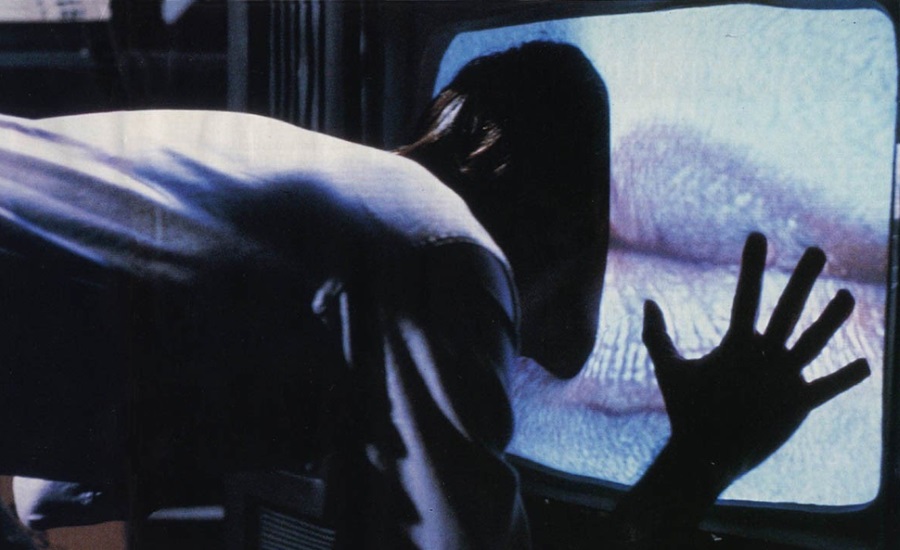
No film is so bad it’s good. Many psychotronic films are so good they are great, like Videodrome. Others are good solid films, like Don’t Look in the Basement. Many are riddled with problems but have so many touches of brilliance that they must be seen, like Death Bed: The Bed That Eats. But they are all enjoyable, unless what you think what is enjoyable is seeing the same thing you’ve seen hundreds of times before.

Toward a Definition of Psychotronic Film

Videodrome - Toward a Definition of Psychotronic Film

When Michael Weldon wanted to start his zine about unusual films, he stole a word made-up for a film he hadn’t even seen, The Psychotronic Man. The resulting zine was called “Psychotronic TV.” Later, it turned into an actual magazine called Psychotronic Video. It all ended in the publication of his classic book The Psychotronic Encyclopedia of Film.

Michael Weldon’s Definition of Psychotronic Film

But it is clear that Weldon was never clear on what exactly a psychotronic film was. In the introduction to his book, he provides something of a definition:

The Psychotronic Encyclopedia of Film celebrates over 3,000 movies often treated with indifference or contempt by other movie guides. Most of them are considered exploitation films. Some of them where made with such impossibly low budgets that they have never been released through regular channels of distribution. Many are now considered classics or cult films despite unfavorable critical response or initial box office failure. Critics searching for art condemn most of these features for the very reasons that millions continue to enjoy them: violence, sex, noise, and often mindless escapism.

That’s not a bad starting point for a definition.

Weldon Contradicts His Own Definition

But it’s hard to take seriously when you consider that a large chunk of the films in the book don’t qualify at all. For example, Dracula (1931 — English Language) was a huge hit with both audiences and critics. It was also a big budget film for its time and made by a major studio (Universal Pictures).

And Dracula is hardly alone. The same is the case for pretty much all of those early horror films. But it wasn’t just the early films. William Castle generally got good reviews and so did Roger Corman. What’s more, the book includes Disney movies like The Shaggy Dog (1959). It includes the Stanley Kubrick classics Dr Strangelove (1964), 2001: A Space Odyssey (1968), A Clockwork Orange (1972), and The Shining (1980).

It includes the Samuel Fuller classics Shock Corridor (1963) and The Naked Kiss (1964), both of which were extremely well reviewed and popularly successful. And the list could go on. So what the hell does Michael Weldon really think a psychotronic film is?

It Can’t Be Just the Films We Personally Like

It’s hard to escape the conclusion that for him, a psychotronic film is any film he likes. Or if you want to look at it more cynically, any film he had movie paraphenelia from that he could put in his magazine. Regardless, his idea of a psychotronic film is fuzzy at best, random at worst.

I’ve seriously toyed with the idea of taking the lead from Weldom and saying that a psychotronic film is any film that I don’t think other people appreciate enough. But I gave up on that idea because that would include pretty much every film I like. And as much as I love Dean Spanley (2008), it is not a psychotronic film.

But maybe it’s like obscenity: we can’t define it, but we know it when we see it.

I don’t think so. That’s too easy.

The Three Kinds of Psychotronic Films

The more I’ve thought about this question, the more I’ve come to see that there are really three kinds of psychotronic films:

  1. True Psychotronics: films with low budgets and crazy ideas about filmmaking. Examples: Glen or Glenda (1953) and The Evil Dead (1981).
  2. Independent Psychotronics: films with classic psychotronic themes (eg, horror, bikers) or other odd content generally made by established independent filmmakers. Examples: Shock Corridor (1963) and Videodrome (1983).
  3. Hollywood Psychotronics: films financed by large studios or distribution companies designed to co-opt true psychotronics. Examples: Close Encounters of the Third Kind (1977) and The Grifters (1990).

On this site, I’d like to focus on the True Psychotronics. But the truth is, the Independent Psychotronics are usually better. And the Hollywood Psychotronics are often excellent. (I’d much rather Hollywood co-opt True Psychotronics rather than yet another comic book or graphic novel.) Note that Hollywood rarely steals from the Independent Psychotronics because they really can’t do any better. For one thing, no studio is going to risk much more than the Independents use on an unknown property.

I like all of the films I mentioned above as examples. (Well, Close Encounters hasn’t aged well, but it’s gotten to the point of being campy, so it’s quite watchable.) This isn’t about liking or not liking a film. It’s about process and purity of vision.

No Conclusion

I intentionally titled this article “Toward a Definition of Psychotronic Film.” That’s because I haven’t finished this process. I may never. But I am getting closer.

There are a couple of things that are clear, however. The first is that Michael Weldon is useless in this quest. The second is that trite definitions like Google’s won’t do at all: “denoting or relating to a genre of movies, typically with a science fiction, horror, or fantasy theme, that were made on a low budget or poorly received by critics.” By this definition, Videodrome isn’t a psychotronic film. And if Videodrome is not a psychotronic film, no film is.

This discussion is not over.

Is It Time to Buy a Blu Ray Player?

I have avoided getting a Blu-ray player for years.

Why I Avoided Blu-ray All These Years

Almost a decade ago, I bought a laptop that just happened to have a Blu-Ray player in it and someone loaned me the first Despicable Me film on a Blu-ray disc, so I played it. Given the small screen size, the only thing I really noticed was that it loaded really slowly.

But there was another reason I preferred DVDs over Blu-Ray discs: DVD Shrink.[1] My preference is to put a disc on a hard drive and then just put the disc in my cabinet. I hate having to find any particular disc.

Is It Time to Buy a Blu Ray Player?

Digital Copies Don’t Cut It — Yet, at Least

I know: I can get digital copies. And as soon as digital copies come with all the extra features that the discs do, I’ll switch. But they don’t.

(Regardless, this is very important: don’t steal films. I could hardly give a jellybean for the lost revenue of Hollywood. But especially now, psychotronic filmmakers can only make films if we all buy them and don’t make or download illegal copies.)

As a result of this, Blu-ray was not a technology that I was keen on.

What Got Me Interested in Blu-ray

But I was at our only remaining video store (and the only one that was ever good), Video Droid. They were playing some film I don’t care for too much (which is unusual, because they have good taste). And I noticed that it looked particularly good on their enormous screen. So I asked the clerk, “Is that Blu-ray?” And she said, “Sure. The players are the same price as DVD players.”

That got me thinking.

There had been a little problem I’ve been running into recently: films on Blu-ray discs are often cheaper than films on DVD. And sometimes, you can only get things on Blu-Ray.

For example, Something Weird Video released The Blood Trilogy on Blu-ray (it says multi-format, but it isn’t — typical Amazon). That’s Blood Feast, Two Thousand Maniacs!, and Color Me Blood Red on a single disc! And when I bought it, it was only $9.99!

Well, that was it! I needed to buy a Blu-ray player. So I went over to Amazon and bought a refurbished Blu-ray player for just $36.99.

My Personal Blu-ray Problems

It turned out to be a bit more complicated for me than I had hoped. I had a monitor with a VGA and two HDMI inputs. So I figured there would be no problem. There was — but just one.

My monitor was so old that it didn’t have speakers in it. So I could watch Blu-rays, but I couldn’t hear them. So I bought a better monitor, with sound, for half the price I paid for my old monitor.

Success!

I was happier than a psychotronic film fanatic with The Blood Trilogy on Blu-ray and nothing to do all Memorial Day.

The great surprise is that even on my little 20", the picture quality is notably better. The sound is not as good as it could be, but sound on the films I most watch is usually the lowest quality aspect.

If You Can, You Should Get a Blu-ray Player

If you are poor, well, you’re poor. But if you aren’t, it’s time to trade in your old DVD player for a Blu-ray player. (Make sure it also plays DVDs, because sometimes — very rarely — they won’t, given it does require an extra laser.) It gives you more options.

And if you buy as few as a dozen films on disc per year, you will likely make your money back within too long. For example, right now, a new release of Bubba Ho-Tep on Blu-ray is available for half-the price of the original DVD. And it has a number of new extras, including a commentary track with Joe R Lansdale, who wrote the original short story. The price difference is well over half the cost of my new Blu-ray player.

DVD Is King — For Now

But yes, you can buy used copies. I’ve just had problems with used discs. People treat them like hell and they often skip or won’t play at all. And there is no point sending them back, because if you purchased a disc used, it’s because it was cheap. Are you really going to spend all that time and effort to send it back just to net $2.00?

DVDs are still king. And for the time being, you can often get very good deals on used copies. Used Blu-ray discs are still unacceptably expensive, but that will change.

I don’t care what the format is. My main problem with VHS is that almost all films were panned and scanned (the edges were cut off on anything other than films shot in 4/3 aspect ratio). Also: very rarely did they have any extras. Otherwise, whatever. You still need a VCR!

The Future Is Blu-ray

But I’m afraid Blu-ray is the future. And it’s reached the point where it will often save you money or allow you to get a film that you couldn’t otherwise.

A Blu-ray player is a good investment. And if you need to replace a DVD player, there’s no question: get a Blu-ray player.


[1] Be very careful if you try to download DVD Shrink. Most sites are just scams. You can spend hours trying to find the link to the program and only be taken to every other site imaginable offering you every kind of software imaginable.

The last release is version 3.2.0.15, although the install program will just say 3.2. Even Wikipedia, as I write this, lists a scam site for DVD Shrink. It is free software. If someone is trying to sell it to you, it is a scam. They will likely take your money and there is no assurance you will even get the software.

The link I provided is good as of the day this was published (27 May 2018). There is a simple link to “Download DVD Shrink 3.2.” If that page has become spam, use the Archive.org link on The Wayback Machine.

Note that DVD Shrink stopped development back in 2004 for legal reasons. So there is no point paying to “support” its development. Also, there are discs it won’t work on. What’s more, it’s use is illegal in some countries. It shouldn’t be. People don’t outlaw garden rakes just because you could commit a crime with them. But this is typical of the power that Hollywood has and our totally out of control copyright system.

What Is an Exploitation Film? Most People Are Wrong

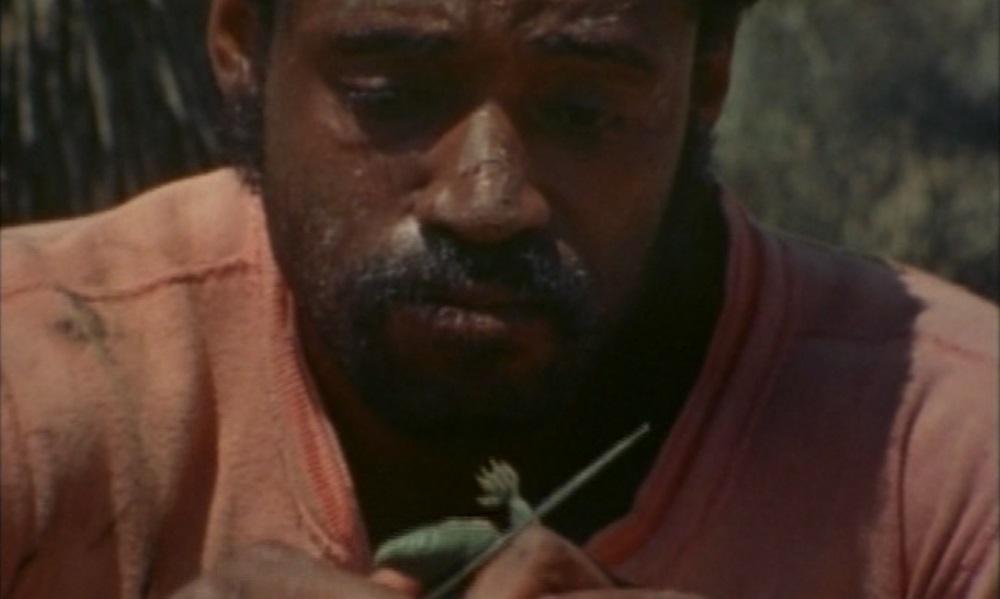
What Is an Exploitation Film? Most People Are Wrong - Sweetback Eats a Lizard

Sweet Sweetback’s Baadasssss Song launched the genre known as blaxploitation (can anyone explain that term to me?), which brought a slew of heroic black enforcers and sexy black women to the screen for the mass consumption of a large, previously ignored black audience.Marilyn Ferdinand

I can! But first we have to discuss what an exploitation film is.

I feel silly even discussing this issue because it seems so obvious to me. But based on many conversations with normal people (that is: people who aren’t psychotronic freaks like me), I know that most people think exploitation films are films that take advantage (exploit) the people in them.

What an Exploitation Film Is Not

It isn’t surprising they would think that given the years of nudie cuties and their followers that seemed mostly thin pretenses at showing off naked women. But even that is absurd. Do these people think the naked actors were kidnapped and made to perform in the films?

As I mentioned in Troma and Economic Inequality, the star of the film made half as much money as his female co-star because she did a number of topless scenes. That was true then too. I’m all in favor of trading in our capitalist system for something more humane, but the system is what it is. Don’t blame the people who have no choice but to live under it.

What an Exploitation Film Is

So what is an exploitation film? It’s a low-budget film where the filmmakers exploit whatever they can to make their film’s successful (often to get them made at all). It’s like Babes in Arms, “My pa’s got a barn; let’s put on a show!” The filmmakers are exploiting, as Herschell Gordon Lewis put, “Something the studios couldn’t or wouldn’t do.”

So if you have a thick forest in your backyard and friend who owns a gorilla suit, you might be able to make something like Bride of the Gorilla (which is a really good film). Or if you’re in a biker club (I don’t think they call them gangs anymore), you could make a biker film. Or whatever.

The Best Thing to Exploit

But the best thing to exploit is your own creativity. Certainly that’s what Lewis and David Friedman exploited in Blood Feast. It wasn’t the gore that made that film half almost a 20,000 percent return on investment in its initial run. It was that no one had seen anything like that before.

And that’s what brings us to Ms Ferdinand’s question about blaxploitation.

What Were the Blaxploitation Films Exploiting

Perhaps no other form of exploitation filmmaking has as bad a rap as blaxploitation. This goes back to the bare chested women in the nudie cuties. People tend to think that black people were being abused.

Quite the opposite was happening. In the late sixties filmmakers started thinking that just as sex and gore appealed to people in the southern drive-in circuit, films that focused on black heroes just might appeal to urban blacks. And they were right.

Blaxploitation Never Ended, It Went Mainstream

It’s funny that people talk about blaxploitation films ending by the mid-1970s. That really isn’t true. They were simply taken over by Hollywood, which began making movies targeted directly at blacks. True, those films have no political resonance, but then the Black Panthers are long gone and Black Power is more quaint than threatening. (That’s not to say that whites aren’t still terrified of blacks; just look at the hyperbolic denunciations of Black Lives Matter.)

Another Idiot “Critic” Doesn’t Know What “Exploitation” Means

Interestingly, Roger Ebert wrote that Sweet Sweetback’s Baadasssss Song wasn’t an exploitation film. As people who have read me a long time know: I hate film “critics.” They’re idiots who watch a film once and then presume to judge the work that was the result of at least dozens of people and months of work (more likely hundreds of people and years of work).

But Ebert was always held up as somehow a good critic because, I don’t know, he wrote a middling screenplay for Russ Meyer and read a book on film history? His claim that Sweetback isn’t an exploitation film is betrayed by almost every sentence in the article (it’s a “review” of Baadasssss!). He had a 13-year-old son he could use for a sex scene (that I think could have been a lot shorter — it is disturbing), so he did. He had black friends so his crew could be all black, so he did.

Sweet Sweetback’s Baadasssss Song Was Exploitation Filmmaking

The truth is that Sweetback simply as cinema is an art film. (It has almost no transitions; little plot; and is mostly interested in experimenting with the interaction between music and visuals. It is also brilliantly edited, but in a way that will confuse and annoy most viewers.) But it is an exploitation film because of the way it was made, why it was made that way, and how that affected the audience.

Contrary to what a lot of people think, Sweetback was not the first blaxploitation film. But to my mind, it is the most true blaxploitation film: a film by blacks, for blacks. Many blaxploitation films were made by whites. But white, black, or green, these filmmakers were exploiting the fact that a significant part of the country had been largely ignored by the film industry, because the Big Brains in Hollywood were too stupid or bigoted to realize that blacks might like to see movies that reflected their lives and dreams.

Exploitation Is a Good Word In Film

Exploitation films are made by people who are smart, creative, and driven. I’ll pick an exploitation film over a Hollywood film any day. That’s a big part of what this site is about. Hollywood has the money to buy all the professionals they need to make a film. Independents have to live by their wits. Hollywood just makes what it’s made before. And it depends upon the exploitation filmmakers to add some new DNA to their commodities — by stealing it.

So to answer the original question simply: “blaxploitation” is a genre of film featuring black heroes, made explicitly for black audiences, who had been ignored by the studios.

How to Count IMDb Credits: It’s Harder Than You Think

William Kerwin - How to Count IMDb Credits: It's Harder Than You ThinkI have highly mixed feelings about the Internet Movie Database (IMDb). I have since the beginning. Soon after it appeared on the web, I wrote to them, begging that they do credits properly. It bugged me especially that they didn’t list screenwriters in credit order. It also bothered me when they started adding a bunch of (uncredited) entries. That’s fine for a minor actor that you can see in the film. But just because a screenwriter was paid to write a draft or punch up a script doesn’t mean a single word or idea made it into the final script. Leave it to the WGA to work out. That’s a big part of what they do.

And there are other problems with IMDb. The biggest is just how cozy they are with Hollywood. All the ridiculous, overblown advertising. And it bugs me that now the studios just feed them their complete credits. Certainly, it makes the site more efficient and profitable. It also makes the site less human and fills it up with a lot of garbage credits (the Hollywood style). And the site has shown no interest and going back to old and odd films and filling them in and correcting errors.

IMDb’s Biggest Practical Problem

But the biggest practical problem I have with IMDb is the way they list credits. And I’ll explain with character actor William Kerwin, but this is true of almost anyone who worked in any capacity in television. If you check IMDb, it says he has 132 acting credits: films and television shows. And that’s the killer. Because a film is equivalent to an episode of a television show, not the whole series. I’ll come back to Kerwin in a moment.

Consider Robert Clary, the actor who played LeBeau on Hogan’s Heroes. According to IMDb, he has only 22 credits! Yet he’s actually been in 219 films and television episodes. And in most of those he was a major part of the cast.

Now I know a lot of people think that television is very different than film, but it really isn’t. That’s especially true for character actors. Regardless what they’re in, they are usually going to be working for a day or two. So whether on film or television it doesn’t matter.

For the technical people, television is generally easier because the shows are shorter and they have established sets and so on. So directing for television shows is a whole lot easier. (Note: directing a television movie is in no way different than directing a theatrical film.)

I’m usually looking at actors and I want to have an idea of how much they’ve worked. And that “credits” number is often wrong.

How to Fix IMDb’s Credits Problem

But there is a relatively easy way to make the correct calculation. Scroll through all of the titles that the person has worked on. Make a note of any television show they were on more than once. In each case, note down one less than the number of episodes they were on. Add all these up and add them to the number IMDb reports as “credits” and you have the actual number of films and television episodes they worked on.

So returning to William Kerwin, we have Adventures of Wild Bill Hickok (5), Play of the Week (2), Lancer (6), Blind Ambition (4), and Romance Theatre (5). So that’s 4 + 1 + 5 + 3 + 4 = 17. So we add 17 to the IMDb credits total of 132, and we get 149.

This Matters

I picked Kerwin both because of his association with Herschell Gordon Lewis, but also because he never starred in a series or played many recurring characters. So it was an easy example.

But this has always bothered me. In his case, it isn’t that big a deal: 132 vs 149. But in the case of Clary, it’s huge: a difference of almost 200: 22 vs 219. Or consider Valerie Harper, who has 70 “credits” but starred in 110 episodes of Rhoda alone. Or Julie Kavner with 69 “credits” but 110 episodes of Rhoda and 643 episodes of The Simpsons.

So this can be a very big deal. And since Psychotronic Review takes film (especially low-budget film) very seriously, we will always provide the right number and not just take IMDb’s lazy and offensive number.

James Cameron: No Actor’s Director

The TerminatorI have had various connections to Hollywood in my life. And I’ve come to see it as an awful place. It is offensive that “normal” (non-Hollywood) people get so excited about celebrities. I was once a minor celebrity, so I saw it from the inside. And it was pathetic. These people thought I was super cool, but I was just the same loner nerd I had always been.

So I thought that people in Hollywood would be lackadaisical about stars and directors and such. No. It’s the opposite. They are even worse than people outside that dysfunctional environment. If David Foster Wallace can be believed, the porn industry is much more mature. And most successful stars and directors (and studio heads and on and on) are very much in agreement. They’re great!

Normal People vs Hollywood “People”

But I never got that from Herschell Gordon Lewis or David F Friedman, men who actually changed the way films were made. They have a humility that’s, well, human. (They’re also assholes, but that’s another issue.) Maybe those people who believe in alien lizards living inside human “suits” are right. If they are, all those alien lizards live in Hollywood.

There are so many examples I could use, but today I want to talk about James Cameron because it really shows off not just his horribleness but also his conviction that he is never at fault. He’s like God, if it’s good, he gets credit. If it’s bad, it’s on someone else — maybe all of us.

It Came From a Commentary Track

I am something on a connoisseur of commentaries on films. Of course, most are quite awful because they are done by directors who are surprisingly ignorant of how movies are made (at least big-budget Hollywood directors). Generally, I would rather listen to a writer or a historian discuss a film. But when it is a director, you often get to see what jerks they are.

(I recently listened to John Carpenter do a commentary on the great In the Mouth of Madness with cinematographer Gary B Kibbe, and Carpenter was so nice about including Kibbe, it was charming. But then, Carpenter isn’t a Hollywood kind of guy.)

Enter James Cameron

Many years ago, I listened to the commentary for Terminator 2: Judgment Day. It includes Cameron and screenwriter William Wisher. And during it, Cameron really shows the dick of Hollywood legend that he is. It is amazing to listen to Wisher play omega to Cameron’s alpha. I know they are friends. But that makes it even more sad, because Wisher is as much a professional in his field as Cameron.

I felt sorry for Wisher but mostly it just made me think that James Cameron was an awful person.

Cameron Blames Bad Actors

I think the problem is that James Cameron didn’t care about the scene and didn’t really try. So he blames the actors.

One moment in the commentary really stood out.

Cameron mentioned that there was a deleted scene at the end of The Terminator where two guys from Cyberdyne Systems pick up a chip from the remains of the terminator.

He said (more or less) that the scene was deleted, “Frankly, because the acting was terrible.” My first reaction was (and I’ve had this with many directors), “Doesn’t he fear that the actors he’s talking about will hear about this and feel bad?” In Cameron’s case, of course not! Who in the world matters but James Cameron?

My second reaction was: I’ve got to see that deleted scene. I had to see what God James Cameron thought of as terrible acting.

The Bad Acting Cameron Had No Control Over

Well, here it is, all 33 seconds worth:

He’s right: the acting is weak. But it isn’t bad. And I certainly don’t present it as, “Hey: look at the bad acting!”

Acting on film depends upon a whole lot more than just the actors. And most actors get it wrong a lot more than they get it right.

How the Acting Could Be Improved

This scene strikes me as awkward more than anything else. Certainly a few more takes and, you know, some direction, and a perfectly acceptable performance could have been squeezed out of these actors.

Notice something else about the scene: the blocking is terrible. The whole scene, in addition to everything else, is boring.

I think the problem is that James Cameron didn’t care about the scene and didn’t really try. The fact that he wants to blame the actors makes him a terrible person and it really makes me question him as a director. I get the idea he depends a lot on other professionals (especially editors) to make his films work (when they do).

Afterword

A similar dynamic is going on in a deleted scene from Remains of the Day. But James Ivory is enough of a man to place the blame on himself. He admits that he didn’t want to shoot the scene and only did it because Anthony Hopkins insisted. As I recall, he said, “I didn’t really try.”