Alice in Wonderland

Alice in Wonderland: Good If Meaningless Fun

Alice in Wonderland

Disney released Alice in Wonderland on 28 July 1951 but held its premiere two days earlier in London.

It was during what I think of as the second phase of the Disney animated features. It’s still a wonderful film. But it doesn’t have the grit of early films like Snow White and the Seven Dwarfs and Pinocchio.

I understand the desire to bring Alice’s Adventures in Wonderland to the screen. It has so many cool characters and ideas. But there really isn’t much of a story. “Girl has colorful dream.” And she wakes up just when we start to get some conflict.

Don Quixote has had a similar problem over the years. Gustave Doré illustrated a French translation of the books much later. Today, they are more iconic than the books. And filmmakers seem more interested in them than the story. I believe that’s why most Don Quixote films fail. (Probably the best is The Man Who Killed Don Quixote but it really isn’t a telling of the story and again is more about Doré than Cervantes.)

But I think Alice has received better treatment in film. This version stays very close to the book. The book is a romp and the film is a romp. If you don’t like it, I fear you are dead inside. (Or you’ve watched it too much!)

I rather like the Tim Burton version. I think Linda Woolverton’s screenplay is brilliant in making the book background. Alice is older and she thinks she dreamed of Wonderland only to learn that it was all real! In this way, the two films would work well as a double feature.

If you want to watch it, Alice in Wonderland is available to stream on Disney+. I certainly don’t think it is so great that one must watch it. But it’s pure pleasure. I think of it more along the lines of Fantasia than Lady and the Tramp. It’s more a visual delight not really an engrosing story.

Here is the trailer for the original release:


Alice in Wonderland via Wikimedia under Fair Use.

Keenan Wynn

Keenan Wynn: So Many Psychotronic Delights

Keenan Wynn

Today, 27 July, is Keenan Wynn’s birthday. He was born in 1916 and died just over 70 years later. He continues to be one of my favorite character actors.

His father, Ed Wynn, was arguably more famous: a vaudeville comedian who then became very popular in radio and films. If you watch old comedies, you know him. If nothing else, you probably know him from the second episode of The Twilight Zone, “One for the Angels.”

Keenan’s full name was Francis Xavier Aloysius James Jeremiah Keenan Wynn—you can see why he shortened it.

Because of his father’s fame, Wynn did not live the most exciting of lives. There are no great stories of his rise to fame. He got work. He was good so he continued to get work.

One interesting thing about Wynn is that his first wife, Evie Wynn Johnson, left him for Van Johnson. Kind of. It appears their relationship was crumbling, so the studio got her to marry Johnson to put an end to rumors that Johnson was gay.

Of course, Johnson was gay, although they did manage a child (but who knows). You see how it is with Keenan Wynn? There was always a lot more around Wynn’s life than in it.

Wynn started on Broadway where he worked from the mid-1930s through the beginning of the 1940s. Then he worked in films, doing bit parts into the mid-1950s. From that point on, he did mostly television, but still a fair amount of feature film work.

Most notably, he played the simple-minded Colonel Bat Guano in Dr Strangelove. He was also in a number of those Disney live-action films that I loved as a kid. In the end, IMDb lists 283 total credits (that includes 25 episodes of Troubleshooters, 9 episodes of Dallas, and 22 episodes of Call to Glory).

Wynn also starred in a lot of exploitation films later in his career. I want to highlight one of those films here: Parts: The Clonus Horror. It’s one of those films I discovered via MST3K and got annoyed because they wouldn’t shut up.

In 2005, it was effectively remade as The Island. I liked that film although it’s over-long because of endless Michael Bay action sequences. The producers of Parts sued DreamWorks, who settled out of court. The truth is, The Island is just a less-believable version of the film.

Watch Parts: The Clonus Horror now for free:


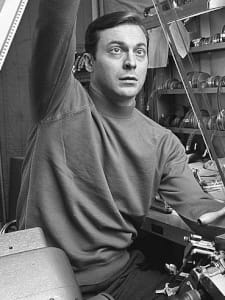
Publicity photo of Keenan Wynn via Wikimedia. It is in the public domain.

James Best in The Killer Shrews

James Best: More Than Sheriff Coltrane

James Best

James Best was born on 26 July 1926.

He is best known for his role as Sheriff Rosco P Coltrane, the sidekick of Boss Hogg, in The Dukes of Hazzard. Even though it aired during my prime TV-watching years, I never saw the show. When I was young, I was a pretty bad bigot toward the South. I’ve tried to make amends but none of that has resulted in my watching the show.

I have, however, become a big Ma and Pa Kettle fan. Those films are often shockingly funny. And James Best at 26 years old played the romantic lead in Ma and Pa Kettle at the Fair. He was then, and throughout his life, very attractive. And he was a good actor to boot.

But psychotronic fans know James Best for one film in particular: The Killer Shrews. I have tended to dismiss this film. But as is often the case, this was only because I had seen such bad prints. Also, I was probably introduced to it through Mystery Science Theater 3000, which always tends to taint one’s opinions.

Best plays the typical All American Man in the film. But unlike most such characters, he actually comes off as charming. The problem with the film is Ken Curtis’ part. He’s the Cowardly Evil Man. His performance is fine but the screenplay makes him a one-note character who doesn’t even get a heroic death with redemption.

James Best had a huge career. He has 188 credits on IMDB, one of those is 141 episodes of The Dukes of Hazzard. One of his last roles was playing the same character (Thorne Sherman) in Return of the Killer Shrews, which I haven’t managed to see yet. People seem to hate it so I’m keen to check it out!

Until then, you can watch the original for free via Archive!


Image of James Best via Wikimedia. It is in the public domain.

Maximum Overdrive (1986)

Maximum Overdrive Sputters Into Theaters

Maximum Overdrive (1986)

The De Laurentiis clan brought Maximum Overdrive into US theaters on 25 July 1986. I don’t like to be harsh so let me turn this over to Michael J Weldon in The Psychotronic Video Guide:

This slow-moving and slow-witted tale of what happens when a comet causes machines to attack people in Wilmington, North Carolina, is based on Stephen King’s short story “Trucks” (in the Night Shift collection).

Emilio Estevez plays a young cook at the Dixie Boy truck stop, run by cruel Pat Hingle. Laura Harrington is good as a pretty, independent-minded hitchhiker who keeps changing from skirts to pants while driverless semis circle the Dixie Boy and terrorize the stupid characters trapped inside. It takes them forever to find the weapons (In the basement!) and make their escape.

Originally given an X rating by the MPAA, Overdrive was heavily edited before its theatrical release, removing most of the gore scenes that might have given it a reason to exist.

Deaths caused by a streamroller and by soft-drink cans are supposed to be funny. Another hoot is a character staring into the end of a malfunctioning gas hose and getting an unleaded flood in his face.

The only black actor in the cast, Giancarlo Esposito, is a looter. Maria Maples (!) is a victim. This is one of the movies, along with King Kong Lives! and The Million Dollar Mystery, that put Dino De Laurentiis’ American-based DEG company out of business.

King (who makes a cameo appearance) said, “I may have made the modern version of Plan 9 From Outer Space.” Actually, Ed Wood’s famous “bad” movie is funny, fascinating, and unique. This one is none of these things. Fans of AC/DC should know that only parts of the band’s songs can be heard during the movie. Look for a great soundtrack album, Who Made Who, though.

You can watch Maximum Overdrive on Plex. But Trucks is a far better version of this story. It is also available on Plex.


Maximum Overdrive (1986) poster via Wikipedia under Fair Use.

Superman IV: The Quest for Peace

Superman IV and the Silliness of Superheroes

Superman IV: The Quest for Peace (1987)

People hated Superman IV: The Quest for Peace when it arrived in theaters on 24 July 1987. And that means I have to defend it. Kinda.

To be honest, I don’t mind people hating this film. I just think it is odd that they loved Superman and Superman II. All these films are just silly fun.

And this is my general issue with superhero films. People take them way too seriously. I don’t get it! If I were bit by a radioactive spider, there are any number of things I might do. But I would not dress up like a spider! And in the case of Superman, we can see his face! People joke about the Clark Kent glasses, but that’s not really it. Rather, no one realizes he is Superman because of his shyness, halting speech, and posture. But I know from experience that if you get a bit of booze in me, I can be the life of the party. When this happens, no one says, “Hey! Where did Frank go?!”

This is not to put down films like The Dark Knight. But can’t we all agree that we are just pretending to take this stuff seriously? It is no less silly than any of the Christopher Reeve Superman films. But it isn’t surprising because at the time people did take the first two films seriously. And that’s why they were so unhappy about Superman III and really unhappy about Superman IV.

Consumers of narrative art make a deal with it: set up the world and I’ll go with it. This is one reason people hate “It was all a dream!” endings. They break the deal.

And maybe Superman IV does break the deal. It doesn’t do it with itself. From the very first sequence in the film, it is clear that this film is going in the Batman TV series direction. And it is certainly no sillier than the previous film.

With all that in mind, I think Superman IV: The Quest for Peace is an enjoyable romp. And you can watch it now for free:


Superman IV: The Quest for Peace (1987) poster via Wikpedia under Fair Use.

The Haunting (1999)

The Haunting and Big-Budget Horror

The Haunting (1999)

The Haunting was released on 23 July 1999. Normally, I wouldn’t be talking about it in an anniversary post. But there really is nothing else good today that relates to psychotronic film. And I like the film well enough.

In particular, Lili Taylor is wonderful in the lead role. And it provides a very compelling story — a surprisingly close rendering of The Haunting of Hill House (though not as close as the 1963 film) with a wonderful back story. Creepy moments abound in the first half of the film. It’s only in the second half that it becomes less compelling.

But I always applaud big-budget horror films. Hollywood has sadly neglected the genre. But there is a catch: horror rarely needs a large budget. In this case, a fair amount of money went to the sets, which are fabulous. I don’t like it when horror films take place in suburban houses, which I understand is often necessary with a low budget. So any money spent on a great location — especially for a haunted house film — is good!

Hollywood wastes a lot of money on special effects in horror films. Look at the scariest part of The Others — just a knock at the door! (As I recall, they spent half the budget to create the fog.) Excellent film, by the way. You should definitely watch it!

This is where there are problems with The Haunting. I would bet that David Self’s first draft was better. The producers seem to be flushing their special effects budget on a number of scenes in the last half hour. The film is, at that point, more action than horror.

But again: that’s a small price to pay. The first half of the film is excellent. And despite the ending getting tedious, the mystery unfolds well.

Should you run out and watch it? It’s a solid haunted house film, so I say yes. Here it is:


The Haunting (1999) poster via Wikipedia under Fair Use.

Plan 9 From Outer Space

Plan 9 from Outer Space

Plan 9 From Outer Space

Plan 9 from Outer Space was released on 22 July 1959.

People love to mock it as “the worst film ever made!” But in The Fifty Worst Films of All Time, there is no mention of the film — or even Ed Wood. The Golden Turkey Awards (the follow-up) named it worst ever — but only based on a ballot of readers for the first book.

Regardless, I can’t take such complaints seriously. I have met relatively few people who have seen the film. Most people have simply heard that it is terrible. Or they’ve just seen Ed Wood.

Don’t get me wrong. It’s not a great film. But it has far more creativity than a lot of films people think highly of. As I wrote a few years back, “It’s still better than any sequel to Iron Man.”

I love that Wood does a great job of making the space aliens sympathetic. Their cause is just! But he still ends the film in a traditional way but with the understanding that the universe is on the verge of annihilation because the aliens could only manage to reanimate 3 corpses over the course of 80 minutes!

The film also renders some very effective moments. Vampira, in particular, is great every time she’s on the screen even though she never talks. And all the reveals of the corpses after the aliens remove the “long-distance electrodes shot into the pineal and pituitary glands” work great.

You owe it to yourself to watch Plan 9 from Outer Space on its 66th birthday. That’s especially true if you haven’t seen it before. Go ahead and laugh at the tombstones. Roll your eyes at Criswell’s portentous narration. Titter at the irrelevant action and dialogue. But pay attention! Because Ed is in a hurry and will not explain twice. For example. Bela Lugosi dies offscreen with only sound effects and you get about two seconds to notice it.

With this in mind, enjoy this excellent print of the film from Archive:


Plan 9 From Outer Space poster is in the public domain.

Living in Oblivion (1995)

Living in Oblivion

Living in Oblivion (1995)

Living in Oblivion was released on 21 July 1995.

It is an independent film about independent filmmaking. Would-be filmmakers of my generation love this film.

I watched it right around this time at Cinema 21 in Portland, Oregon. At the time, I was trying to make a film. I thought it was so inspiring. When I got home, I got a call from an actor I was working with. He said, “Drop everything! You have to go watch Living in Oblivion!”

The film should not inspire anyone! Parents ought to use it to discourage their film-curious children. But I think it inspires because it is so accurate. It explains why films take so much time to make. Because everything goes wrong. All the time.

The film also has an interesting production history. It started as a short film and was expanded into a feature by creating two variations of the original. Long-term, I think this weakens the film. In particular, the third part negates the second part. And the “happy” ending seems kind of tacked on.

The film really launched two acting careers. Catherine Keener (Get Out) certainly had a career but it was mostly bit parts. After this, she exploded. Peter Dinklage (I Care a Lot) had basically no film credits at the time and, well, now he’s Peter Dinklage!

I revisit Living in Oblivion every couple of years. I especially like the second part and the performance of James LeGros. And you can watch it right now, commercial-free, for free on Archive:


Living in Oblivion (1995) poster via Wikipedia licensed under Fair Use.

Die Hard (1988)

Die Hard and the Problem of Franchises

Die Hard (1988)

Die Hard was released on 20 July 1988.

It’s a remarkable film. But the terrible franchise it spawned is clear even in this film.

What makes the film great is that John McClane is just a regular cop. All he’s trying to do for the first half of the film is get the attention of the local police. They will deal with the issue. It is only when they fail so spectacularly that he becomes the “die hard” badass we now love.

Die Hard 2 maintains some of that “I don’t want to be here” energy from the first film. There is even a bit of this left in Die Hard with a Vengeance. But this is only because he is badly hungover. But the mask is fully offer in the fourth film, Live Free or Die Hard: John McClane is a superhero. He is the Badass. Do not blame him for being a total dick! Finally, A Good Day to Die Hard is explicitly racist but most American film-goers can’t see it.

I’ve said before that the only point of having franchises is to make films with characters we love. But John McClane isn’t a character. Laurie Anderson talked about his kind of character in “Big Science,” where she said, “I think we should put some mountains here. Otherwise, what are all the characters going to fall off of?” His character is whatever is necessary for the plot.

Another problem with the later films is that they make no effort to create good villains. Alan Rickman provided a horrific yet enjoyable villain. None of the other films feature even a memorable villain, much less a good one.

But coming up with new stories is hard. Coming up with new characters is hard. Coming up with new ideas is hard! We only pay Hollywood producers millions of dollars. We must allow the slow drip of ever more tedious films based on existing intellectual property. Anything else would be cruel!

The producers of Die Hard made an amazing amount of money. This explains why, after almost 40 years, the owners still have the film locked down. You won’t find it even on small streaming sites. But it is currently streaming on Amazon Prime if you are keen to watch it. Alternatively, you could watch Theatre of Blood, which stars Diana Rigg who was born on this day. It is available on Plex and Darkroom.


Die Hard poster via Wikiedpia licensed under Fair Use.

The Conjuring (2013)

The Conjuring: Curse of “Based on a True Story”

The Conjuring (2013)

The Conjuring was released on 19 July 2013 throughout the United States.

I haven’t seen it. The first trailer looked really good but it includes those five dreadful words: based on a true story.

There are two major issues with films based on a true story:

  1. If the story is really true, the film will distort it because real like doesn’t unfold with dramatic structure.
  2. The true story is probably not true anyway.

The first point applies to bio-pics and historical dramas and similar properties. Even when the films stick close to the facts, I find it harms the viewing experience because I can’t focus on the truth of the story because there are, in fact, two truths.

The second point bothers me more. It is horror films that usually suffer from this. My problem with this is that the plots can’t unfold as completely as a film that is just made up. (Disregard films like The Texas Chain Saw Massacre, which only pretends to be based on a true story.)

I had this experience recently. I was keen to see The Pope’s Exorcist. As many of you know, I love Catholic-themed horror. It’s just so old and creepy. I’m sure you could create a Jehovah’s Witnesses-themed horror film. But it would come off more like Nordic folk horror. Regardless, there would be too much lighting!

The film starts with a quote, “When we jeer at the Devil and tell ourselves that he does not exist, this is when he is happiest.” Father Gabriele Amorth, “Chief Exorcist of the Vatican, 1986 – 2016,” said this. That’s a more subtle way of saying, “Based on a true story.” The following 5 minutes of film were thrilling but after that it was fairly dull so I gave up after a half hour.

And so it is with The Conjuring. Looking at a later trailer, we see the narrative goes outside the home and introduces the real-life “investigators” Ed and Lorraine Warren. So we get less time in the haunted house, and those scenes look really good! But they have to do it this way to keep it “true,” even though it’s all nonsense.

I assume producers put “based on a true story” in their films because it attracts viewers. I’ve known a number of people who feel this way. But I don’t believe in ghosts so it hardly helps that a film is based on “some rubbish gullible people believe.”

Films that claim to be based on a true story are weaker than they should be because the “true story” element supposedly makes them more compelling. This is why found footage films imply they are real. But I forgive them because they aren’t claiming to be based on anything; they are claiming to be the thing.

Regardless, there are a lot of “based on a true story” films that I’ve liked. I just wish we could get beyond making the claim. It diminishes the films that use it.

So, should you watch The Conjuring? I’m planning to do so as soon as I find a free copy. But until then, I do enjoy this one trailer:


The Conjuring (2013) poster via Wikipedia under Fair Use.