Category Archives: Anniversaries

Hellraiser - Clive Barker

Clive Barker Has Directed Only 3 Films

Clive Barker

Clive Barker is 73 today. He was born on 5 October 2025.

Barker is amazing in one way, especially. He makes visually interesting films even though he’s really a novelist. Of course, I think the same about William Peter Blatty.

I’ve never seen a Clive Barker film that I didn’t think wasn’t worth making. Unfortunately, I also rarely enjoy his films. Of course, he has only directed three feature films. It seems like more. That’s branding, I’m afraid.

Barker is able to create a general feeling of dread. He does this in part by creating memorable, grotesque images. Pinhead is a good example of this. But it also highlights why I don’t connect with his films. His images are so outside my experience that I can’t relate.

But I can see why people love his work. And he deserves to be admired. There are a lot of filmmakers I love who make crap. It stands to reason that it would work the other way around.

But now I have a problem. Should I choose Hellraiser, Nightbreed, or Lord of Illusions? The second two are weaker. But hasn’t everyone seen the first?

If I had my druthers, I’d pick Candyman. But he didn’t direct it; he wrote the story it is based on. So I don’t think it matters. I would like to see Hellraiser again. So that’s what we get!


Image cropped from Clive Barker by Steven Friederich under CC BY 2.0.

Attack of the Killer Tomatoes

Attack of the Killer Tomatoes — Not What You Think

Attack of the Killer Tomatoes

NAI Entertainment released Attack of the Killer Tomatoes on 4 October 1978 in the United States.

When I was in high school, this film was iconic. But no one I knew had seen it. It just had a very memorable title. I assumed it was a cheeky parody of a 1950s science fiction monster movie. And it is. But I was surprised when I finally saw it. It’s much closer to The Kentucky Fried Movie and the later Airplane! than it is The Rocky Horror Picture Show.

Attack of the Killer Tomatoes will do anything for a laugh. And this gets in the way. It especially gets in the way when the humor is more obscure. And it is often very obscure. But the film keeps its momentum throughout.

But Killer Tomatoes is amazing in one way especially. They made it for $100,000 — maybe less. Some of it shows. The sets are hotel rooms and college multipurpose rooms. But it features amazing crowd scenes. It also features a great scene when the army is attacking the tomatoes.

Attack of the Killer Tomatoes features a mostly amateur cast. There are exceptions. Jack Riley has a small role in the film. You will remember him as Elliot Carlin on The Bob Newhart Show. But he was already a very successful TV actor at that time. Eric Christmas is also in the film.

Most of the less experienced actors are fine. And even when the acting is sketchy, it still works. Sharon Taylor is especially weak. Yet she works for the role.

“Critics” didn’t like the film at the time. Even Michael Weldon said that although parts were funny, “it doesn’t really make it as a midnight cult film.” And he was right. It never did become the kind of cult film you would expect. And that probably explains why “critics” today also don’t like it.

But I don’t think there is any doubt. It’s a fun film as long as you get past your predetermined idea of what it ought to be. So let’s watch Attack of the Killer Tomatoes to celebrate its 47th birthday!


Attack of the Killer Tomatoes poster via Wikipedia under Fair Use.

The Last Lovecraft: Relic of Cthulhu

The Last Lovecraft: Relic of Cthulhu — Fun Over Genius

The Last Lovecraft: Relic of Cthulhu

The HP Lovecraft Film Festival premiered The Last Lovecraft: Relic of Cthulhu on 3 October 2009. Other than film festivals, I don’t think the film ever got a proper theatrical release.

I love this film. It is so much fun. Outlaw Films made it on a shoestring. That is probably why no one has seen it. Most people only watch well-advertised films.

Regardless, The Last Lovecraft brings up an interesting question. Why is Lovecraft’s work the basis for so many great films? It’s similar to Philip K Dick. Both writers had good ideas. Neither was a very interesting writer.

Not that The Last Lovecraft takes that much from the author. Basically, it just grabs the fish-based mythology. And it doesn’t have nearly the budget to do more than putting a silly mast on Star Spawn.

Lovecraft inspired technically better films. In particular, there are Re-Animator and In the Mouth of Madness. But neither of these nor any others are any more fun than The Last Lovecraft.

The film stars Kyle Davis and Devin McGinn. The latter also wrote the script. But the standout here is Barak Hardley. This is the first film I saw him in. But I’ve seen him in much more since. In particular, he has a great section in The Mortuary Collection. He’s also been in a series of commercials. Why? Because he is the perfect uber-nerd. Guys like me identify with him.

The Model II Uber-Nerd, Martin Starr, is also in this film. But he has a small part. He’s also done a lot of commercials.

Anyway, if you like psychotronic film and fun, you need to watch The Last Lovecraft: Relic of Cthulhu. Unfortunately, I don’t have a commercial-free link to the film. You will need to watch it on Plex. But here’s the trailer:


The Last Lovecraft: Relic of Cthulhu poster via Wikipedia under Fair Use.

The Marx Brothers - Animal Crackers - Groucho Marx

Groucho Marx and His Uneven Films

Groucho Marx

Groucho Marx was born on 2 October 1890. He was born Julius Henry Marx. Groucho was his stage name from fellow performer Art Fisher, who coined all the brothers’ names. Groucho is the only name that made much of sense. His character wasn’t grouchy exactly — more caustic. But it’s close enough.

Of the main three Marx Brothers, Groucho was the youngest. It seems odd. But it is probably due to his tendency to play older characters. He was also the biggest star of the group.

The Marx Brothers started as a musical act. And you can see that later in their films. I do like Groucho’s funny songs and Chico’s circus-like piano playing. I could do without Harpo’s harp act. He was very good but… You know, harp. The singing and piano playing was at least amusing. The harp scenes just killed the comedic momentum.

In total, the Marx Brothers made 14 films. They all featured the older three brothers. Zeppo was in the first five of the films. Gummo wasn’t in any of the films. He didn’t like performing but went on to be a talent agent, later representing Groucho.

I have always loved Groucho Marx. I even enjoyed reruns of You Bet Your Life when I was a kid. But I loved him then and now mostly for the films. Not that the films are great. They are normally filled with boring romances featuring unremarkable characters. Margaret Dumont was the only non-brother to stand out in the films. She was in seven of them.

The best things in the movies are Groucho’s scenes with Dumont and Chico. They still make me laugh.

People have their favorite Marx Brothers films. And I’m not here to say they are wrong. Well, they are wrong about Duck Soup. Not because the film is bad but because it almost certainly indicates that they were told by modern “critics” that it is “great.”

Regardless, my favorite today is the same as it was when I was a kid. So let’s celebrate Groucho Marx by watching Animal Crackers.


Groucho Marx image via Wikipedia. It is in the public domain.

Galaxy of Terror

“Galaxy of Terror”: Better Than “Alien”?!

Galaxy of Terror

New World Pictures released Galaxy of Terror on 1 October 1981 in the United States. It only ever got a limited release.

I’ll be honest. This film is a rip-off of Alien. Yet it’s really good. Of course, “critics” generally hate it. Of course they would! Can’t appreciate a low-budget version of a beloved earlier film!

But it’s more than just Alien. It influenced Aliens. This is not surprising. James Cameron was second unit director and co-production designer.

What I most like are the practical special effects. Alien gets by without much because the whole thing is so dark. (Obviously, John Hurt’s chest explosion is the exception.)

But I understand why many don’t like this film. A lot of it is less realistic than Alien. But it ain’t like this earlier film couldn’t use a bit more color!

Strangely, director Bruce D Clark never directed again. And he never directed horror or science fiction. It goes to show: a film is a film is a film. I assume he just got tired of working on these films. But he did come back to produce a couple of direct-to-video films in the 1990s. Both were filmed in Washington state so I assume he retired up there. I hope he’s well!

Anyway, enough talk! Let’s watch this underappreciated gem:


Galaxy of Terror poster via Wikipedia under Fair Use.
The Return of the Living Dead - Dan O'Bannon

The Return of the Living Dan O’Bannon

Dan O'Bannon

Dan O’Bannon was born on 30 September 1946. He died at the age of 63.

O’Bannon was a great screenwriter who wrote many iconic psychotronic films. These include Dark Star, Alien, Lifeforce, Invaders from Mars, and Total Recall. He also directed a couple of excellent horror films: The Return of the Living Dead and The Resurrected.

It’s shocking he created so much great stuff when he died so young.

In general, O’Bannon shares screenwriting credit for his work. For example, three of his films were co-written with Don Jakoby. O’Bannon was the visionary or genius. Jakoby was the craftsman. Or at least that’s what film journalists will tell you. I think such generalizations are mostly nonsense. Both men loved the kind of horror and science fiction they wrote. Jakoby, for example, co-wrote Arachnophobia without O’Bannon.

Dan O’Bannon also collaborated with Ronald Shusett on two big hits: Alien and Total Recall. People say exactly the same thing about this relationship.

There is one wrinkle. The two men supposedly wrote Dead & Buried together. But according to O’Bannon, he only put his name on the screenplay to get it made. He hated the final film. That’s too bad. It’s actually quite good. This was after they wrote Alien together but before Total Recall. I smell a rat. Temperamental artists with journalists recording every silly thought they have.

It is hard to pick a film to celebrate Dan O’Bannon’s birthday. But I really think we have to go with The Return of the Living Dead. It’s one of his few directorial efforts. And he wrote the screenplay (but not the story). And it works very well to this day.


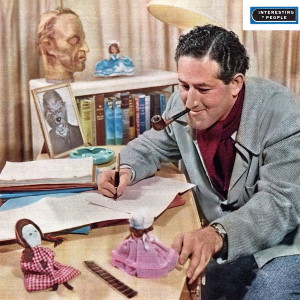
Dan O’Bannon by JaSunni under CC BY-SA 3.0.

The Rocky Horror Picture Show

“The Rocky Horror Picture Show” and Inaccurate Song Lyrics

The Rocky Horror Picture Show

20th Century Fox released The Rocky Horror Picture Show in the US on 29 September 1975.

It was not initially successful. In its first year, it made less than its production costs. But it wasn’t a classic sleeper either. It made roughly ten times its budget in each of the following five years.

El Topo was the first midnight movie. But after it, the trend was away from art films and toward psychotronics. (Of course, I certainly consider El Topo a psychotronic film.)

Rocky Horror is such a bizarre film that it is classic psychotronic. But I do tend to push it away because the film is so obviously pandering to people like me. For years I’ve wanted to rewrite “Science Fiction/Double Feature.” I love the song but it’s like it is written by someone who knows about psychotronic films but hasn’t actually watched them.

  • Michael Rennie was not ill The Day the Earth Stood Still
  • Fay Wray and King Kong were not in a celluloid jam — whatever that means
  • Doctor X will not build a creature
  • Leo G Carroll was not over a barrel when Tarantula took to the hills
  • Janette Scott did not fight a triffid — she cowered throughout The Day of the Triffids
  • Dana Andrews never made a rune pun in Night of the Demon
  • And George Pal is not in When Worlds Collide, and so said nothing to his bride.

But Richard O’Brien knows these films. I think he’s just lazy. And fair enough! So am I!

The Rocky Horror Picture Show wasn’t successful because it is designed for psychotronic fans. It succeeded because it is sexually transgressive. And the music is great! But I love it because it shows such respect for these old films. You don’t have to get the references but they are there for the getting.

So it has been 50 years since Rocky Horror made it to these United States. Let’s celebrate by watching it!


The Rocky Horror Picture Show poster via Wikipedia under Fair Use.

Alligator - John Sayles

John Sayles and the Monster Movie

John Sayles

John Sayles turns 75 today. He was born on 28 September 1950.

Sayles is a notable director but not really a psychotronic director. When he was in charge, he tended toward drama and social commentary. I’m very fond of Matewan but it isn’t psychotronic (even if I’ve made the argument that it is).

But as a screenwriter, John Sayles is a psychotronic icon. We don’t need to go any further than his first screenplay, Piranha. There were a lot of films that came out in the late 1970s that tried to capitalize on Jaws. And I tend to like them. But I can’t say they are exactly good. But Piranha definitely is. And for a first produced screenplay: wow!

Sayles went on to write Battle Beyond the Stars, which is way better than it should be. And then there was Alligator. And he co-wrote The Howling. I’m not a fan of werewolf films. But this is one of the best.

The bottom line is Sayles writes films that are better than what we get from others. And, as I tell young filmmakers, things are so much easier if you start with a solid script. And check this out: it doesn’t cost anything to rewrite a screenplay!

The only true psychotronic John Sayles directed is The Brother from Another Planet. And even it is more art than psychotronic.

Let’s celebrate John Sayles’ 75th birthday by watching Alligator. It is a solid monster film that demonstrates his prowess as a screenwriter. It also features a young Robert Forster.


John Sayles by Rodrigo Fernández under CC BY-SA 3.0.

The House That Dripped Blood - Milton Subotsky

Milton Subotsky and Amicus Productions

Milton Subotsky

Milton Subotsky was born on 27 September 1921. He, along with Max Rosenberg, founded Amicus Productions.

I associate Amicus closely with American International Pictures. But most people associate it more with Hammer Film Productions. Why?

First, Subotsky and Rosenberg were American even though the company was British. But it’s more the companies were similar. Both were founded by two men. And the division of labor was much the same. Subotsky and James H Nicholson were the creative ones and Rosenberg and Samuel Z Arkoff were the business guys.

Like most fans, I tend to valorize the creatives. But let’s be honest: the films weren’t that creative. They wouldn’t have survived if it weren’t for the unsung businesspeople.

Milton Subotsky got his start in film production in the Army during World War II, writing and editing educational films. He leveraged that to produce TV in the 1950s. And in the late 1950s, he moved to the United Kingdon. There he wrote and produced a couple of feature films before making The City of the Dead (Horror Hotel in the US).

It was on this last film that he started his collaboration with Max Rosenberg. They made a couple of silly teen comedies. Dr Terror’s House of Horrors changed everything.

It was an anthology film in the tradition of Dead of Night. And Amicus is even today synonymous with them. Not that they didn’t produce other films. They notably produced two Dr Who films starring Peter Cushing. As with AIP, there were many other genres.

Amicus saw its fortunes fade at roughly the same time and for the same reason as AIP. The market was changing. Big budget Hollywood films were going after the same market.

Subotsky’s later career featured some successes (eg, The Lawnmower Man) and some failures (eg, Maximum Overdrive).

Let’s celebrate Martin Subotsky’s life by watching an under-valued Amicus film, The House That Dripped Blood.


Milton Subotsky via IMDB under Fair Use.

Carnival of Souls

“Carnival of Souls”: Greatest Horror Film Ever?

Carnival of Souls

Carnival of Souls premiered on 26 September 1962 in Lawrence, Kansas. And then, like Mary Henry herself, the film disappeared. It was never properly released in the United States.

I’ve always loved Carnival of Souls. But I can say more. It is the best horror film of all time. From the crash to the final reveal, it provides nonstop unease. It also delivers more traditional scares.

The story is simple: a woman dies and it takes her a while to figure it out. She exists in two different worlds. One is the regular living world. Ghouls exist in the other world. And she attracts them in a very unsettling way.

But it’s more than that. It’s that she works as an organist in a church. It’s that her neighbor is a creepy guy who seems like he’s one hint away from sexual assault.

But above all, Candace Hilligoss in the lead role is fantastic. She makes the most banal things seem threatening. The film lives and dies on her performance.

There’s more to it, of course. The simplicity of the production — like the make-up for the ghouls. The non-threatening lighting. The film is shot beautifully. It would be an art film with a different context. And perhaps the biggest technical element: the all-organ score.

But another thing is critical to me. I love that it doesn’t explain anything. The final reveal raises more questions than it answers. The film keeps me off balance throughout. And the ending provides just enough clarity to send me away happy.

It is sad that the filmmakers didn’t get any money from this film. But they lived long enough to be recognized for their achievement. (Candace Hilligoss is still alive at the age of 90.) And now the film belongs to us all since it fell into the public domain.


Carnival of Souls poster via Wikipedia. It is in the public domain.