
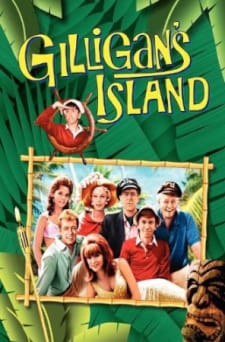
Many years ago, I heard a stand-up comedian make the following joke about Gilligan’s Island.
My favorite episode was the one where they almost got off the island but then Gilligan screwed it up.
I thought it was very funny. As a kid, I watched the show daily. So I thought the joke did sum up every episode. But there’s a problem: it doesn’t.
The show ran for three seasons with 36, 32, and 30 episodes each for a total of 98 episodes, which is a lot. So I chose to look only at the first season. But a cursory look at the other episodes shows that what is true of the first season is broadly true of the second and third.
How many escape attempts depends upon how you define them. For one thing, many episodes tack on an escape at the end of an episode that is primarily about something else. There are also episodes where the escape attempts clearly wouldn’t work. If you go simply by episodes that revolve around an escape attempt that Gilligan ruins, I count only two episodes: “‘X’ Marks the Spot” and “Physical Fatness.”
First Season Episodes
Of the 36 episodes, fewer than half (17) have escape attempts. Of these, less than half (8) are Gilligan’s fault. Here’s a rundown:
| No | Title | Type | Fault |
| 1 | “Two on a Raft” | Escape | No |
| 2 | “Home Sweet Hut” | Life | No |
| 3 | “Voodoo Something to Me” | Life | Yes |
| 4 | “Goodnight, Sweet Skipper” | Escape | Yes |
| 5 | “Wrongway Feldman” | Escape | No |
| 6 | “President Gilligan” | Life | No |
| 7 | “Sound of Quacking” | Escape | Yes |
| 8 | “Goodbye Island” | Escape | Yes |
| 9 | “The Big Gold Strike” | Escape | No |
| 10 | “Waiting for Watubi” | Life | No |
| 11 | “Angel on the Island” | Life | No |
| 12 | “Birds Gotta Fly, Fish Gotta Talk” | Life | No |
| 13 | “Three Million Dollars More or Less” | Life | No |
| 14 | “Water, Water Everywhere” | Life | No |
| 15 | “So Sorry, My Island Now” | Life | No |
| 16 | “Plant You Now, Dig You Later” | Life | No |
| 17 | “Little Island, Big Gun” | Life | No |
| 18 | “‘X’ Marks the Spot” | Escape | Yes |
| 19 | “Gilligan Meets Jungle Boy” | Escape | No |
| 20 | “St. Gilligan and the Dragon” | Life | Yes |
| 21 | “Big Man on a Little Stick” | Escape | No |
| 22 | “Diamonds Are an Ape’s Best Friend” | Life | No |
| 23 | “How to Be a Hero” | Life | No |
| 24 | “The Return of Wrongway Feldman” | Escape | No |
| 25 | “The Matchmaker” | Life | No |
| 26 | “Music Hath Charms” | Life | No |
| 27 | “New Neighbor Sam” | Life | No |
| 28 | “They’re Off and Running” | Life | No |
| 29 | “Three to Get Ready” | Life | Yes |
| 30 | “Forget Me Not” | Escape | No |
| 31 | “Diogenes, Won’t You Please Go Home?” | Life | No |
| 32 | “Physical Fatness” | Escape | Yes |
| 33 | “It’s Magic” | Life | No |
| 34 | “Goodbye, Old Paint” | Escape | No |
| 35 | “My Fair Gilligan” | Life | No |
| 36 | “A Nose by Any Other Name” | Life | No |
| No is the episode season number; Title is the title of the episode; Type is whether the episode contains an Escape or if it is just Life on the island; and Fault iw whether Gilligan caused an escape attempt to fail. | |||
Gilligan’s Fault
So I accept that two of the episodes conform to the trope: E18 “‘X’ Marks the Spot” and E32 “Physical Fatness.” But let’s go over the six episodes where Gilligan is at fault and why none of them fit the trope:
- E03 “Voodoo Something to Me”: This is just a Life episode. At the end, Gilligan does destroy all the flares, which is a big set-back for the castaways. But it isn’t a mistake made during an escape attempt.
- E04 “Goodnight, Sweet Skipper”: Skipper is able to repair the transmitter when he’s asleep. But it doesn’t work, and Gilligan fixes the transmitter by hitting it. Then he breaks it by hitting it again. So it’s the same problem as E03.
- E07 “Sound of Quacking”: A duck lands on the island and the professor proposes they put a note on it. But Gilligan forgets the note. So what’s the problem? Gilligan was the one who captured it and stopped the others from eating it. But most of all, this escape plan would never work.
- E08 “Goodbye Island”: Gilligan develops a glue they use to repair the boat. But he finds out that the glue only holds temporarily. You could say it was a bad plan but not that Gilligan messed it up.
- E20 “St Gilligan and the Dragon”: This episode is basically Lysistrata with the women going on strike. But at the very end, they find a weather balloon, which Gilligan destroys. So, could they have used it for an escape? Sure. Were they about to get off the island, but Gilligan screwed it up? No.
- E29 “Three to Get Ready”: This episode has Gilligan finding a wishing stone. But his final wish is that they get off the island. So it’s basically just a Monkey’s Paw situation where he gets his literal wish rather than his implied wish. This isn’t really an escape episode.
What Gilligan’s Island Is About
Most of the episodes of the show could be reworked into episodes of Leave It to Beaver or M*A*S*H or Northern Exposure. Because they are about people living their lives in a particular environment.
But the show doesn’t even stick with its primary environment. Roughly 15 percent of all the episodes include extended dream or fantasy sequences. And these become far more common in the last season.
The show really isn’t about the castaways trying to get off the island because it couldn’t be. Because there just isn’t enough material there. As it is, some of the escape attempts are lame. Even “Physical Fatness” (which I included as one of the trope episodes) features a questionable escape attempt.
What’s more, if Gilligan only screwed up, we wouldn’t like him. He is the hero more often than you probably remember.
But even if you want to include all eight episodes, you see that the show is about a lot more than the trope of escape attempts that Gilligan messes up.
But my takeaway from watching a bunch of the first season is that the show was really good. It’s silly in the extreme, of course. But there is a lot of clever writing. And the cast is fantastic. It really is as good as anything on TV now. And if it came out now, I think it would still be a hit.
Gilligan’s Island poster via IMDb under Fair Use.
