Author Archives: Frank Moraes

Frank Moraes is a freelance writer and editor online and in print. He is educated as a scientist with a PhD in Atmospheric Physics. He has worked in climate science, remote sensing, throughout the computer industry, and as a college physics instructor. Find out more at About Frank Moraes.
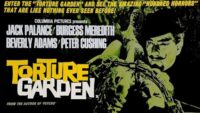
Torture Garden (1967) - Burgess Meredith

Burgess Meredith’s Psychotronic Delights

Burgess Meredith

Burgess Meredith was born on 16 November 1907.

Meredith isn’t what I would call a psychotronic actor. He had an extremely broad career in TV, film, and theater. But he worked so much that he managed to do more psychotronics than many actors who were more focused.

We know Burgess Meredith for a lot of mainstream successes late in his career: Rocky (I, II, and III), Foul Play, Magic, and Grumpy Old Men. But he is important to psychotronic fans primarily because of his work in TV.

Most people probably know him best for playing The Penguin in 21 episodes of the 1960s Batman TV series. He really chews the screen in that show. He delivers lines like, “I am an aristocrat of crookery, my dear man!”

Psychotronic fans most remember his work on The Twilight Zone. He was in four episodes:

  1. “Time Enough at Last”: One of the most iconic episodes where a bookworm survives a nuclear bomb and is happy to have the rest of his life to read, only to break his glasses.
  2. “Mr Dingle, the Strong”: Space aliens give Luther Dingle super strength. I’ve always hated this episode because the aliens criticize him for not doing anything good with his strength. But they’ve hardly given him any time. Isn’t it natural that the first thing anyone would do is play around with the power?
  3. “The Obsolete Man”: A totalitarian state finds a librarian to be obsolete. He uses his execution to make a point. It’s pretty good but I could do without all the religion.
  4. “Printer’s Devil”: A newspaper publisher hires a new printer. He alters the press so that anything that he prints happens. I think this is my favorite of these.

Burgess Meredith also appeared in two episodes of Night Gallery:

  1. “The Little Black Bag”: A former doctor and current drunk finds a medical bag accidentally transported from the future.
  2. “Finnegan’s Flight”: A lifer is hypnotized by his cellmate. He’s so susceptible that what he’s told to believe actually happens to him — with tragic consequences. Cameron Mitchell is wonderful in the lead here.

So, let’s celebrate Burgess Meredith’s birthday by watching his one Amicus film, Torture Garden. In it, he plays Mr Diablo, a carnival showman who holds the horror shorts together. You will be shocked to learn that he’s actually The Devil!


Burgess Meredith via Wikimedia. It is in the public domain.
Manos: The Hands of Fate

Manos: The Hands of Fate — Better Than You Think

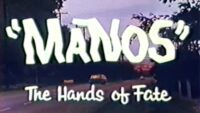
Manos: The Hands of Fate poster

Emerson Film Enterprises released Manos: The Hands of Fate throughout the southwest. But the film premiered on 15 November 1966.

People have written so much about this film. But I don’t want to repeat any of its history because it is all questionable. For example, people still claim that writer-director-producer Harold P Warren was a fertilizer salesman. But Brian Albright in Regional Horror Films, 1958–1990 disproved this claim.

Mystery Science Theater 3000 features Manos on the last episode of its fourth season. Most people have only seen it in this form. That was me for many years. I used to think it was the worst film I had ever seen. Of course, that was before seeing Black Frankenstein and Bad Teacher.

But there’s something more. A few years ago, I found a good print of Manos: The Hands of Fate. The print that MST3K used was terrible. There is no film good enough to counter that. So I watched this print. And I found a lot to like.

For one thing, John Reynolds as Torgo is iconic. People may laugh but the character is a lot like Ro-Man in Robot Monster. If he weren’t so weird, no one would remember him. And the character is deeply disturbing for the first half of the film when there isn’t much else of interest.

And Reynolds isn’t alone. The acting is way better than it should be — generally as good as the acting in most Herschell Gordon Lewis films.

The film also looks pretty good — especially considering they clearly had limited lighting and most of it takes place at night. This is very clear in a good print. The bad print makes the main set appear disgustingly dirty, which was the biggest issue for me during early viewings.

But okay. The script isn’t great. But it works reasonably well. The idea of a sex cult that kidnaps a family and turns the father into a Renfield and his wife and young daughter (!) into sex slaves is creepy in the extreme.

So let’s watch Manos: The Hands of Fate the way it should be presented. I’m not saying it’s great. But it’s a lot better than people give it credit for. And it’s a fast and even fun watch!


Manos: The Hands of Fate poster via Wikimedia. It is in the public domain.

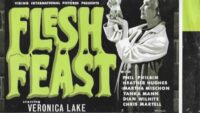
Flesh Feast (1970) - Veronica Lake

Veronica Lake and the Villainy of Hollywood

Veronica Lake

Veronica Lake was born on 14 November 1922 as Constance Frances Marie Ockelman. I mention that only because I think it’s an awesome name.

She played notable femme fatales in a number of film noirs. I know her mostly for Sullivan’s Travels. She filmed it while being 7 months pregnant — something she originally hid from writer-director Preston Sturges. (Although generally considered Sturges’ masterpiece, it isn’t one of my favorites.)

But she was a leading lady of the Hollywood Golden Age. And like so many, Hollywood abandoned her by the late 1940s. People still tell stories of her being “difficult.” But I think she was smart and a great actor. And that is normally what got women in trouble in Hollywood of the time.

Don’t feel too bad for Veronica Lake. She was a strong woman. And she held her head high her entire life. She did die young due to the effects of heavy drinking during bad times in the late 1950s and early 1960s. But I think we should be angry at the treatment of her and not sad for her given that she did better than most of us would.

Late in life, she produced the only truly psychotronic film she was ever in: Flesh Feast. It came out in 1970 but it was made in 1967. And it is a wild film!

Sadly, much of the film doesn’t work that well. The direction by Brad F Grinter is a lot like the worst work of Doris Wishman. The sets are over-lit but still use too few lights. The script is almost unintelligible. It has a single (wonderful) idea, which the script very obviously hints at throughout the first two acts.

But the reveal that “the leader” is actualy a very old Adolf Hitler is pretty good. And everything after that is great too. The acting is also pretty good. And it has some good special effects — including a scene where a leg (of a dead person) is sawed off that made me squirm.

Overall, it’s better than They Saved Hitler’s Brain. I think all psychotronic fans should watch the whole thing. But for others, just check out the last 6 and a half minutes. Lake plays the doctor. A regional Florida actor, Douglas Kennedy, may have played Hitler. No one is credited. I think he’s rather good!

Here is the whole film to celebrate Veronica Lake’s birthday:


Veronica Lake via Wikimedia. It is in the public domain.
Crocodile (2000) - Tobe Hooper

“Crocodile” and Bad Special Effects Monsters

Crocodile (2000) poster

Millennium Films released Crocodile in the United Kingdon on 13 November 2000. They only released it there — at least for a couple of years. It went directly to video in most countries.

This is despite Tobe Hooper directing it. But that’s why I’m writing about it now. I think the film is pretty good. I pretty much always hate teens and college students in horror films. This annoyance is wonderfully brief here. We get to the killing fast!

But the film’s biggest problem is the computer-generated crocodile. It looks terrible. These digital effects soiled a couple of decades of film. It is what the Yamaha DX7 did to pop music of the 1980s.

This reminds me of Jaws. The mechanical shark wasn’t great. And it didn’t work well. As a result, the film depended on the barrels. And that’s why it works so well. When a barrel pops up, you know the shark is there but you can’t see it. That’s terrifying! (I know, because I had nightmares for years when I was a kid!)

Hooper does his best to hide the crocodile until later in the film. But the tools to do it well just aren’t there. And ultimately, the audience has to see the monster in all its glory. And its glory is not glorious!

The film is still worth seeing. The story’s good and it’s fun. But you can’t look at it and think, “Wow! People were impressed by this?!” Because they clearly weren’t. It got a theatrical release in very few places. It’s best to think of this as a direct-to-video film.

As for Tobe Hooper, well, like all of us, he had to make a living. And I don’t blame him. I don’t blame anyone. Everyone did a good job. That includes the special effects people, who were just dealing with the technology and budget they had.


Crocodile (2000) poster via Wikipedia under Fair Use.

The Comedy of Terrors (1963) - Jacques Tourneur

Jacques Tourneur and B-Picture Horror

Jacques Tourneur

Jacques Tourneur was born in Paris on 12 November 1904.

He started his career in France as an assistant director and editor. But in the early 1930s, he also directed a few feature films. In 1934, he moved to Hollywood. (He had lived in the United States as a child with his father, Maurice Tourneur, who was a noted filmmaker in his own right.)

In Hollywood, Tourneur continued to work as an assistant director. And he directed a number of short (usually around 10-minute) films. Starting in 1939, he directed mostly feature films. And in 1942, he made what is probably his masterpiece, Cat People. Of course, producer Val Lewton, who would work more with Tourneur. The two also worked together on I Walked with a Zombie and The Leopard Man.

From there, Jacques Tourneur moved on to do bigger-budget films. But in the 1950s, he became a freelance director — eventually directing a lot of TV. He directed one of my favorite episodes of The Twilight Zone, the heartbreaking “Night Call.”

Not surprisingly, the good men at American International Pictures saw a good opportunity in Tourneur. So they hired him to direct what would be his last two films: The Comedy of Terrors and City Under the Sea.

After that, he retired and went back to France where he died in 1977. Americans could learn a bit from the French. Don’t work until you die!

Let’s celebrate Jacques Tourneur by watching what I still revisit often, The Comedy of Terrors. It’s got a great cast. The screenplay by Richard Matheson is way better than most of what he wrote for AIP. And the overall production is just lots of fun. It features a romance that I can totally get behind. Just don’t read about Joyce Jameson. Instead, imagine her living happily ever after with Peter Lorre!


Jacques Tourneur via TCM under Fair Use.

The Beyond

“The Beyond” and Realism in Horror

The Beyond (1981) poster

Medusa Distribuzione released The Beyond in Italy in early 1981. It wasn’t until 11 November 1983 that Aquarius Releasing released the film in the United States.

The Beyond is one of my favorite films. This isn’t surprising. Lucio Fulci is one of my favorite directors. It is arguably his best film.

But it is an aquired taste. It doesn’t go for strict realism. The standout scene features an army of tarantulas. And they don’t look real at all!

Americans overvalue realism. People justify this with the idea that realism keeps you immersed in the film. But that isn’t really true. Inconsistency pulls viewers out of a film. Put unrealistic spiders in Alien and it will destroy the narrative reality. But in a Fulci film? It all hangs together.

Strangely, the effect of watching The Beyond is visceral. There is nothing especially intellectual about it — at least as a viewer. Just sit and let it take you over.

The film is part of the Gates of Hell trilogy. Like most horror trilogies, it really isn’t. The first film, City of the Living Dead, is about one of the gates of hell opening. But the last one, The House by the Cemetery, doesn’t feature any gate of any kind. It’s a good film but hardly the way to finish off a trilogy.

Of the three films, The Beyond is the best. (But I admit that I’m rather more obsessed with City.) If you’ve never seen it, you must! It is essential viewing. And if you’ve watched it a dozen times, it’s still worth watching again!


The Beyond (1981) poster via Wikipedia under Fair Use.

The Invisible Man (1933) - Claude Rains

Claude Rains Was the Invisible Man

Claude Rains

Claude Rains was born on 10 November 1889.

Most people know him for playing Captain Renault in Casablanca. And, of course, Senator Paine in the tedious Mr Smith Goes to Washington. And I quite like him in The Paris Express — an unusual and enjoyable film noir.

But we are here for The Invisible Man. Just because it’s in the song “Midnight Double Feature Picture Show“? Of course not! Well, maybe a little. But it is a remarkable film. And Rains’ first feature.

(Before moving on, there is a parody of the film as “Son of the Invisible Man” starring Ed Begley Jr in Amazon Women on the Moon. It gets to the heart of one thing that is always on my mind when watching the original: Is Claude Rains’ penis swinging around as he runs naked?)

It isn’t close to my favorite Universal horror film. But it’s still really good. Of particular note is the quality of the special effects. But Michael Weldon noted something I had never noticed, “A major technical flaw: when the naked Invisible Man runs through the snow, he leaves shoe prints.” I just think it’s interesting. It really doesn’t matter.

Another good thing is that, like most of the Universal horror films, this one is short: just 70 minutes. It moves along at a brisk pace. No time to get bored.

And even though you almost never see Claude Rains (for good narrative reasons, I think we can all agree), he’s really great. He’s possibly the most unlikeable character in any of the other Universal films. So let’s celebrate his birthday by watching this iconic film.


Claude Rains via Wimimedia. It is in the public domain.

Child's Play

Child’s Play and the “Killer Doll” Subgenre

Child's Play (1988) poster

MGM released Child’s Play on 9 November 1988.

I like this film well enough. Because it’s well-made and fun. But people — And critics! — love the film. And I don’t really get that.

Michael Weldon wrote in his second guide, “It’s way too much like the old Twilight Zone episode ‘Talking Tina’…” But he’s wrong about the title, which is “Living Doll.” And I think he’s overstating to say it is too much like the episode. But he is right that the idea for Child’s Play is not new.

But it is part of a horror subgenre that I love. Let’s call it “murder doll.” One of my all-time favorite films fits here, Dolls. And more recently, Benny Loves You is a classic.

This subgenre works well with low budgets. A great example of this is Killer Piñata (2015). It was made for just a few thousand dollars. And it doesn’t look great. But it’s a hoot! (Note: a sequel came out a couple of years back, Bride of the Killer Piñata. I haven’t seen it yet but it looks very much like the original.)

And there are others like the micro-budget films CarousHELL and Llamageddon.

The subgenre is good for that. Most people can forgive bad special effects when the monster is a space alien llama, a pissed off carousel unicorn, or just a creepy doll. Not that Child’s Play had a low budget. But it could have been made with a low budget. And it probably would have been better!

But it’s still a fine film. It’s helped a lot that Chucky is an incredibly creepy doll. And it pairs well with Brad Dourif’s creepy “death camp doctor” voice. So let’s celebrate the 37th anniversary of Child’s Play by watching the film. But this will be my last. There are just too many other killer doll films to see!


Child’s Play (1988) poster via Wikipedia under Fair Use.

Magic (1978)

Magic Is a Good Ventriloquist Movie But…

Magic (1978) poster

20th Century Fox released Magic on 8 November 1978.

As a kid, I saw Magic in the theater. The MPAA (Bastards!) rated it R. But my parents let me see lots of movies I shouldn’t! I also read the novel. I was really into magic when I was young.

It’s not a great film for kids. I didn’t identify with the whole love story. But I’ve revisited it as an adult. It holds up well. I genuinely like it. But I’m shocked that it was made or even that the novel was published.

Producer Joseph E Levine gave William Goldman a million dollars for the screenplay! That’s $5 million today. For what? A story about a ventriloquist who goes insane? That’s almost as common as “boy meets girl.”

But I get it. There aren’t that many original stories. It’s all about the rendering. And Goldman (as usual) does a fine job of rendering this story. What’s more, it does end well in a sweet way that resonates with me.

Just the same, it isn’t nearly as good as “The Ventriloquist’s Dummy” in Dead of Night. And I prefer supernatural ventriloquist stories. My favorite is the exceptional Devil Doll.

I still think everyone should watch Magic. It works. And it looks great. The budget ends up on the screen in terms of production design, filming, and acting.

So let’s celebrate the 47th anniversary of Magic by watching this free copy:


Magic (1978) poster via Wikipedia under Fair Use.

Snow White and the Seven Dwarfs - Lucille La Verne

Lucille La Verne and the Evil Queen

Lucille La Verne

Lucille La Verne was born on 7 November 1872.

I didn’t know who she was before today. Although she has a fair number of film credits, she wasn’t really a film actor. She was a big star on Broadway and as a touring actor. In fact, she eventually ran her own company.

She started acting as a child. She played Juliet and Lady Macbeth back-to-back at the age of 14. This was the hallmark of her career. She was always a very versatile actor. And she made it to Broadway at the age of 16.

In addition to acting, she wrote and directed plays — including on Broadway.

But I’m talking about her today for one reason. In her best-known film role, Lucille La Verne provided the voice for the Evil Queen in Snow White and the Seven Dwarfs.

I’m not a huge fan of Disney animated features. But the first five of them were amazing. After Snow White, Disney produced Pinocchio, Fantasia, Dumbo, and Bambi. When I was a kid, I found them all terrifying. They are not kid films!

(Note: there is something of an exception. The Reluctant Dragon was a feature. But most of it is live action. The animated part is very light and silly. Interestingly, it is the only early Disney feature that I did not see as a kid!)

Anyway, La Verne performed as the Evil Queen as her final performance. It doesn’t look like she did any more theater. And she definitely didn’t do any more films. But it is a fine performance. In fact, it’s really the only performance in the film that anyone remembers!

So let’s watch Snow White to celebrate Lucille La Verne’s birthday!


Lucille La Verne via IMDb. It is in the public domain.