House of Frankenstein (1944)

House of Frankenstein (and Dracula)

House of Frankenstein (1944) poster

Universal Pictures released House of Frankenstein on 1 December 1944. Or not. Some sources say they released it at select theaters starting 15 December 1944 with its wide release not coming until February of 1945. But just a year later, Universal released the follow-up, House of Dracula, on 7 December.

I’m not terribly fond of either film. But when I was younger, I hated them. They just didn’t live up to the original films. But if you watch them with fresh eyes, you see that they are extremely well-made. The acting is fantastic. The sets are glorious. The camera work is modern and engaging. So what’s the problem?

The stories. They are just kind of boring. But don’t blame the writers. What more is there to do with Dracula? The Wolf Man was so uninteresting, it only had a single film by itself. And Frankenstein’s monster? There isn’t a lot to do with that character. Son of Frankenstein and The Ghost of Frankenstein only worked because of Lugosi‘s evil Ygor.

But writers could have done something creative with each of these properties. The biggest problem is combining them. Dracula and Frankenstein exist in different worlds. And throwing in the Wolf Man to whine his way through yet another film makes matters so much worse!

It is thus kind of strange that neither of these films is hard to watch. House of Frankenstein works pretty well. Karloff steals a traveling horror show, which is a wonderful meta-comment on what Universal is doing here. And the film is divided neatly in two, with both halves working as complete films. And at 70 minutes, it is never boring.

House of Dracula is almost a remake of its predecessor. A different mad scientist supposedly helps Dracula and the Wolf Man but is really only obsessed with Frankenstein’s monster. It does annoyingly bring back Dracula despite clearly being destroyed in the previous film due to a very bad sunbathing incident. But it also includes a hunchbacked female nurse, so that kind of makes up for it.

Let’s celebrate the day by watching both films. First House of Frankenstein:

And then House of Dracula:


House of Frankenstein (1944) poster via Wikipedia under Fair Use.

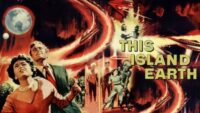
This Island Earth (1955) - Rex Reason

Rex Reason and “This Island Earth”

Rex Reason

Rex Reason was born on 30 November 1928.

He was a handsome leading man who only worked as an actor for about a decade. He starred in his first film, Storm Over Tibet. And late in his career (but not life), he starred in two seasons of Man Without a Gun, where he played a newspaper editor in the Old West who fought bad people without violence. After that, he starred in two seasons of The Roaring 20’s, where he was again a newspaper man.

He was in a lot of westerns and war movies. But we do not remember him for these. Psychotronic fans know him for two films. And they both co-star Jeff Morrow!

The Creature Walks Among Us is the less important of these films. It is the third of the Creature from the Black Lagoon film. However, I think it is the best of the series. And it set up a fourth film, which never came.

The other psychotronic film is This Island Earth. It is a classic. And so, many people were confused when it was the featured film in Mystery Science Theater 3000: The Movie. That show is responsible for a lot of confusion. RiffTrax has shown that it is trivial to riff on even the best films.

If you’ve only seen the MST3K version of the film, you haven’t seen it. They cut the film from 86 minutes to roughly an hour. As I recall, they joke about the film not making sense. And they are right! When you remove one-quarter of a film, it tends to destroy the plot.

What annoys me about this is that idiots now think the film is bad. I discuss this in my article about The Mads doing Choppers.

Rex Reason is remembered primarily for his role as Dr Cal Meacham in This Island Earth. He is great in these kinds of American Hero roles that were so popular in the 1950s. But overall, he had an amazing career for one so short.

Let’s celebrate Rex Reason’s birthday by watching his best-known film!

Note that this print has an aspect ratio of 1.37:1. There is also a 1.85:1 version of the film on the Shout Factory Blu-ray. The filmmakers shot it at 1.37:1 aspect ratio with the intent to release it as widescreen.


Rex Reason via Straight 2 DVD under Fair Use. (But I believe the image is actually in the public domain.)

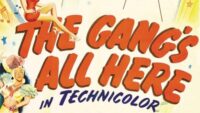
The Gang's All Here (1943) - Busby Berkeley

Busby Berkeley Is Totally Psychotronic

Busby Berkeley

Busby Berkeley was born on 29 November 1895. He tried to kill himself in the 1940s. And he almost succeeded. He also killed two people while driving drunk (nearly killing himself). Despite all this, he lived to the rip old age of 80, dying on 14 March 1976.

Berkeley is synonymous with his lavish musicals. So you might be thinking that he isn’t a psychotronic filmmaker. But have you ever watched them? They are insane!

But what is a psychotronic film anyway? I first heard the term back in the early 1990s. I was at Movie Madness in Portland, Oregon. And I wanted The Last Man on Earth, but couldn’t find it. So I asked the clerk, and he said, “Oh, it’s in the back under ‘psychotronic.'” I soon became a frequent visitor to that section!

The standard definition of “psychotronic” is that it is the kind of movie you would see at drive-ins during their heyday in the 1950s. But I’ve come to see the term differently. It is more about how you watch films than the films themselves. Psychotronic fans keep their minds open.

I hate that most people will only watch recent big-budget films. When I talk about a film I admire, I most often get the response, “Is it new?” Since I consider any film from 1970 onward as new, we normally miscommunicate after that.

This has led me to the unusual position of thinking of any older film outside of classics like Casablanca as psychotronic. But if you don’t like that, I can assure you that Busby Berkeley films made it to the drive-in. Consider his masterpiece, The Gang’s All Here. It came out in 1943, and I’m sure it was making the drive-in rounds in the 1950s.

But if you’re a purist, he did make a crime drama, They Made Me a Criminal. It features psychotronic actors John Garfield, Claude Rains, Ann Sheridan, and The Dead End Kids. It is in the public domain and Archive has a decent print of it. But I have to go with The Gang’s All Here. If you won’t watch the whole film, at least watch “The Lady In The Tutti Frutti Hat“!

You might think that Busby Berkeley was gay. In fact, he was married six times. Three ended in divorce. Two were annulled. And the final one lasted almost two decades, ending in his death. The median length of his marriages was 14 months. He was not a stable (or happy) guy!


Image cropped from Busby Berkeley Portrait by The Fabulous Miss Fisher under CC BY 4.0.

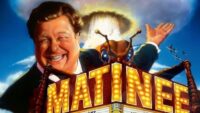
Matinee (1993) - Joe Dante

Joe Dante Made a Great Film (Not “Gremlins”!)

Joe Dante

Joe Dante was born on 28 November 1946.

Dante made one of my favorite films: Matinee. It is a love letter to exploitation filmmaking. And I really appreciate that. But it also exhibits the problems that make me not much like Dante as a filmmaker.

Joe Dante is the Steven Spielberg of horror. He’s very good. He knows how to tell a story. But his films have no grit. He’s the anti-Tobe Hooper. Or better: the anti-Lucio Fulci. Comparing these directors is hard because Dante has generally had much bigger budgets. But he is what most people would think of as a better director.

My biggest problem with Dante is Gremlins. I like the film. But it is a classic “horror for people who hate horror” film. And since it was first released, I’ve been annoyed by all the people quoting the film to me and gushing about how great it is. It’s not great. It’s not quotable. To be clear, it’s fine — just not much more.

We can’t blame Joe Dante alone, of course. Chris Columbus wrote Gremlins. But I can’t escape the notion that the two men are actually the same man. Has anyone seen them together? But it’s probably just that both men are testicle deficient. That is, they lack balls.

There is nothing wrong with this! People love both men’s films! Hell, I enjoy many of their films. The Adventures in Babysitting poster hangs proudly on my wall (more because it is an awesome poster). Columbus has never made a horror film, of course. I’d give him a pass if he hadn’t written The Goonies.

But Dante? I can’t forgive a man who has made a number of films that could have been great but were instead just profitable. But like I said, Matinee is great. It’s still very much a Joe Dante film. But it works for me because I was kind of that kid. And I still am. The truth is, Dante probably is too. The economics of filmmaking is terrible. And I can’t blame him for choosing a profitable and stable career over cult stardom. But I can still grouse about it!

But enough of this! Let’s watch Matinee!


Image cropped from Dante and Elizabeth Stanley attending the 66th annual Venice International Film Festival in 2009 by nicolas genin under CC BY-SA 2.0.

Gamera, the Giant Monster (1965)

“Gamera, the Giant Monster” and Genre Silliness

Gamera, the Giant Monster (1965) poster

Daiei Film released Gamera, the Giant Monster to an eager Japanese audience on 27 November 1965. Its US release was a year and a half later.

People instinctively dismiss the Gamera films. It’s understandable. People see it as a cheap rip-off of Godzilla. There are two ways to respond to this — both involve Ray Harryhausen:

  1. Gamera was actually ripping off The Beast from 20,000 Fathoms, not Godzilla.
  2. Godzilla was ripping off The Beast from 20,000 Fathoms. All films rip off films that went before.

Both those are true.

The first time I watched Gamera, the Giant Monster, I thought the spinning turtle was ridiculous. But that’s true of all these kinds of films. King Kong is hardly believable — especially with all the dinosaurs.

Over time, Gamera becomes a hero — much like Godzilla’s more complicated narrative arc. But it starts pretty good in this first film. The giant flying turtle saves the little boy. That is the opposite of it kicking a dog. And audiences loved it! So later films did not disappoint fans.

“But isn’t this film series just too silly?” I don’t think so. All these films are nothing more than a fun romp. No one thinks that everyone in Japan will be dead due to Gamera or Godzilla.

Gamera is the most absurd of these giant monsters. But making a big deal of this is equally absurd. The others are 98% absurd and the flying turtle is 99% absurd. No one would notice if they were presented together. But everyone is used to Godzilla and King Kong.

Don’t let this stop you. It is the 60th anniversary of Gamera, the Giant Monster. It’s a lot of fun. And if you have children, let them watch with you. Gamera loves children!

This is an English dub of the film. If you want to watch it with subtitles, feel free. Just don’t expect anyone to be impressed with your sophistication!


Gamera, the Giant Monster (1965) poster via Wikipedia under Fair Use.

Alien Resurrection (1997)

“Alien Resurrection” and Thematic Bedrock

Alien Resurrection (1997) poster

On 26 November 1997, 20th Century Fox released Alien Resurrection across the United States.

I like this film. I like all of the first four films. But the third film loses the franchise’s theme about the hubris of man. This film brings it back — in a big way. We saw it coming. Of course people were eventually going to grow aliens in a lab!

Joss Whedon wrote the script. And it features a proto-Firefly crew. But here’s something to remember. Artists don’t have that many new ideas. And they don’t need to! Certainly, William Faulkner didn’t. Whedon doesn’t either, which isn’t surprising. But people give artists way too much credit. And the good idea in Alien Resurrection is one most fans would have come up with.

Jean-Pierre Jeunet provides solid direction. The film looks good, despite its constrained sets. But most of all, the cast is great. Even the supporting cast includes JE Freeman, Dan Hedaya, and Brad Dourif!

Critics aren’t thrilled with the film. Can you guess the problem? It wasn’t the other films! But critics are dodging. Always assume critics just have gut reactions to films. They dress up those opinions as reasoned opinions.

Jeunet’s previous two films also created a problem. So critics were itching to find his third feature disappointing. And Alien Resurrection was a straight genre film. The horror!

But I think the film is a lot of fun. So on this, its 28th anniversary, let’s watch Alien Resurrection.


Alien Resurrection (1997) poster via Wikipedia under Fair Use.

The Ghoul (1933)

“The Ghoul” and Lost Treasures

The Ghoul (1933) poster

Gaumont British Picture Corporation of America released The Ghoul on 25 November 1933 in the United States. Woolf & Freedman Film Service distributed the film in the UK, where it was first released the previous August.

It is effectively another dark house film like the previous year’s The Old Dark House. And it features two of the stars of that film: Boris Karloff and Ernest Thesiger. But The Ghoul actually has a better plot.

An Egyptologist dies. He claims he will come back from the dead if anyone steals his special jewel. Someone steals it and he comes back to get it. The rest of the film is an dark house film with ghoulish Borish Karloff hunting for the jewel.

The Ghoul is not a well-known film. There is a reason for this. For a long time, everyone thought the film lost. In 1969, a film collector discovered a badly cut copy with mangled audio in Czechoslovakia. It was more a curiosity than anything. But in the early 1980s, staff at the iconic Shepperton Studios found a blocked film vault with the original negative of the film. As a result, we can enjoy it today.

T Hayes Hunter directed the film. He was primarily a silent film director. But this often works out well. Silent film directors tend to be more focused on the visuals. (This is why the Spanish language version of Dracula is arguably better than the Lugosi version that most people know.)

So let’s celebrate the 92nd anniversary of the release of The Ghoul. This means it will soon be in the public domain. It does highlight how uncontrolled our copyright system is. This film is from another universe. It should have been placed in the public domain decades ago.

But that doesn’t stop us from enjoying it today!


The Ghoul (1933) poster via Wikipedia under Fair Use.

Of Unknown Origin (1983)

“Of Unknown Origin”

Of Unknown Origin (1983) poster

Warner Bros released Of Unknown Origin on or about 24 November 1983. It’s confusing. Different sources provide different dates.

Neither critics nor audiences took to the film. Of course, the producers didn’t give audiences much of a chance. They distributed the film in spurts. But I think I know what the problem was. The film is a comedy. Sure, it’s also horror. And it is pretty scary at times. But a lot of this film is laugh-out-loud funny.

Of Unknown Origin is like a lot of lower budget films. Critics like it much more now at its release. Because critics are idiots.

The film started with Chauncey G Parker’s novel, The Visitor. Executive producer Pierre David optioned it. He had veteran TV writer Brian Taggert write the screenplay. Director George P Cosmatos was also interested in making a film based on the book. So he hooked up with David.

Cosmatos is an interesting guy. He had some success in Europe early on. This film had a similar budget to the films he had been making, despite being his first North American production.

Cosmatos follwed up the film with a series of big budget films. These included two Sylvester Stallone films: Rambo: First Blood Part II and Cobra.

Let’s watch Of Unknown Origin on its (more or less) 42nd anniversary!


Of Unknown Origin (1983) poster via Wikipedia under Fair Use.

The Black Room (1935) - Boris Karloff

Boris Karloff and “The Black Room”

Boris Karloff (1913)

Boris Karloff was born on 23 November 1887 in London, England. In 1909, he moved to Canada. And until 1959, he worked there and (increasingly) in the United States. He spent the last decade of his life back in England.

What can I say about Karloff? I said a bit already in my article about Bela Lugosi. I’ve been clear that I’m much more of a fan of Karloff. Part of that is surely that I’m just not a big vampire fan. So I’m not that interested in Lugosi’s signature role. Compare that to Karloff’s signature roles: Frankenstein and the mummy. I love those! Bride of Frankenstein and The Mummy are two of my very favorite films.

But the two actors are very different in their skills. Lugosi was made for the stage. Karloff was a better screen actor. A lot of his work was very subtle. In his most iconic roles, he doesn’t have a lot to work with. He could also go broad and over-the-top — like he did in The Raven. Of course, I could say the same about Lugosi. He was also great. It’s just a question of degrees.

But mostly, Karloff was simply in better films. As a result, I’m tempted to highlight the 1940 film, The Ape. Michael Weldon wrote of it:

Karloff plays another kindly doctor, trying to cure a polio victim. He needs human spinal fluid for the miracle serum, so kills an escaped circus gorilla, skins it (off-screen), and disguised as the ape goes after more spines. What a brilliant idea! Nobody would notice a gorilla killing people. And you thought only Bela Lugosi made movies this dumb.

You really should watch it! Archive has a decent print of it. But I want to present The Black Room. It is far better. Plus, he plays a dual role as twin brothers. Happy birthday, Boris Karloff!


Boris Karloff (1913) via Wikimedia. It is in the public domain.

I Spit on Your Grave (1978)

“I Spit on Your Grave” and the Rape-Revenge Film

I Spit on Your Grave (1978) poster

Cinemagic released I Spit on Your Grave on 22 November 1978. The Jerry Gross Organization re-released the film two years later.

I Spit on Your Grave is probably the most disturbing film of the rape-revenge subgenre of horror. My preference in these films is a brief rape and a lot of revenge. This is why I’m so fond of Ms 45. But that ain’t reality. And Grave presents the rape and the incredibly violent act that it is.

The rape goes on for almost a half hour. Obviously, it isn’t sexy. In fact, it isn’t even sex. It is pure brutality. It is so bad that I haven’t watched it for a decade. And I never will again. However…

I watch the last half hour every year or two. And I will continue. Because these guys deserve to be killed over and over.

But this is the problem with the film. A one-to-one ratio of rape-to-revenge just isn’t enough. And the final guy gets a death that, while thematically great, is practically underwhelming.

Alexandra Heller-Nicholas in her excellent book, Rape-Revenge Films: A Critical Study, notes:

Even today, the blatant (and yes, sensationalized) depiction of human suffering in I Spit on Your Grave emphasizes how sensitized we are to glossy depictions of rape. However, somewhere in those grueling 25 minutes is a lightning flash of empathy where we realize we are trapped, too — even leaving the cinema or turning off the DVD can’t take back what we’ve already seen. Jennifer’s rape therefore leaves us powerless. [The film] moves the onus of trying to comprehend the brutal incomprehensibility of rape firmly onto the spectator.

She is right. Society gets a skewed perspective on rape with more “sensitive” depictions. I think men can easily understand the horror of being anally raped in prison. It shouldn’t be hard to expand this to understanding all sexual assault. If not, I Spit on Your Grave provides a very good example.

As far as I know, I Spit on Your Grave was the first rape-revenge film where the victim gets the revenge. This is an essential innovation. And a big reason I admire the film.

Here is the film. If you’d like to skip the rape, watch the first 20 minutes. Then you can skip to 47:00. It’s still hard to watch. If you would prefer just the revenge, skip to 64:00.


I Spit on Your Grave (1978) poster via Wikipedia under Fair Use.