
When Michael Weldon wanted to start his zine about unusual films, he stole a word made-up for a film he hadn’t even seen, The Psychotronic Man. The resulting zine was called “Psychotronic TV.” Later, it turned into an actual magazine called Psychotronic Video. It all ended in the publication of his classic book The Psychotronic Encyclopedia of Film.
Michael Weldon’s Definition of Psychotronic Film
But it is clear that Weldon was never clear on what exactly a psychotronic film was. In the introduction to his book, he provides something of a definition:
That’s not a bad starting point for a definition.
Weldon Contradicts His Own Definition
But it’s hard to take seriously when you consider that a large chunk of the films in the book don’t qualify at all. For example, Dracula (1931 — English Language) was a huge hit with both audiences and critics. It was also a big budget film for its time and made by a major studio (Universal Pictures).
And Dracula is hardly alone. The same is the case for pretty much all of those early horror films. But it wasn’t just the early films. William Castle generally got good reviews and so did Roger Corman. What’s more, the book includes Disney movies like The Shaggy Dog (1959). It includes the Stanley Kubrick classics Dr Strangelove (1964), 2001: A Space Odyssey (1968), A Clockwork Orange (1972), and The Shining (1980).
It includes the Samuel Fuller classics Shock Corridor (1963) and The Naked Kiss (1964), both of which were extremely well reviewed and popularly successful. And the list could go on. So what the hell does Michael Weldon really think a psychotronic film is?
It Can’t Be Just the Films We Personally Like
It’s hard to escape the conclusion that for him, a psychotronic film is any film he likes. Or if you want to look at it more cynically, any film he had movie paraphenelia from that he could put in his magazine. Regardless, his idea of a psychotronic film is fuzzy at best, random at worst.
I’ve seriously toyed with the idea of taking the lead from Weldom and saying that a psychotronic film is any film that I don’t think other people appreciate enough. But I gave up on that idea because that would include pretty much every film I like. And as much as I love Dean Spanley (2008), it is not a psychotronic film.
But maybe it’s like obscenity: we can’t define it, but we know it when we see it.
I don’t think so. That’s too easy.
The Three Kinds of Psychotronic Films
The more I’ve thought about this question, the more I’ve come to see that there are really three kinds of psychotronic films:
- True Psychotronics: films with low budgets and crazy ideas about filmmaking. Examples: Glen or Glenda (1953) and The Evil Dead (1981).
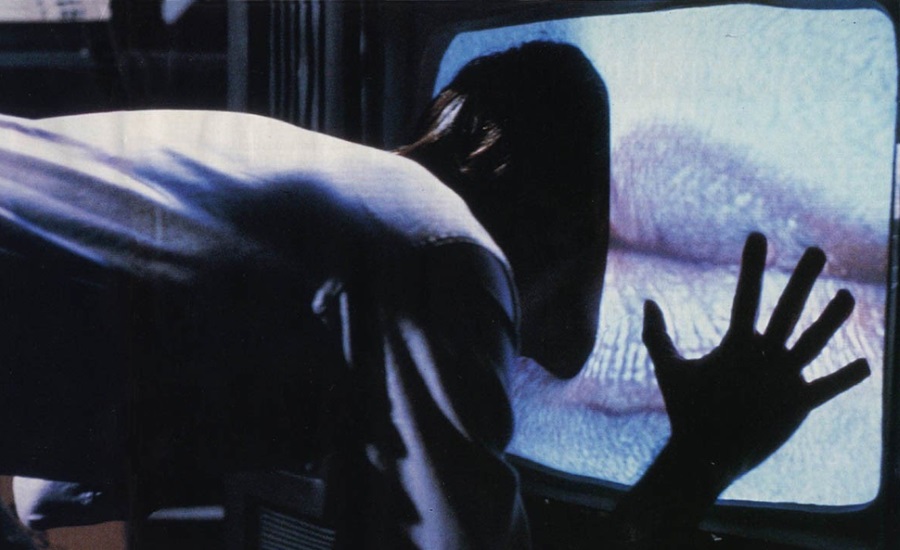
- Independent Psychotronics: films with classic psychotronic themes (eg, horror, bikers) or other odd content generally made by established independent filmmakers. Examples: Shock Corridor (1963) and Videodrome (1983).
- Hollywood Psychotronics: films financed by large studios or distribution companies designed to co-opt true psychotronics. Examples: Close Encounters of the Third Kind (1977) and The Grifters (1990).
On this site, I’d like to focus on the True Psychotronics. But the truth is, the Independent Psychotronics are usually better. And the Hollywood Psychotronics are often excellent. (I’d much rather Hollywood co-opt True Psychotronics rather than yet another comic book or graphic novel.) Note that Hollywood rarely steals from the Independent Psychotronics because they really can’t do any better. For one thing, no studio is going to risk much more than the Independents use on an unknown property.
I like all of the films I mentioned above as examples. (Well, Close Encounters hasn’t aged well, but it’s gotten to the point of being campy, so it’s quite watchable.) This isn’t about liking or not liking a film. It’s about process and purity of vision.
No Conclusion
I intentionally titled this article “Toward a Definition of Psychotronic Film.” That’s because I haven’t finished this process. I may never. But I am getting closer.
There are a couple of things that are clear, however. The first is that Michael Weldon is useless in this quest. The second is that trite definitions like Google’s won’t do at all: “denoting or relating to a genre of movies, typically with a science fiction, horror, or fantasy theme, that were made on a low budget or poorly received by critics.” By this definition, Videodrome isn’t a psychotronic film. And if Videodrome is not a psychotronic film, no film is.
This discussion is not over.