Author Archives: Frank Moraes

Frank Moraes is a freelance writer and editor online and in print. He is educated as a scientist with a PhD in Atmospheric Physics. He has worked in climate science, remote sensing, throughout the computer industry, and as a college physics instructor. Find out more at About Frank Moraes.
Frankenstein (1910)

First Frankenstein on the Silver Screen

Frankenstein (1910) poster

The Edison Manufacturing Company released the first Frankenstein on 18 March 1910.

The motion picture industry started around 1890 and got going in the middle of the decade. By 1900, producers released upwards of 1,000 short films. So Frankenstein was late to the party. This is surprising! Producers presented Frankenstein on the stage just a few years after the novel was published. And when they did, they presented many different versions — including melodramas and burlesques.

This first filmed version of Frankenstein runs roughly 12 minutes. The story is closer to the novel than most filmed versions. Dr Frankenstein creates his creature and then returns home. Once there, the creature menaces him. Ultimately, it is trapped within a mirror due to Frankenstein’s love for Elizabeth. Or something.

The film is typical of the time. All scenes are shot with a single master. But the sets are flat, more typical of earlier periods. The creature design is horrific — especially so during its lengthy creation. You should watch the film just for this. It looks like the creature is being burned alive — but in reverse.

Two other silent film versions of Frankenstein were released. Life Without Soul (1915) was the first Frankenstein film that was feature-length. Il Mostro di Frankenstein (1921) was a 40-minute production. Sadly, both of these films are lost.

Thankfully, we do have the first filmed version of the story. And all fans should check it out. It isn’t great. But it also isn’t long. And it is very interesting to see what the producers do with so little.


Frankenstein (1910) poster via Wikimedia. It is in the public domain.

The Computer Wore Tennis Shoes (1969)

Kurt Russell Is Dexter Riley

Kurt Russell

Kurt Russell is 75 years old today. He was born on 17 March 1951.

I know what you’re thinking. “Frank’s gonna present a great film today!” You’re thinking something like The Thing or Escape from New York. Or maybe Stargate. At least he’s going to do Death Proof! Right?

Nope.

I like all those films. But I think they’d all be just as good with someone else. I think They Live was better with Roddy Piper.

Kurt Russell is a solid actor. But so are lots of people. I don’t think he really stands out. And he wouldn’t have been a star if he hadn’t had a successful actor for a father.

But I am fascinated with the live-action Disney films that Kurt Russell starred in. Again: he’s totally replaceable. But I loved these films as a kid. And I think they are still good. I really don’t know why these films have such bad reputations today.

He had roughly a dozen major roles in these films. And he was the star in four of them. He plays Dexter Riley in three of these films. And they are my favorites:

  1. The Computer Wore Tennis Shoes (1969)
  2. Now You See Him, Now You Don’t (1972)
  3. The Strongest Man in the World (1975)

Again: it could have been anyone. If it had been 20 years earlier, it would have been Roddy McDowall! (Kurt Russell’s entire career could be replaced with a handful of Roddys!)

So let’s celebrate three-quarters of a century of Kurt Russell by revisiting his first major Disney success, The Computer Wore Tennis Shoes. You can’t expect too much from these kinds of films. But if you go in expecting nothing more than an amusing romp, you will enjoy yourself.

But I’m happy just to not have to listen to people go on about Snake Plissken, who is, at base, a reactionary character who most appeals to reactionary fans.


Kurt Russell via Wikimedia. It is in the public domain.

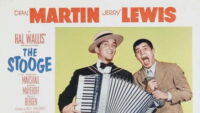
The Stooge (1952) - Dean Martin and Jerry Lewis

Jerry Lewis and the Problem of Aging

Jerry Lewis

Jerry Lewis was born on 16 March 1926.

Most people know him today for The Jerry Lewis MDA Labor Day Telethon. The first was in 1966 and they went on for decades. I remember watching them when I was a kid. And honestly, I never quite knew what to think of the man I saw in those. Because I knew him from something else — something very different.

In 1945, Lewis partnered with the singer Dean Martin to form a comedy act. Martin was the straight man and Lewis was, well, insane. They worked the nightclub circuit. And they were very successful. They also created a popular radio show. And, starting in 1949, Paramount Pictures hired them. From there, they made 16 feature films over a 7-year period.

The first two of these films were My Friend Irma and My Friend Irma Goes West. They played supporting roles. At War with the Army was the first true Martin and Lewis film. These were basically expansions of their existing act. At least at first. Over time, they got more elaborate. And also, Dean Martin became less important. That’s because audiences were the same as I was. We were all there for Lewis and we put up with Martin and his songs.

But Jerry Lewis’ comedy is based on him being a man-child. And that worked well through these films. By the end of their partnership in 1956, Lewis was still a youthful 30. But even in their last film, Hollywood or Bust, his body didn’t really work for his style of comedy — much less a couple of years later in Visit to a Small Planet. Or it didn’t and doesn’t for me. He continued to star in a lot of films — often as writer and director. And they were generally very successful with audiences.

For the record, I think Lewis was a genius. And he did great work behind the camera. He was also great in The King of Comedy. He didn’t need to do anything different in his career, even if I would have preferred it.

These films are all pretty much the same so let’s watch The Stooge, since it is the one I best remember from childhood.


Jerry Lewis via Wikipedia. It is in the public domain.

Spider - David Cronenberg

David Cronenberg Isn’t a Horror Director

David Cronenberg

David Cronenberg was born on 15 March 1943.

Cronenberg is one of the Big Five horror directors. But he almost doesn’t belong. Sure, he makes horror films. But they are more just Cronenberg films.

What do I mean? Well, what do we make of a film like Dead Ringers? I know. People call it a thriller. But it really isn’t. Thriller is just a word people use when they can’t figure out what else to call a film.

Or Crash? That’s an “erotic thriller”! I’m on board with the erotic in that phrase. But it isn’t a thriller. Nor are most of his films. He simply has too unusual an artistic vision to be crammed into any one genre.

Consider The Fly. It is a great film and you can certainly call it horror. But it doesn’t fit either all that well. Cronenberg isn’t really trying to scare or disgust the audience. The horror that is there is about Brundle and what he is doing to himself. We generally aren’t afraid for anyone else. I would say the same for Videodrome. Other than the conspiracy subplot, it’s pretty much the same story!

Then, of course, there are David Cronenberg’s normal films. First, there is Fast Company. Admittedly, he was more or less a director for hire on that one. Then there is The Dead Zone, which is based on a Stephen King novel, but is one of Cronenberg’s most straightforward efforts.

But 2005 came. And this was the start of a disappointing decade. Cronenberg made A History of Violence, Eastern Promises, A Dangerous Method, Cosmopolis, and Maps to the Stars. Don’t get me wrong. Each of these is a good film. And I adore the last act of Cosmopolis. But, as weird as they all are, they just aren’t at the level of weird that I expect from Cronenberg.

But he came back with some classic body horror in Crimes of the Future. (Not to be confused with his early and deeply disturbing short film of the same name.) Then he made another body horror film, The Shrouds. We all return to our authentic selves — as long as something strange isn’t growing inside us.

Let’s watch one of the best David Cronenberg films that few have seen, Spider. It isn’t terribly psychotronic. But it is very disturbing!


Image cropped from David Cronenberg by Colleen Sturtevant under CC BY-SA 4.0.

Scream (1996) - Kevin Williamson

Kevin Williamson and Meta Horror

Kevin Williamson

Kevin Williamson is 61 years old today. He was born on 14 March 1965.

If you know Williamson at all, it is likely because he wrote Scream. He also wrote Scream 2 and Scream 4. And he co-wrote and directed Scream 7. But don’t misunderstand. Williamson is no one-trick pony. He’s done a lot of varied work.

And as much as I love Wes Craven, Scream works because of the script. Yes, the producers could have messed up the film. But it is the screenplay that made it iconic. And in 1996, it was quite something!

Now? I don’t know. I’m well past meta horror. Screenwriters commonly use it to cover over bad writing. Hell! GEICO used meta horror in an ad back in 2014! So we find ourselves in an environment where horror fans would prefer we just get on with the story and stop with the cuteness.

I don’t blame Kevin Williamson. He wrote Scream for the kind of people who read this website. But long-term, it has made us all have to put up with regular people making jokes about the rules of horror films. And as with someone talking about a book they’ve only read about on Wikipedia, they don’t understand it very deeply.

Narrative writing is very interesting. Any writer is negotiating with all the writing that has gone before. A keen observer will see the same set-up entirely differently for a film made in 1970 versus one made in 2010. Anyone who sees this comes to an uncomfortable conclusion: all writing is ephemeral. And so is all reading and viewing!

Regardless, Scream is a wonderful film that is tons of fun to watch. But today, I’d rather highlight another of Kevin Williamson’s meta horror films, The Faculty. I think it is even more fun than Scream. Plus, we get to watch Jon Stewart being stabbed in the eye. (BTW: I think Stewart is great in the film; it’s too bad he didn’t do more acting!)

Unfortunately, I can’t find The Faculty online. So here’s Scream:


Image cropped from Kevin Williamson by Gage Skidmore/ under CC BY-SA 2.0.

The Funhouse (1981)

“The Funhouse” and the Sad Realization of Critics

The Funhouse (1981) poster

Universal Pictures released The Funhouse on 13 March 1981.

Critics wanted Tobe Hooper to become a great mainstream director after he burst on the scene. There is a history of this. George Lucas made THX 1138 only to go on and make big budget films. More recently, Sam Raimi has done the same. But thankfully, Tobe Hooper disappointed those critics!

After The Texas Chain Saw Massacre, Hooper made Eaten Alive. It’s a fantastic film but critics hated it. The problem was not the quality of the film. The problem was that he made the film at all. After all, shouldn’t he be making a big-budget space opera? Or a big-budget superhero film?!

Hooper next made The Funhouse. Critics didn’t hate it quite as much. But critics had figured out that he was never going to make the kind of films they wanted. But it was hardly fair. The critics pretended that they had liked Chain Saw. But they didn’t! They showed grudging respect for the production but they did not like the film.

All this led to Poltergeist. At long last, Tobe Hooper got a big budget. Their reaction? It was all Steven Spielberg!

Of all Tobe Hooper’s films, I like The Funhouse the most. This is surprising. I am not keen on teenagers as protagonists. But these teens seem more real to me. They aren’t the usual idiots who populate slasher films. But here, before the horror starts, it’s fun to hang out with the group as they go around the carnival.

Chain Saw is a masterpiece. But it obscures the rest of Tobe Hooper’s work. And I get it. Eaten Alive is dreary. Spontaneous Combustion is bizarre, Crocodile is generic, and Night Terrors is just bad. But The Funhouse? It’s pure fun. And everyone who enjoys even a little horror will enjoy it!


The Funhouse (1981) poster via Wikipedia under Fair Use.

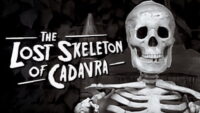
The Lost Skeleton of Cadavra (2001)

“The Lost Skeleton of Cadavra” and Low-Budget 1950s Sci-Fi

The Lost Skeleton of Cadavra (2001) poster

Sony Pictures released The Lost Skeleton of Cadavra on 12 March 2004. It had been making the film festival rounds for the previous two and a half years.

This was the first of Larry Blamire’s feature film parodies. It shows a keen understanding of low-budget 1950s science fiction films. In particular, it lampoons the thoughtlessly rigid gender stereotypes of that period. And it makes great fun of the scientific illiteracy of such films. The main character doesn’t do physics or geology. No, he does “science!” (The exclamation mark is critical!)

You can see why the film took a while to find an audience. It isn’t heavy-handed. Much of the humor is pretty subtle. He is similar to Christopher R Mihm in generally staying inside the constraints of genre rather than going for a joke all the time. And that makes this film, in particular, a treat for psychotronic fans. It really is a film by psychotronic fans for psychotronic fans.

Blamire made a few other films like The Lost Skeleton of Cadavra. The most important is the sequel, The Lost Skeleton Returns Again. If anything, it is better. It uses a bunch of forced perspective, which really makes the film look like it has a notably bigger budget. But the main thing is, the script is simply better with way better pacing.

He also made Trail of the Screaming Forehead. I don’t like it as much but it is well made. And then there is Dark and Stormy Night. It is my favorite of Blamire’s work. But it isn’t science fiction. It is a parody of an Old Dark House film. And it features some amazing dialogue along with some great miniature work and a man in a gorilla suit!

But let’s watch the film that started it all, The Lost Skeleton of Cadavra!


The Lost Skeleton of Cadavra (2001) poster via Wikipedia under Fair Use.

THX 1138 (1971)

“THX 1138” Is a Little Gem

THX 1138 (1971) poster

Warner Bros first released THX 1138 in the United States on 11 March 1971.

The film is well-known. It was George Lucas’ first feature-length film. But American Zoetrope produced it with backing from Warner Bros. So it has a notably larger budget than you would think. The film cost about three-quarters of a million dollars. That’s roughly $6 million today.

THX 1138 is probably my favorite of Lucas’ films. Of course, I’m not a huge fan of his. He’s a good producer and director but I find his ideas pretty limited. That has worked out really well for his career. He never gets too far ahead of his audience.

But in this film, he shows off his excellent visual sense. Even if you aren’t that into the story, this film is enjoyable to look at.

The film tells a very typical dystopian story for its time. It reminds me of John Christopher’s young adult books The Tripods.

THX lives in an emotionless world. The society drugs everyone to keep them working. His roommate changes his medications so that his sex drive comes back. She gets pregnant and they go to prison. She is killed. And he escapes.

All psychotronic fans should see this film. It isn’t as good as Phase IV. But George Lucas could have been killed on his way to the premiere. And this film would still be a little gem that genre fans love.


THX 1138 (1971) poster via Wikipedia under Fair Use.

Frankenstein Island - Jerry Warren

Jerry Warren Put Together Films

Jerry Warren

Jerry Warren was born on 10 March 1925.

Warren is a unique filmmaker — even by psychotronic standards. He produced and directed a small number of films. But mostly, he purchased foreign-language films and edited them for American audiences.

La Momia Azteca — better known here as The Aztec Mummy — is a great example of this. He created Attack of the Mayan Mummy. As usual when he did this, he did not simply dub the film. He shot new scenes with American actors and added voice-over to explain the significantly different plot. The original Godzilla was the same. This is why you really need to see the Japanese- and English-language versions. I don’t think the same about The Aztec Mummy.

The Wild World of Batwoman got the Mystery Science Theater 3000 treatment. I’m sure I’ve seen it since it was during the Comedy Central days and I’ve seen all of those. It isn’t one of Warren’s better outings despite (or because of) his writing the screenplay.

Some other titles are worth a look. But they can be hard to get through. The Incredible Petrified World is pretty boring. But it does show that you can make a film in which almost nothing happens. Terror of the Bloodhunters is a more interesting specimen. It features two men and a woman escaping from an island prison. You’d think it would be exciting! It’s really not.

My directing is what is adequate for the type of films I wanted to put together.

–Jerry Warren

And then there is Teenage Zombies. I think it is one of Warren’s better films. There’s nothing in it that stands out. But it works. Warren’s wife that that time was Brianne Murphy. She had a small role in this film. But she would go on to be an important cinematographer. She was the first woman to join the American Society of Cinematographers (ASC) Guild. They divorced around the time that film was released.

But I am currently writing a book about Frankenstein on film. So we have to watch Jerry Warren’s last film, Frankenstein Island. Well… It is dorky in a charming way. And it has a surprisingly good cast. The sets are terrible. And for the husband of one of the most important cinematographers of the late 20th century, it is shot in a strikingly dull way. But it’s fun — especially if you know what you are getting into!


Jerry Warren image cropped from a larger picture in Return of the B Science Fiction and Horror Movie Makers under Fair Use.

Tales From the Crypt (1972)

“Tales From the Crypt” and EC Comics Films

Tales From the Crypt (1972) poster

Cinerama Releasing Corporation put out Tales From the Crypt in the United States on 9 March 1972. Despite it being a British (Amicus) production, it was first release there. It didn’t appear in the UK until 28 September 1972.

When I was a kid, EC Comics were just about the only comic books that I liked. I was, for obvious reasons, focused mostly on the horror titles. But I liked the rest — even the war and crime titles. This is probably due to the moral clarity of all their stories and their heavy use of revenge for their denouements.

It may surprise some readers to learn that I have generally been unhappy with filmed versions of these titles. I mentioned this in my capsule review of Tales From the Crypt. The three main horror titles featured jokey narrators who presented the stories. It was not high-brow humor. But it worked really well. It took the edge off the horror.

But we’ve learned a lesson about this just as we learned it about Stephen King’s novels. Things that work well on the page don’t necessarily work well on the screen. And horror puppets spitting out puns to introduce horror shorts don’t work!

And that’s why Tales From the Crypt works well. It’s all done straight. The Crypt-Keeper is here but he’s serious. And Ralph Richardson! It was followed with The Vault of Horror, which was produced the same way. No jokey puppets!

Interestingly, this was the first film based on the EC horror titles. It was only later that producers tried to make the connective bits humorous. These two Amicus films were co-produced and written by Milton Subotsky. Like me, he was a fan of the comics. And I think he understood that the jokes wouldn’t work. Later producers and writers were not as wise!


Tales From the Crypt (1972) poster via Wikipedia under Fair Use.