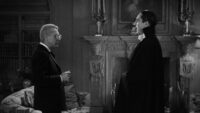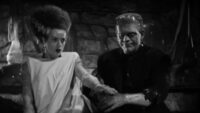
Dracula (1931) - Bela Lugosi and Edward Van Sloan

Edward Van Sloan Is the Learned Professor

Edward Van Sloan

Edward Van Sloan was born on 1 November 1882. That was in Minnesota. I mention it only because I tend to think of him as British. But that’s because of the kind of roles he played.

But I know! Most people don’t know his name. But he had notable parts in Dracula, The Mummy, and Frankenstein.

This in itself is remarkable. He had major parts in the 3 most important horror films of the 1930s. He also reprised his role of Professor Von Helsing in Dracula’s Daughter.

And sure. You could write this off to him being just a Universal player. But the truth is, he was just right for these films. He pretty much defines the “learned professor” archetype in horror films.

Apparently, the producers of Frankenstein were afraid that the usual religious conservatives would protest the film. So they had Van Sloan come out on stage as himself and give the following introduction, which I don’t think would impress the censors at all! If you ask me, it adds to the thrills of the film:

How do you do? Mr Carl Laemmle feels it would be a little unkind to present this picture without just a word of friendly warning. We’re about to unfold the story of Frankenstein, a man of science who sought to create a man after his own image without reckoning upon God. It is one of the strangest tales ever told. It deals with the two great mysteries of creation: life and death. I think it will thrill you. It may shock you. It might even horrify you. So if any of you feel that you do not care to subject your nerves to such a strain, now is your chance to, uh… well, we’ve warned you!

Of the four important films Edward Van Sloan appeared in, my favorite is The Mummy. But he doesn’t have a big part in it. (We’ll have to watch for later this month when I do Boris Karloff’s birthday!) So let’s watch him in Dracula!


Edward Van Sloan as himself from the start of Frankenstein under Fair Use.

Ghostwatch (1992)

“Ghostwatch” and Horror Pranks

Ghostwatch (1992)

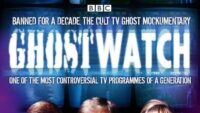
BBC One broadcast Ghostwatch on 31 October 1992. And no one has ever aired it again.

Ghostwatch was a fake documentary. And even with opening credits, you know how that goes. No? Viewers freaked out!

They always freak out. And that’s why I’m writing about it now. You know, people are easily confused. And you have to wonder, should we make films like this?

I really don’t know the answer to this. I enjoy stuff like this. But maybe it isn’t worth it.

I saw The Blair Witch Project with a large group. And I hung around afterward to hear what they thought. Most people thought it was real. And they loved it!

Personally, I hate films that are “based on a true story.” I want an original story that works. These kinds of films generally only work when they betray the “original story.” So when I see “actual” footage of the paranormal, I don’t buy it. Nor does it tend to engage me more than a completely made-up story.

But I love the idea that I would be fooled! And I tend to think the people who called up the BBC in fear during Ghostwatch actually got something special that I am missing out on.

Stephen Volk was the writer of this. And he co-wrote one of my all-time favorite films, The Awakening. So he’s okay in my book, regardless.

But I can’t say you should watch Ghostwatch. Out of context, it won’t grab you. You are better off watching the documentary, Ghostwatch: Behind the Curtains. Unfortunately, it isn’t available online. I don’t know where I saw it since the DVD release I have of the film doesn’t include it. (It’s a terrible release! There is a good one, if you are interested.)

But you can enjoy the film if you focus. It’s pretty subtle, so pay attention!


Ghostwatch via Wikipedia under Fair Use.

The Hidden (1987) - Kyle MacLachlan

“The Hidden” and the Rudeness of Hollywood

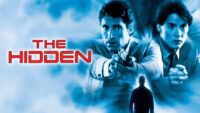
The Hidden (1987) poster

New Line Cinema released The Hidden on 30 October 1987.

I was there. In the theater. I absolutely loved it. And I’ve watched it about once a decade since then. And I still think it is great. So you should just watch it — even if you’ve seen it before.

But I want to talk about something else.

A few years back, I watched the film with director Jack Sholder’s commentary. It was fine. Pretty typical of director commentaries. No real surprises. And lots of production details no one really cares about.

But he talked a lot about co-star Michael Nouri. According to Sholder, Nouri was angry that Kyle MacLachlan was getting all the attention. And here’s the thing: I’m sure he was right. It’s hard to look at a photo of Nouri and not think he keeps his head firmly wedged up his ass.

But it always comes back to this: filmmaking ain’t cancer research. I would certainly hate if cancer researchers went out in public and bad-mouthed their colleagues. (Biologist James Watson did this about Rosalind Franklin and I lost all respect for him as a human being.) But I’d forgive it. I mean, people curing cancer can do what they want.

Why is it that filmmakers think it is fine to air their dirty laundry in public like this? I think part of it is that there is a very high level of psychopathy in Hollywood. But the bigger issue is that people in Hollywood love the taste of their own excrement. The successful ones don’t think they are curing cancer. They think what they are doing is so much more important than that!

So rather than acting like an adult and just moving on, they hold on to grudges for decades just to spew them out on commentary tracks, where the salacious bits are repeated in places normal (non-commentary watching) people frequent.

Again, I don’t doubt that Michael Nouri is a prick. Then again, maybe he was just at a bad place in his life. Or maybe Jack Sholder misunderstood him. The only thing that really matters is that Nouri is great on screen and his character’s relationship with MacLachlan’s character is perfect.

So forget all that. The Hidden is pure joy. Thanks to all who made it possible!


The Hidden (1987) poster via Wikipedia under Fair Use.

Wizards - Ralph Bakshi

Ralph Bakshi Is the Wizard of Fun

Ralph Bakshi in 1979

Ralph Bakshi is 87 today. He was born on 29 October 1938.

Because of my age, I didn’t learn of Bakshi until the late 1970s. I saw Wizards and American Pop as a double feature at the Plaza Theater (now Mystic Theatre) in Petaluma at least a half-dozen times. I also saw The Lord of the Rings in the theater when it was first released. And I thought it was fine. At least I had no problem sitting through it like I did with Peter Jackson’s version!

Since then, I’ve seen most of his work. But the main thing I still like is Wizards. It’s the only one of Bakshi’s films that I own on disc. But I will admit, I most love the non-animated stuff. The opening with the stills of Mike Ploog’s artwork with Susan Tyrrell’s narration is unbeatable. (Note that Ian Miller is also credited for the artwork. Although I think he’s outstanding, I don’t see him in that opening.)

I also like that Avatar is so clearly a rip-off of Cheech Wizard. And I was a huge Vaughn Bode fan back then.

I’m not a huge animation fan. Not that I’m against it. I like stories. It doesn’t much matter to me how they are rendered — as long as it is done well. And Ralph Bakshi renders most things well.

Wizards is not really a great film. I just think it’s fun with a lot of great gags. And, of course, “I wanna show you a trick mother showed me when you weren’t around!”

So I can’t think of a better way to celebrate Ralph Bakshi’s birthday than by watching Wizards. It’s fun to do any time. And unlike Tolkien, it doesn’t take itself seriously. And really: how does anyone take this stuff seriously?


Ralph Bakshi in 1979 via Wikimedia. It is in the public domain.

The Bride of Frankenstein - Elsa Lanchester and Boris Karloff

Elsa Lanchester Is the Only Bride for Me

Elsa Lanchester

Elsa Lanchester was born 28 October 1902.

Lanchester was a great actor. I love her work as an old woman as much as I do when she was young. Frankly, I’ve always had a crush on her. It started before I knew what a crush was. It was just very clear to me that The Bride was the ultimate woman. She even hissed like a cat and at that age, I still thought boys were dogs and cats were girls.

Elsa Lanchester married Charles Laughton when she was 27 until his death. That should tell you all you need to know about her as an actor. She was serious. She’d act in pretty much anything. But her filmography is interesting. She is listed third or fourth in most film credits. She wasn’t a day player. But she also wasn’t a star. She only got top billing in one film, Passport to Destiny. It’s not much of a film but she’s excellent in it. And the picture of her dead husband is Laughton!

Over the years, I’ve come to think of all old films as psychotronic. But Lanchester’s role in psychotronic films goes beyond that. Like a lot of serious actors who didn’t puff themselves up, she was in a lot of psychotronic films. For example, she performs “Yoga Is as Yoga Does” in the Elvis film Easy Come, Easy Go.

And one of her last roles was playing a parody of Miss Marple in Murder By Death. She’s absolutely adorable.

But we know Elsa Lanchester because of The Bride of Frankenstein. In it, she plays The Bride but also Mary Shelley. Admittedly, these aren’t large roles. But they are iconic! And as longtime readers will know Bride is the Alpha horror film for me. It made me so afraid that I vomited. But that was all Boris. It was no Elsa.

Now, of course, I think it a very sweet film. And she is a big part of that. I just wish she hadn’t hissed at Boris.


Elsa Lanchester via Wikimedia. It is in the public domain.

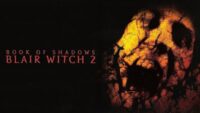
Book of Shadows: Blair Witch 2

“Book of Shadows: Blair Witch 2” and the Sequel Bind

Book of Shadows: Blair Witch 2

Artisan Entertainment released Book of Shadows: Blair Witch 2 on 27 October 2000.

Imagine that you are one of the filmmakers who created The Blair Witch Project. And you know you need to produce a sequel. But how?! There is nothing to go on. Find another group of filmmakers who get lost in the woods? That’s pretty lame.

Thankfully, the filmmakers decided to go in a totally different direction. They decided to make a normal (non-found footage) film. It features a group of obsessed fans.

But there was a problem. Critics and fans alike will hate this. They can (and did) complain that the film was too different from the original. Of course, they would have complained regardless. They would all scream, “Why didn’t they do something new!”

Damned if you do; damned if you don’t. I just hope they all made a lot of money.

I love the original film. And I love this film. But I don’t think the filmmakers could have won in these circumstances. The first film succeeded largely because of an advertising campaign. I love it for other reasons, but people connected with the film because they thought the story was true. The only option for the filmmakers was to not make anything at all. And that would have been fine.

I don’t think Book of Shadows: Blair Witch 2 is a great film. But it’s good. It’s enjoyable. And most of all: it isn’t just a retread of The Blair Witch Project. And that’s important. Because I can (and do) rewatch the original. I don’t need another film like it.

(But like most people, I do have an idea for a sequel that I think would work well. Filmmakers go back into the area to find the lost filmmakers. And they find a cult living there with the three part of it. Kind of like The Ritual. But I like Book of Shadows: Blair Witch 2 more than I do that film.)

Now is a great time to watch it! And then you can tell me why I’m wrong. I’ve already had plenty of people do that. And they were all wrong just as you will be. But it’s worth a try!


Book of Shadows: Blair Witch 2 poster via Wikipedia under Fair Use.
When a Stranger Calls

“When a Stranger Calls” Is Better Than “Halloween”

When a Stranger Calls poster

Columbia Pictures released When a Stranger Calls on 26 October 1979.

Critics didn’t like it at the time. They don’t much like it today. But audiences did. In fact, it did best in its second week of wide release than it did in its first. This is a clear sign that word-of-mouth was good.

I saw the film on TV. I remember almost falling out of my chair when Carol Kane discovers that it is the killer in her bed. But the whole thing is excellent. It is an intense ride.

So why didn’t critics like it? John Carpenter’s Halloween came out a year earlier. The critics liked it. So they couldn’t like When a Stranger Calls. People might think they like slasher films!

What I most love about the film is that it takes a folklore story and does something interesting with it. And the story itself is one of the less interesting of the “teen horror” stories around. I think it isn’t nearly as good as The Hook or The Corpse Under the Bed or The Hanging Boyfriend.

I have a great respect for Halloween. And I love the look of the film. But as I discussed yesterday, it’s padded and pretty dull. When a Stranger Calls is gritty. It doesn’t look nice at all. It looks like the story that it tells.

What’s more, Carol Kane’s face was made for this role. She’s fragile but also determined. And sure, Charles Durning saves her at the end. But for all those critics who say that Laurie Strode (Jamie Lee Curtis) is some kind of feminist icon, she only does what Carol Kane does: fight back. Donald Pleasence shoots Michael Myers. The difference here is that the slasher actually dies as opposed to Halloween where no one knows what the hell happened.

So let’s celebrate the release of When a Stranger Calls by watching it!


When a Stranger Calls poster via Wikipedia under Fair Use.

Halloween (1978)

Halloween vs Black Christmas

Halloween (1978) poster

Compass International Pictures released Halloween on 25 October 1978. Shortly after, Aquarius Releasing distributed the film in the northeast. And eventually, Astral Films released it across the US. It was something of a sleeper. Although it went on to make a lot of money, it didn’t come out of the gate that strong.

Halloween is the film that made John Carpenter a star. He also started working with Debra Hill at this time — an important and underappreciated collaboration. I’m fond of Dark Star and Assault on Precinct 13. But it was very clear that Halloween is on a different level, even though it didn’t have that big a budget.

But the film raises an important question. Why don’t I enjoy it more? Why don’t I still watch it? The film works really well. The story is compelling. The acting is great. And it looks good — both the lighting and camera work are wonderful.

Others have copied Halloween so much over the years. But I don’t think that’s the problem. The film is still far better than pretty much everything that came later.

But was Halloween a big break from the past? The truth is that everything is does well was also done well in Black Christmas. And if I’m going to watch one of them, it will always be Black Christmas.

I think it is simple. Carpenter and Hill basically remade Black Christmas. But they did it in a much more accessible way. It presents a perfect heroine with thigh-high socks. Yes, she does smoke a bit of the demon weed, but she coughs a lot, so you know she doesn’t do it a lot.

The film also provides a happy ending. Black Christmas presents evil injected into a fallen world. Halloween presents evil injected into an idyllic, vaguely 1950s suburban world. And I think that explains why Black Christmas was only modestly successful at the box office and Halloween was a huge hit. And also, why I haven’t watched Halloween in decades (until today).

Or maybe it’s just the Captain Kirk mask…


Halloween (1978) poster via Wikipedia under Fair Use.
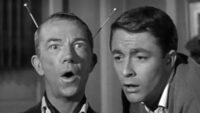
Dark Night of the Scarecrow

“Dark Night of the Scarecrow” and Made-for-TV Horror

Dark Night of the Scarecrow

CBS premiered Dark Night of the Scarecrow on 24 October 1981.

Made-for-TV horror tends to be weak. There are notable exceptions. Night Gallery was generally excellent. And it wasn’t alone. Tobe Hooper made the excellent Salem’s Lot for TV. There were films like Don’t Be Afraid of the Dark. And there is pretty much anything Dan Curtis did during the 1970s.

This last exception is probably most telling. Horror on TV generally sufferred from groupthink. Curtis had power because of the success of Dark Shadows. But how did a film as outstanding as Dark Night of the Scarecrow manage to make its way onto TV screens without being defanged?

Sadly, the commentary track on the excellent Blu-ray release is laser-focused on the production, so we don’t learn much about how it got to be made. But there are a couple of things that stand out. One is that JD Feigelson didn’t write it for TV. And Frank De Felitta was the perfect person to direct. He was fundamentally a writer. But he also had a good, unpretentious visual style.

Why the network heads at CBS didn’t make changes to destroy it is not clear. It’s not like the film lacked for resources. It does seem fairly low-budget but quite reasonable for TV. I guess we can put it down to incompetence. If the CBS managers had been more on the ball, they could have destroyed this film too!

A big reason I love the film is that it’s a very effective revenge story. It’s a very clear plot. There is one truly evil man and three followers who are sort of idiots but also pretty evil. And I enjoy seeing them get justice.

Additionally, the acting in the film is exceptional. I can well imagine that at that time, none of these pros cost much money. And only Charles Durning would go on to be anything like a star. But everyone in the cast does a great job. I think actors work harder when they have a great script, as they do here.

If you have never seen Dark Night of the Scarecrow, you really must. It’s so much fun — even after 46 years!


Dark Night of the Scarecrow via Wikipedia under Fair Use.

Invasion of the Body Snatchers - Philip Kaufman

Philip Kaufman and That Time He Went Full Psychotronic

Philip Kaufman

Philip Kaufman is 89 years old today. He was born on 23 October 1936.

I wouldn’t call Kaufman a psychotronic filmmaker. He certainly made a number of genre films. But mostly, he was just a very good director. He made whatever films he could.

But there is one major exception: Invasion of the Body Snatchers. The first Invasion of the Body Snatchers (1956) is a classic. But I do have some minor criticisms of it. Too much of it takes place in suburban homes — typical of 1950s B movies. But this is minor. The film moves along quickly and we never stay anywhere too long.

The frame story is the biggest problem, as pretty much everyone acknowledges. (People hated it at the time!) That’s 75 seconds at the beginning and just under two minutes at the end. It takes a terrifying story and reframes it as a story about American “can do” pluckiness.

The worst thing about this is that it diminishes the remake. If the film had ended where it should, we would find Kevin McCarthy ranting on the highway as cars pass him by. And that sets up the best scene in the remake where McCarthy (22 years older) shouts at our 1978 heroes, “They’re coming!”

And then, Kaufman kills him — instantly. Because this version ain’t playing pattycake!

None of this is to say that the remake is perfect. I think the late second act drags a big. The film should probably be about 10 minutes shorter. But coming from me — who thinks most films should be a half-hour shorter — that isn’t a great criticism.

I’m not sure that the 1978 version of the film had that much bigger a budget than the 1956 version did. But it feels so much bigger. Part of it is that they set it in San Francisco. So even the home interiors are more interesting. Plus the pods being shipped overseas is just wonderful and horific. Of course, credit for this should go to producer Robert H Solo.

But Philip Kaufman should get credit for what is best in this film, which is its 1970s-era paranoia. Just as we can say that the original was about the Cold War, this version is about Richard Nixon and Watergate.

Plus, there’s Leonard Nimoy, who was always best as a villain — in particular, this kind of villain!

As time has gone on, I find it hard to say why one film works and another doesn’t. And sure, I can justify any film’s brilliance. But the bottom line is that this film does work. And it is still fun to watch today.


Image cropped from Philip Kaufman by Gorup de Besanez under CC BY-SA 3.0.