Gone in 60 Seconds

Gone in 60 Seconds (1974)

On this day, 28 July, in 1974, Gone in 60 Seconds was put into wide release in the US. Most people know the remake starring Nicolas Cage and Angelina Jolie. But this is the one to watch.

As a point of comparison, the remake cost roughly 200 times as much to make in real dollars. It highlights something that has been much on my mind these last few years: psychotronic film has gone mainstream.

Or has it? Because when films like Gone in 60 Seconds or Parts: The Clonus Horror are remade, they lose their individuality. They become just another blockbuster. That doesn’t make them bad. But it does mean that there is a certain sameness to them that is the result of getting the full blockbuster treatment.

Gone in 60 Seconds

Gone in 60 Seconds was created by HB Halicki. He was the son of a towing company family who started his own in southern California. He did some work in and around the independent film scene before he decided to make the film.

With the exception of editor Warner E Leighton, Halicki relied primarily on an inexperienced crew. And yet, the results are exceptional. People mostly talk about the 40-minute car chase that ends the film. But I’m more impressed with the first hour.

One exceptional aspect of the film is all the inside information that it provides — from car theft to police work to the insurance industry. It all comes off like a really exciting documentary.

It’s also beautifully shot. When I first saw it, I figured that Halicki must have hired an experienced camera operator and cinematographer. But no.

Another aspect of it is the dense sound editing. You can’t possibly catch it all on one viewing. It’s as exciting as the action on the screen.

Overall, it’s just a wonderful story that has you hooked from the start. I imagine that Halicki was a great raconteur. There isn’t a lot to the story of Gone in 60 Seconds, but the telling is great.

The film was a big hit at the time. But since then, it’s been neglected and dismissed as just a car-chase film. There is so much more here and if you haven’t seen it, you owe it to yourself.

Later HB Halicki

Halicki went on to create a few more films that were similar in nature and usually in plot. But during a stunt for Gone in 60 Seconds 2, he was killed at the age of 48.

You can get Gone in 60 Seconds on DVD but the Blu-ray and combo DVD/Blu-ray are both cheaper. The single Blu-ray comes with some interviews. The combo comes with more including a commentary with cinematographer Jack Vacek and editor Leighton. The film is also on Amazon Prime.


Gone in 60 Seconds cover image via Amazon under Fair Use.

2020 Ozone Blu-ray Review

Ozone (2020) Blu-ray

Over the last few years, Tempe Digital has slowly been releasing their greatest hits on “ultimate” edition Blu-ray releases. In 2017, they released The Dead Next Door. In 2018, it was a beautifully restored (and fixed) Robot Ninja.

This year, Ozone gets the treatment with two different versions. The Standard Edition comes with the Blu-ray. The slightly more expensive Signature Edition also comes with a DVD and (while supplies last) an Ozone refrigerator magnet. Is upgrading to the Blu-ray worth the cost? Read on to find out.

2003 DVD Release

Each time that Tempe comes out with one of these releases, they face a bit of a problem: they’ve already produced excellent DVD releases. Ozone was released in 2003 and it was great. I’ve had it for years and I never thought, “I really wish Tempe would put out a good edition of this film” — as I have for far too many of my favorite films.

More than that, every time there’s a sale, I pick up a few copies of the DVD, which I give out like the micro-budget horror Johnny Appleseed. (I do the same thing with Kingdom of the Vampire.) If you are interested in my thoughts on the film itself, check out Every JR Bookwalter Film Ranked. I think Ozone is Bookwalter’s best film.

My one major complaint about the 2003 DVD release is it is slow. All my players really struggle with moving from selection to selection. Maybe this is due to my playing it on Blu-ray players. Regardless, this isn’t a problem with the new discs.

Audio and Video

I’ve gotten used to the look of Ozone over the years. It was shot on S-VHS-C, which might have been passable for broadcast at the time but certainly isn’t today. And the film is overwhelmingly shot in dark locations. So I figured what I was getting on the original DVD was about all that I could expect.

I was wrong. This Blu-ray version looks distinctly better. And the colors, which are really important in the film, are richer — fuller. I don’t know how to put it other than to say that it looks a whole lot better.

The sound is also better. The dialog is clearer and the music has more depth. It makes the DVD version sound mushy now.

Setup

There are a number of significant additions to the setup on the Blu-ray. First up is that Ozone gets subtitles for the first time — in English and Spanish.

This goes along with the standard English audio track in DTS-HD 5.1 and a Castilian Spanish dubbed in Dolby Digital. I seem to be in the minority of people who have no problem with dubbing — as long as it’s done right. And the Spanish dubbing is pretty good — up their with Italian films like Suspiria.

Of course, what’s most interesting about the Spanish audio track is that it allows interested parties to compare the sound designs for the film. For example, when Eddie and Mike are talking in their car, the crickets sound like they are all over in the English track. In the Spanish track, you only hear a solitary cricket now and then.

Commentary Tracks

There are also three commentary tracks included on this disc. First there is the 2003 commentary from the DVD with Bookwalter and James Black. It’s mostly interesting because of the enthusiasm that Black shows for the work. That’s also seen on the commentary track for Galaxy of the Dinosaurs. There are also some interesting story like Black’s concern that the bar extras (who had been drinking) were actually going to do him harm.

There is another track with Bookwalter alone from the 2003 release of the film as Street Zombies. This is a surprisingly good commentary. Not only does Bookwalter cram a lot of information into it, he does it in an amusing way. At times it seems like he is doing a stand-up routine. This commentary was not on the DVD release.

And finally, there is a new commentary with Bookwalter and Ross Snyder of Saturn’s Core Audio & Video. It’s generally the kind of commentary I like best — more or less an interview. If you don’t know much about the making of Ozone, it’s probably the best one to listen to first.

Sadly, the Blu-ray does not include a widescreen version of the film. But I won’t complain — at least as long as Tempe doesn’t release a widescreen version only on iTunes for another ten bucks! (They did that with Robot Ninja.) [See below]

Scenes

The original DVD release subdivided the film into 29 chapters. The Blu-ray subdivides it into 20. The first 5 chapters are the same. After that, the ones on the Blu-ray are kind of arbitrary.

Not that it matters too much but it would be nice to have shorter chapters since Ozone has so many notable scenes you might want to share with friends.

Extras and Special Features

Now things get kind of complicated. Or at least detailed.

Recycled Material

First, we have the stuff that is recycled from the 2003 DVD, although in many cases, it has been updated in some way:

  • Production Gallery: 5-minute video using all the production and artwork images.
  • Promotional Gallery: 6-minute video using all the promotional images (mostly shorts of magazine and newspaper articles).
  • Paying for Your Past Sins: 30-minute documentary about the making of Ozone.
  • Into the Black: 8-minute documentary about James Black. It’s odd though. There’s very little interviewing of Black in it.
  • 2003 Location Tour: 5-minute documentary with James L Edwards. Edwards is charming and it’s interesting to see the locations as they actually exist in context with each other.
  • Behind the Scenes: 7-minute behind-the-scenes documentary. In this version, you can choose to listen to Bookwalter’s discussion or just music.
  • Early Test Footage: 13-minutes of the footage that David Wagner shot before Bookwalter came onboard.

New Material

The following stuff was not on the original DVD:

  • Bloopers: This is 30 minutes of material. Normally, I hate this kind of thing. But it works as a kind of behind-the-scenes documentary.
  • 1993 TV News: 3-minute segment from local news on Tempe Video and Riot Pictures. (They misspell Mark Basko’s name.)
  • 1993 NewTalk Interview: 19-minute local talk show featuring Bookwalter and the Riot Picture guys, Bosko and Wayne Harold. It focuses on Riot more than Tempe.

Trailers

The Blu-ray comes with fewer trailers than the original DVD (there are more on the DVD that comes with the Signature Edition). It presents trailers that are currently available from Makeflix: Ozone, Robot Ninja, The Dead Next Door, Platoon of the Dead, and Poison Sweethearts.

Signature Edition DVD

The DVD features the original VHS version of Ozone. I don’t actually see any difference between it and the original DVD version. But to be honest, I haven’t looked in detail.

It too comes with English and Spanish subtitles. There is a Dolby Digital 2.0, production, and isolated music tracks. The production track seems to be the basis for the Spanish language dub on the Blu-ray. That is: it doesn’t sound as good.

The highlight of the disc is a commentary track with Doug Tilley and Moe Porne of No-Budget Nightmares — one of the few listenable film podcasts. They manage to be funny and informative. They are also highly opinionated in a way that doesn’t make me want to turn them off.

The film is divided into the same 20 chapters as on the Blu-ray.

Extras

The extras are all on the original DVD:

  • Ozone: Droga Mortal: 12 minutes of the film with Spanish dubbing. With the whole film now available in Spanish, this is just included for completeness.
  • 1992 B’s Nest Video Magazine Intro: Tempe used to put a little video magazine at the end of their tapes. Basically, they’re just commercials. This one is interesting in that it is produced by Bookwalter and Lance Randas (who is also Bookwalter). What’s up with that?!
  • Three other Ozone trailers:
    • Original 1993
    • Japanese 1995
    • Street Zombie 2003.
  • Other trailers:

Booklet

The Blu-ray also comes with an eight-page booklet with an article by Ross Snyder that puts Ozone into historical context relative to the films that went before and after. It’s excellent and well worth a read.

Additionally, Tempe has had some Ozone magnets produced and one comes with the Signature Edition. The magnet is much more substantial than the old (still cool) magnets that they used to sell. It’s more than worth the extra $5 the Signature Edition will cost you.

Summary

I see that all the cheap 2003 Ozone DVDs at Makeflix are sold out. You can purchase it on Amazon, but at $12.99, you are better off springing for the Blu-ray.

The Blu-ray is available on Amazon, but currently, you get a better deal at Makeflix — even with shipping (which is free if you order more than $30). The basic version is $19.99. If you want the Signature Edition ($24.99), it seems to only be available from Makeflix. If you’re any kind of fan of the film, it’s the one to get.

Note

It turns out that the source material just doesn’t have the resolution to do a widescreen print. It was possible with Robot Ninja (which looks great in widescreen) because it was shot on 16mm film.


Image of Ozone taken from Makeflix under Fair Use.

Ouija Blood Ritual: Blu-ray Review

Ouija Blood Ritual

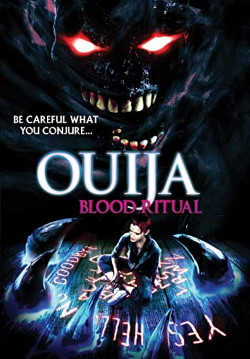
Ouija Blood Ritual was released at the start of this month and it is a masterpiece.

I didn’t even want to buy it. It looked like just another micro-budget horror film. But Tempe just put out a Blu-ray of Ozone and even though I have several copies, I had to get this version.

The problem is that Makeflix gives free shipping on orders over $30, and I’m really cheap about that. So I purchased Ouija Blood Ritual. And glad I am that I did!

The film is the brainchild of Dustin Mills. I haven’t seen any of his films before, even though he’s made a dozen and a half features since 2010. He is also a puppeteer, which raises him further in my estimation.

The Plot

Ouija Blood Ritual tells the story of three 20-somethings who are producing a YouTube video series that recreates rituals meant to summon ghosts and demons. Things like Bloody Mary.

Not surprisingly, their recreation of the summoning of Closet Man (the boogeyman who hides in your closet) actually works. Things go from uncomfortable to unnerving to terrifying from there

The plotting of it subtle and clever. There are a number of very tense points that aren’t necessarily directly related to the plot. Then there is an extra layer of psychological torture going on in the second half of the film that makes it almost unbearable.

Structure

It’s constructed as a found-footage narrative with two different groups. The second group’s video exists as a kind of film-within-a-film. But it’s also used effectively at the beginning to set the tone.

One element of the story that heightens its effectiveness is that Closet Man can grab your phone and use it to film what he sees. This is seen at the very start but it gets much more intense as the film unfolds.

Acting

What most struck me as I watched the first half-hour of Ouija Blood Ritual was how much I liked the three principal characters. And they all seemed very real. I was surprised to learn that they didn’t have a history of working together. In fact, they mostly hadn’t worked together at all.

The lead is played by Kayla Elizabeth (The Dead Will Rise 2). She’s the on-screen talent for the show who would like to leverage it to get a job in local news. The producer is played by Rob Grant who is understanding of the foibles of his colleagues even if he doesn’t hide his annoyance well. And the cameraman (who is also Kayla’s brother) is played by Dustin Mills himself.

The three come off very much like friends who are working on a project together. Then, when things start going wrong, they respond with the same concern and aggravation that you would expect. The acting was mostly ad-libbed, but I think it speaks well of the actors that they seem like they’ve known each other for years.

Technical Elements

Most of the effects in Ouija Blood Ritual are practical or editorial. Digital effects are also used, however. But only once in a major way and always in a way that added to the film.

The sound editing is exquisite — one of the main reasons the film works so well. It mostly consists of electronic noise. But it is how it is used that makes it effective. For example, there is one scene where Dustin is in his room sobbing and speaking into the camera. But all we hear is noise until the sound cuts to what he’s saying, “I can’t, Goddammit!”

I so often find myself annoyed at music in film making me feel things that the rest of the film would not. So it’s nice to not have any here. Even if we admit that noise is music, its use here only heightens what’s already happening. I think the film would still work with only the in situ sound.

As you can tell, I love this film. Now I’m going to have to dig into Dustin Mills’ old films.

Blu-Ray Details

The video and sound on the Blu-ray are excellent, but that’s not really my thing. Others may be less impressed.

When I looked carefully at some scenes, I saw a bit of aliasing, which is probably in the source material. And since the film is supposed to be found footage, it isn’t well lit. As with other films like V/H/S, not being able to see details is part of the appeal.

Commentary

The Blu-ray comes with a commentary by Dustin Mills. As solo-director commentaries goes, it’s pretty good. There is a lot of background information about the production. And I was pleased to hear him discuss the likability of the characters, which was a critical element of my enjoyment.

Interviews

There is a 7-minute interview with Kayla Elizabeth and 4.5-minute interview with Rob Grant. They don’t add much to what is in the commentary.

Misc Extras

The full footage (14:21) of the film-within-a-film adds a bit of context for the production.

The trailer is also included.

Finally, there are trailers for Sons of Steel (perhaps an upcoming release), The Zombie Army, Going Hog Wild (our review), and Oil of LA.

It’s available on Blu-ray and DVD. You can also get it from Makeflix or directly from Phantom Pain Films.

Overall, a pretty good release of a great film.


Ouija Blood Ritual cover taken from Amazon under Fair Use.

City of the Living Dead - Ending Shot

The Ending of City of the Living Dead

City of the Living Dead - Ending Shot

I recently published a discussion about Lucio Fulci’s Gates of Hell trilogy. In it, I briefly discussed the ending of City of the Living Dead. I’ve given some thought to it, and I now think I understand it.

The Ending

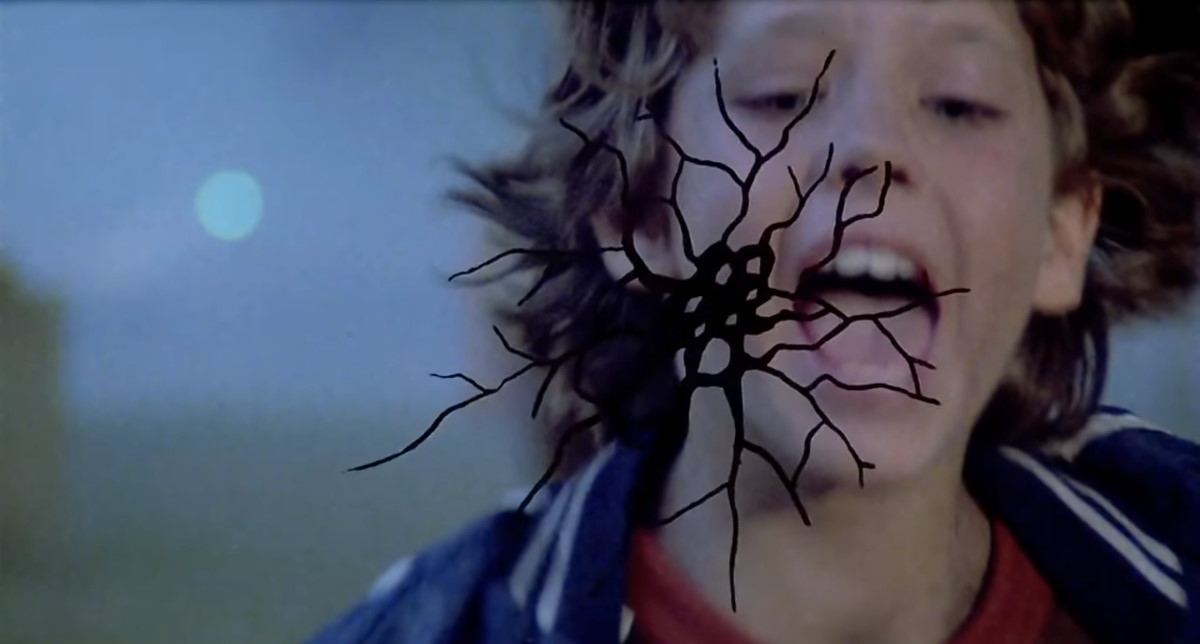
At the end of the film, Mary and Gerry have managed to kill Father Thomas and thus close the gate of hell. They come out of the tomb and see John-John, the young boy they had rescued after all his family was murdered. He runs toward them smiling.

Then they look concerned. We see John-John running toward the camera, still happy. But we overhear the survivors screaming. The shot freezes and then is cracked with black lines that expand to fill the screen. The end.

What Happened

It is widely claimed that the original footage shot was destroyed. That may be true. But it isn’t necessarily. What we do know is that Fulci decided, for whatever reason, that he couldn’t use the ending that was shot.

Clearly, whatever the original ending, it had to include something that Mary and Gerry saw and recast the happy ending it appeared we had reached was not a happy ending after all.

There isn’t a lot to work with here, though. They are in an isolated area. So:

  1. Zombies could have appeared from out of the forest.
  2. The police, who brought John-John to the tomb, could be zombies.
  3. John-John could have been a zombie.

What most people say about the ending as it stands is that we are supposed to understand that John-John is a zombie. But so what?

Ending in Context With “Gates of Hell”

It doesn’t really matter who is a zombie or even how many zombies there are. When Mary and Gerry killed Father Thomas, all the zombies burst into flames. If there are zombies outside the tomb, well… Are they really back in the normal world?

Based on the ending of The Beyond, it would seem that the appearance of zombies means that they are rather in Hell itself. So they saved the world but imprisoned themselves in the process.

The other possibility is that they simply defeated Father Thomas and his minions but the gates of hell are still open. But in that case, what were the characters doing for the previous hour and a half?

Does the Ending Matter?

To be honest, I’d rather the film just end with the death of Father Thomas. As I mentioned before, City of the Living Dead is more of a cinematic nightmare than anything else. Sure, it has a plot and character. But the point is to horrify the viewer.

No one watching the film thinks, “I wonder what happened to John-John”! The scene outside the tomb seems tacked on. And it isn’t as though the world is now safe. There are seven gates of hell. What are the odds that a plucky psychic and harried psychologist will manage to show up to close the other six just in time?

The epilogue deprives the viewer of a satisfying ending. So instead of reflecting on the masterpiece that you just saw, you spend a bunch of time trying to figure out what you were supposed to take away from the ending.

City of the Living Dead is an exceptional film with a third act that kills (literally and figuratively). But I don’t think it’s deep. It isn’t the kind of film that is supposed to make you think. So don’t!

I’m going to pretend this epilogue doesn’t exist and that Mary and Gerry will always be standing in the tomb in front of the ash of Father Thomas.


Image taken from City of the Living Dead under Fair Use.

Recent Additions: June 2020

Psychotronic Review

Instead of the usual layout here, I’m going to discuss these below because a number of these need to be discuss together.

  1. 100 Bloody Acres (2012)
  2. 2 Young 2 Die (2006)
  3. The Beyond (1981)
  4. The Birds (1963)
  5. BloodRayne: The Third Reich (2011)
  6. Blubberella (2011)
  7. City of the Living Dead (1980)
  8. Death Ship (1980)
  9. The Funhouse (1981)
  10. The Ghost and Mr Chicken (1966)
  11. Hell of the Living Dead (1980)
  12. The House by the Cemetery (1981)
  13. Housebound (2003)
  14. The Incredible Mr Limpet (1964)
  15. It Came From Outer Space (1953)
  16. Pizza Man (1991)
  17. Platoon of the Dead (2009)
  18. Poison Sweethearts (2008)
  19. Scare Campaign (2016)
  20. The Seekers (2003)
  21. The Unseen (1980)
  22. V/H/S (2012)

100 Bloody Acres (2012) and Scare Campaign (2016)

The Cairnes brothers are a successful editor and director in the Australian TV industry. They know their craft and work with some great people.

Their first feature was the horror comedy 100 Bloody Acres, which everyone should see. It features a twisted sense of humor that should appeal to anyone who enjoys horror generally.

Scare Campaign is kind of odd. It’s really well made with a great performance by Josh Quong Tart. But I find the plot predictable. But I eagerly await their next film. These guys are great!

2 Young 2 Die

David Palmieri is a successful grip in Hollywood and on the side he makes micro-budget (mostly) horror films. Such people are really inspiring because they could just relax in their careers. But he continues to put out films.

I’ve only seen 2 Young 2 Die (AKA Axegrinder). It was one of his first films. It features some good gore and a plot that kind of makes sense. I’d definitely like to see more of Palmieri’s work.

City of the Living Dead (1980) and The Beyond (1981) and The House by the Cemetery (1981)

This is Lucio Fulci’s “Gates of Hell” trilogy and it is amazing. Every horror fan should own them. And of course that means that they haven’t been released together, as they ought to be.

Check out my article, The Gates of Hell Trilogy. It also includes a thorough round-up of the available versions. Sadly, City of the Living Dead has been released really well only outside the US. If you only get one, I think The Beyond is the best. And most other people agree.

Housebound (2003) and The Seekers (2003) and Platoon of the Dead (2009)

I originally bought Platoon of the Dead when Tempe Video was closing down. It’s a good micro-budget zombie film. So I decided to look into the work of director John Bowker. There’s a double DVD with Housebound and The Seekers.

I hope to write an article looking at the progression of Bowker’s career. These two earlier films aren’t as good as Platoon. But they are still worthy and The Seekers was pretty fun.

The Birds (1963)

I grew up with The Birds. Because it was filmed locally, every time it came on TV, we had to watch it. I still enjoy it — especially Suzanne Pleshette and the bird-lover, Ethel Griffies.

BloodRayne: The Third Reich (2011) and Blubberella (2011)

These two Uwe Boll films were made at the same time. BloodRayne is a standard Nazi action film and Blubberella is a parody of it. They are both solid films, but the main reason to watch BloodRayne is that you will better enjoy Blubberella.

Death Ship (1980)

Death Ship feels so much like it was made for TV but it wasn’t. It has its moments. I didn’t much like it but to be honest, I really don’t like George Kennedy.

The Funhouse (1981)

I love The Funhouse. It’s scary, has interesting characters, and looks fantastic. Wayne Doba as the “monster” is great. And I quite like Elizabeth Berridge. This is one of Tobe Hooper’s best.

The Ghost and Mr Chicken (1966) and The Incredible Mr Limpet (1964)

Don Knotts has not aged well for me. I find him kind of annoying. Yet these films work remarkably well. The Incredible Mr Limpet is the lesser of the two. It’s got a strange Cold War kind of plot that seems tacked on. Still, the animation is good and it’s sweet.

The Ghost and Mr Chicken is a surprisingly scary film. I don’t have any children, but if I did, I’d definitely use it to infect them with the Horror virus.

Hell of the Living Dead (1980)

Hell of the Living Dead is a Bruno Mattei “me to” film. It’s not great. But it features some awesome gore. Frankly, I’ve always found the conflict in Day of the Dead kind of annoying and it’s the same here.

It Came From Outer Space (1953)

It Came From Outer Space is a great science fiction film from the people who brought us Creature from the Black Lagoon. It’s nice to get away from the usual “invasion” films of that time.

Pizza Man (1991)

Pizza Man is LF Lawton’s follow-up to Cannibal Women in the Avocado Jungle of Death. It’s equally funny. Sadly, Lawton doesn’t make these kinds of films anymore.

Poison Sweethearts (2008)

Poison Sweethearts is a series of short films — mostly about women who are pushed too far. It’s roughly horror but presented in a very artistic way. It’s worth a watch. I really liked one of the shorts.

The Unseen (1980)

This is one of those “Great horror films you’ve never seen” type of things. I’ve gotten tired over the years of having plots where I’m trying to figure out who the killer is. There’s none of that here. And the story is heartbreaking. I highly recommend The Unseen.

V/H/S (2012)

V/H/S brings together a number of fine filmmakers to create a bunch of connected shorts. What’s not to like? Even the poor lighting and limited resolution is used for great effect. I need to check out Siren, which was spawned by this film.

Is the Drive-in Theater Back?

Milford Drive-in Theater

In January, I went to see a high school basketball game with my cousin and I got a great idea. In the summer, we should drive over to Sacramento, pick up her brother, and go to the West Wind Drive-in Theater!

She didn’t immediately take to the idea because she knows the kind of movies that I like. But I explained that we would see a “normal” film. There would (sadly) be no Blood Feast playing there anyway.

And then the pandemic started and I despaired of getting to do this. But I shouldn’t have. Drive-in theaters may end up being big winners from this crisis.

Childhood Memories

Many people have noticed that drive-in theaters are kind of pre-social-distancing.

A large percentage of my memories from childhood involve movies: on television, in the theater, and at the drive-in. I especially remember my older sister sticking my younger sister and me in the trunk of the car to save money getting into the drive-in. It seems that everyone did that — to the point where theaters started just charging by the car.

One of my earliest memories was going to the drive-in to see The Planet of the Apes and Beneath the Planet of the Apes with my friend George and his parents. I must have been 6-years-old. George fell asleep, which still shocks me. He missed the reveal of the people who worship the bomb!

When I first went to grad school, I went to the drive-in a number of times. I remember seeing Dick Tracy and Terminator 2: Judgment Day.

Technological Changes

By the 1980s, most drive-ins had switched from physical speakers to FM broadcasting. So the sound when I saw these films in 1990 was fine. The visuals, however, were not. They were faded out — a lot like those illegal DVDs people used to sell that had been video-taped during a showing of the film.

I’m happy to hear that the drive-in theater industry eventually addressed this problem. In recent years, theaters have been converting to digital projection. Sadly, this is going along with the consolidation of the industry because this technological change is expensive. So we are seeing a lot of chains, like West Wind that I discussed earlier.

Pandemic Movies

The movie industry has adjusted to the pandemic by releasing films directly to streaming. And that’s great! (I guess it’s great; I almost never see new films.) But people still like to make movie-going an event.

And I suspect soon the theaters will open up. I don’t see a problem if precautions are taken. (It’s interesting that airplanes are filling up but movie theaters aren’t. I’m not saying either should go back to normal but I see a distinct class element here.)

But many people have noticed that drive-in theaters are kind of pre-social-distancing. Sure: there might be some issues at the snack bar and the bathrooms. But these can all be managed. For example, some theaters are offering food service at cars.

And while all the indoor theaters around me are closed, you can still go to the drive-in. At the San Jose drive-in, they are showing a bunch of well-designed double features. For example: ET and Jurassic Park. But they also have new films: The Hunt and The Invisible Man.

Temporary drive-ins are opening up. I just read about two in the Chicago area. Another in Maryland. And Colorado. And these are just some that have been reported on in the last day!

I really don’t know if drive-in theaters will ever again be more than nostalgia for old people like me. But changes in the technology are a good sign. The indoor theater doesn’t offer me much. I’m thrilled that the drive-ins near me are playing double-features. I don’t expect I will ever prefer the drive-in to my home theater. But if they were equally accessible, I’d definitely pick the drive-in over the indoor theater.

And not just for nostalgia.


Milford Drive-in Theater by Laxbot7 under CC BY-SA 4.0.

Recent Additions: May 2020

Psychotronic Review

It was a big month for new short takes. I can’t really get through a day without watching a film — usually a horror film. But as usual, I’m going to have to look up half the films here. It was only after writing two articles about Monster From The Ocean Floor that I remembered what it was about.

This doesn’t speak to the quality of the films. But it does speak to the quality of the titles. Like The Beast Must Die. That could be about anything!

  1. 13 Frightened Girls (1963): probably my least favorite William Castle film. But then, I’m not that target audience of 13-year-old girls. It’s well-made, though.
  2. 13 Ghosts (1960): a light horror mystery from our man Castle. This is a good one to get your kids started on horror films.
  3. And Now the Screaming Starts! (1973): one of the better Amicus features. Very effective!
  4. Asylum (1972): another collection of short horror films from Amicus. I particularly like the one about the chopped-up lady.
  5. The Babysitter (1980): made-for-television film about an unstable nanny who destroys a family. Features William Shatner in a regular-guy role.
  6. Beast From Haunted Cave (1959): a standard low-budget monster movie about a group of criminals on the run. Notable mostly for taking place in the snow.
  7. The Beast Must Die (1974): this is the kind of film that psychotronic fans live for. Who would think to combine a werewolf with an insane big game hunter? You’ve got to see this!
  8. Black Christmas (1974): one of the earliest slasher films and one of the best. It’s really nice to have a story that doesn’t feature any kind of clever back-story. There’s a crazy guy and he’s murdering people. That’s enough.
  9. Blood Ties (1991): a new take on the vampire. Unfortunately, this has been done to death now. But if you can get past that, it’s a solid film.
  10. BMX Bandits (1983): a bike-oriented kids film that made Nicole Kidman a star. If you were into those bikes when you were a kid, you’ll love this film. I, of course, was inside watching horror films.
  11. Captain Kronos – Vampire Hunter (1974): if released today, this title would be cheeky. But this film is for real. It’s a wonderful combination of horror and adventure. This is a classic!
  12. Chop (2011): a truly funny horror comedy that surprises right up to its denouement, which is purposefully anti-climatic. I love this film!
  13. Countess Dracula (1971): horror film based on the true-life psychopath Elizabeth Báthory. Other than actually getting younger, this is probably how it was.
  14. Day of Anger (1967): a good Spaghetti Western that maybe tries a bit too hard to be serious.
  15. Day the World Ended (1955): another of those 1950s post-nuclear war films that mostly take place in a single room. This one is pretty good.
  16. Death Smiles on a Murderer (1973): basically a period zombie picture that is pretty twisted.
  17. Doll Factory (2014): a teen horror-comedy that is genuinely funny. And most of the teens are horrible so it’s fun to see them eaten by dolls.
  18. Escape from LA (1996): people hated this film when it came out but today, it’s probably more fun to watch than the original.
  19. Escape from New York (1981): a solid action film although I don’t especially care. I’ve never gotten over Adrienne Barbeau dying.
  20. The Evil (1978): people renovating an old house unleash a demon and need to find their way out. The set is great and the film a lot better than it has any right to be.
  21. Forest Primeval (2008): a lesser film by the Polonia brothers, it’s a bit slow but definitely has its moments.
  22. Frankenstein Meets the Space Monster (1965): a pleasant 1960s Scifi film about Martians stealing our women. Nothing to be sought or avoided.
  23. God’s Gun (1976): a great Spaghetti Western with Lee Van Cleef playing two roles. It’s a lot of fun.
  24. Homicidal (1961): one of William Castle’s best. I think it’s better than Psycho.
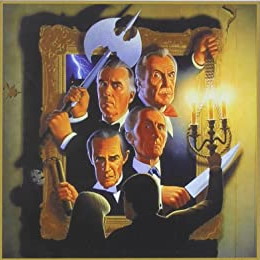
  25. House of the Long Shadows (1983): the only film featuring Vincent Price, Peter Cushing, Christopher Lee, and John Carradine. Even apart from that, it’s a good film.
  26. Inferno (1980): The second film in The Three Mothers trilogy. Very creepy with great practical effects and look. Essential viewing!
  27. The Kentucky Fried Movie (1977): great sketch comedy featuring four segments that should appeal to psychotronic fans.
  28. Krippendorf’s Tribe (1998): a widely-hated but hilarious screenball comedy.
  29. The Little Shop of Horrors (1960): this is a very funny film. If you haven’t seen it, what’s wrong? Here: a free copy!
  30. Mandao of the Dead (2018): a youthful comedy with a horror angle. I’m really looking forward to what this group does in the future.
  31. Monster From The Ocean Floor (1954): Roger Corman’s first film is pretty good. And the shark scene is great.
  32. Mother of Tears (2007): the last of The Three Mothers trilogy. It features great practical horror effects. Don’t believe the haters.
  33. Mr Sardonicus (1961): this is a really good film but the make-up effects do make it seem kind of silly.
  34. The Norliss Tapes (1973): the pilot of what looks like what would have been a great series. It features an unusual zombie story.
  35. The Old Dark House (1963): William Castle’s remake is quite enjoyable. This is another one for the kids.
  36. Paranoiac (1963): story of a very screwed-up family. Solid narrative.
  37. Phantom of the Paradise (1974): a surprisingly good musical and parody of Faust and Phantom of the Opera.
  38. A Pistol for Ringo (1965): a very good Spaghetti Western that spawned a ton of sequels.
  39. Rats: Night of Terror (1984): Two hundred years after nuclear war, rats have become very dangerous. Pretty fun film.
  40. Seven Psychopaths (2012): a fun but intense film about a bunch of really bad people. You know they have to be bad if Colin Farrell is the most likable character.
  41. Shanghai Joe (1973): more or less a film version of Kung Fu with over-the-top action sequences.
  42. Schlep (2016): teen comedy from the same group that brought us Mandao of the Dead.
  43. Serpent Island (1954): low-budget film aboard a ship on its way to Haiti. It’s surprisingly engaging.
  44. Support Your Local Gunfighter (1971): solid comedy with great production values. Most people like the original more.
  45. Support Your Local Sheriff (1969): simple comedy with a strong lead performance and a great supporting cast.
  46. Terror of Dracula (2012): a low-budget and very talky Dracula adaptation. Good acting.

That’s all for this month. I’ll probably focus more on horror next month.

I’d say the following are worth owning: The Beast Must Die, Black Christmas, Captain Kronos – Vampire Hunter, Chop, Doll Factory, Escape from LA, Escape from New York, Homicidal, Inferno, The Kentucky Fried Movie, A Pistol for Ringo, And Now the Screaming Starts! The rest are either of less interest or are only marginally psychotronic.

Also: just download The Little Shop of Horrors since it is free and something you’ll want to watch every few years.

Anniversary Post: Price, Cushing, and Lee

House Of The Long Shadows (1983)

Yesterday, 26 May, was Peter Cushing’s birthday. He was born in 1913.

And today, 27 May, is the birthday of Vincent Price (1911) and Christopher Lee (1922).

Three titans of horror. Three excellent actors. Three tall men. All born around the same date.

I guess they were also all friends, although it’s very hard to tell when it comes to actors who are always playing a part when a camera is rolling.

Collaborations

Everyone knows that Christopher Lee and Peter Cushing starred in a lot of films together. Watching a collection of Hammer films is a lot like watching “The Cushing and Lee Show. “

I know of only two films that featured Price and Cushing. The first was Dr Phibes Rises Again although Cushing is barely in it and probably wasn’t even on set at the same time as Price. Much better is Madhouse where they work together closely and brilliantly. It’s a great part for Cushing!

And there’s only one film I know of with just Price and Lee: The Oblong Box. It’s a great film but the two men don’t work that much with each other.

All Three Men

There are two films that feature all three men. The first was 1970’s Scream and Scream Again. It’s a good film that has you confused until the very end. The problem with it is that Peter Cushing is hardly in it all.

If you want to celebrate this occasion, you should watch House of the Long Shadows. It’s an ensemble film but the three men are all primary. And as a special extra it also features John Carradine!

And I just happened to have found a wonderful copy of the film on YouTube. So here’s to Peter Cushing, Vincent Price, and Christopher Lee!


Image from House Of The Long Shadows via Amazon under Fair Use.

Monster from the Ocean Floor (1954)

The Shark in Monster From the Ocean Floor

Filmfax Issue 102

I’ve stated before that the most interesting thing in Monster From the Ocean Floor is the scene where the lead character fights off a shark. Well, I got more information on this.

You can see a bit of this sequence in the trailer at the link above. But it’s much more impressive than that. What’s in the trailer looks impressive because they are using a long lens, which compresses distance and so makes it looks like the shark is right on top of her when it isn’t.

Luckily, the actor, Anne Kimbell, talked about this in an interview with Michael Barnum for Filmfax 102 (2004), “Monster (from the Ocean Floor) Hunter.”

I got this off the DVD for the film. In it, Tom Weaver quotes from the article:

On the last day, Roger said, “Now about the scene where you fight the shark…” I said, “Roger, “I’m not fighting a shark.” And he said, “Oh no, Anne. It is a very old shark. So again I said, “Roger, I am not fighting a shark!” He said, “We’re going to put a net around it, Anne. It can’t hurt you. It practically doesn’t have any teeth. Besides, the thing we really have to be careful about is that this is a valuable shark…”

There are things that don’t make sense. There is no net apparent in the film. I suspect what he meant was that there would be a net around the whole area so that the valuable shark didn’t escape.

And old or not, toothless or not, a six-foot (blue?) shark is still dangerous. Just running into her could have caused damage.

Here is the scene cued up:

It Ain’t Anne Kimbell

But this is the most remarkable part of the interview:

So when you watch the movie, the lady fighting the shark is not me. It is the wife of photographer Al Hanson who lived and worked on Catalina Island. His wife, who was also a deep-sea diver, fought the shark.

That’s Al Hanson who did some underwater cinematography (and probably a lot more than he got credit for).

I’ve watched that sequence over and over. They do a good job of not allowing us to see the diver’s face in the shark scenes. But I’ve spent a lot of time trying to notice body differences and I just don’t see them. It all looks like Anne Kimbell. It is definitely not like that great scene in I’m Gonna Git You Sucka.

Also: Roger Corman Was Kind of a Dick

I admire Corman. I think people obsess about him too much. But being a low-budget film producer is hard. And he did it well. But it was all about the money. And he stepped on a lot of toes.

Monster From the Ocean Floor was Corman’s first film as producer. And he already had it down. He got everyone to work for little or nothing in exchange for a cut of the film. Anne Kimbell:

Roger showed the movie briefly in the theaters then he cut it and sold it to TV and made a lot of money to start is own picture career. Unfortunately, those of us that had started on commission never got much money because our commission was going to be on theatrical release, not the television part.

And I’m sure that was a mistake. I’ve gotten used to this. Most of the low-budget producers of the past did so on the backs of the idealism of those around them. And in the end, they get the money and all the credit.

Meanwhile, we don’t even know the name of the woman who did the scenes with the shark.


Filmfax 102 via Amazon under Fair Use.

Anniversary Post: For a Few Dollars More

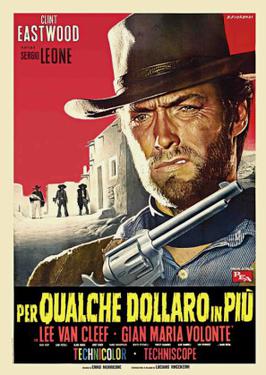
For a Few Dollars More

On this day, 10 May, in 1966, For a Few Dollars More was released in the US.

It was the follow-up to A Fistful of Dollars. At one time, I liked it better but I eventually realized that was only because I enjoyed seeing Lee Van Cleef as a good guy.

But in the long run, I don’t like it all that much. The flashback scenes of Indio and Mortimer’s sister are prime examples of Sergio Leone at his worst.

Also, the plot is a mess with Indo being both unbelievably smart and stupid.

But if you haven’t seen the film, you definitely should. It’s nice just to hang out with Van Cleef and Clint Eastwood for a couple of hours. And there are a number of comedic elements like the old man who refused to sell his property to the railroad and the hat-shooting scene.

Mothra

On this day in 1962, Mothra was released in the US.

Okay, so it isn’t a serious film like Godzilla. But it’s much more fanciful — like a Ray Harryhausen film.

Dead Man

On this day in 1996, Jim Jarmusch’s Dead Man was put into general release. When I first saw it, I didn’t enjoy it that much. I was expecting a traditional narrative. Over time, my love of the film has only increased.

It’s both deep and deeply twisted. I never lose my appreciation for Lance Henriksen’s eating Michael Wincott’s hand. That should be enough to get you to watch it.

Thunder Road

On this day in 1958, Thunder Road was released. It’s hard not to like Robert Mitchum. And here he is as a bootleg transporter so we get lots of car chases and bravado.

The formula has been copied many times but this zippy little feature is a must-see for psychotronic fans.


For a Few Dollars More poster via Wikipedia under Fair use.