Lon Chaney is an icon of horror film — to a large extent because of his skill with make-up. Sadly, all but one of his films were silent.
In the one film where he spoke, The Unholy Three(1930), he is shown to be as good with his voice as he had always been with his face. In fact, he has almost a “broadcast voice” before there was such a thing.
Had he lived, Chaney would have played the part of Dracula rather than Bela Lugosi. I don’t think it would have been better or worse — just different.
I think about it often. Legosi brings a strong otherness to it but I tend to think it would have been more frightening with Chaney.
But despite his films being silent and thus even less seen that older movies, he was responsible for many of the iconic horror images that people still know today.
On this date, 31 March, in 1930, the Motion Picture Producers and Distributors of America agreed to abide by the Motion Picture Production Code (MPPC) or “Hays code.” It stayed in effect until 1968, by which time it was often circumvented anyway. This saw the rise of the MPAA rating system.
Censorship
All of these efforts — in the US and abroad — to protect audiences from the contents of films are evil and stupid. They are evil because they stop people from seeing the films they want, which producers are willing to supply in a lawful way.
We aren’t talking about kitty porn here. One of the final straws for the MPPC was its denial of Michelangelo Antonioni’s film Blow-Up. Why? Because it had nudity!
(Now the MPAA effectively has the ability to dictate what can be seen in a theatrical release because of the lack of competition in the theater business. And the MPAA uses this not to stop consumers from seeing love scenes, but rather same-sex love scenes. Think what you will about such things but the MPAA is effectively censoring ideas in these cases.)
Stupid and Evil
But this censorious behavior is also stupid in that it does protect anyone from anything. Take, for example, The Texas Chain Saw Massacre. It was banned by the British Board of Film Classification. But in 1999, this ban was reversed. So that’s the difference between a film so dangerous it can’t even be seen and one that can: 25 years. What happened? Did humans become different?
It’s clear that the MPPC and other censors are not working in the interests of film viewers but of themselves. They don’t want to see the films so no one can. But after a bit of time, the censors get used to the films and allow others to see them. No one is made safer as a result of this.
Now, with so many films being released directly to consumers, the MPAA and others don’t have the power they once did. But they continue to have a pernicious effect on film. See Kirby Dick’s This Film Is Not Yet Rated.
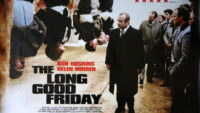
On this day, 29 March, in 1981, The Long Good Fridaywas released to the world (at first in London). Over the years, I’ve come to hate films that make gangsters out to be heroes. That’s true of The Godfather, of course, but also of Goodfellasand The Sopranos. The Long Good Friday is not like that.
Story
In it, Harold Shand (Bob Hoskins) is a successful London-based gangster who is trying to expand his operation into real estate with the help of representatives of the American mafia. Shand is clearly older and more thoughtful than he used to be. In fact, he has become part of the establishment and spends much of the film whining about the state of the world that he helped build.
But despite his protestations, he’s still just a thug who rationalizes his own horrible behavior while complaining about that of others. Ultimately, he has little going for him other than his propensity toward violence.
That’s his downfall. The behavior that allowed him to rise to the top of the crime world doesn’t suit him outside of it. He doesn’t do what he should with the IRA and it is clear that he wouldn’t do any better with the real estate deal.
Production
Whenever I read about a film production, I’m amazed that any film ever gets produced. It’s like flipping a coin 50 times and requiring that it come up heads every time. The Long Good Friday was no exception.
It was originally produced as a film, but its funding collapsed. So it was picked up by ITC. But then when it was ready to be broadcast, it was badly cut. So a scramble ensued and Handmade Films (George Harrison’s company) bought it and released it.
If you get a chance, you really should watch it. It’s a great film.
On this day, 27 March, in 1910, the special effects artist Tom Howard was born. He worked in the world of practical effects. He received two Academy Awards for his work on Blithe Spirit and Tom Thumb.
Howard was best-known for his use of front projection. In fact, Howard even invented a special process of this.
Front Projection
Let me go over front projection. I think most people are familiar with rear projection. An image is projected on to a screen which allows light through, which can be seen from the front.
I most associate this technique with Alfred Hitchcock and it is thanks to him that I have a low opinion of it. He over-used it and did so poorly. Today, people use this as a reason to hold him up as a hero, “He demanded so much control that he had to use rear projection!” I really think it was more that he didn’t care.
Front projection is the opposite. An image is projected onto a screen via a two-way mirror. The camera is positioned behind the two-way mirror.
The screen behind the actors is highly reflective so that the image is seen as the background to the camera. And the image displayed on the actors in front of the screen is not noticeable because the actors aren’t highly reflective.
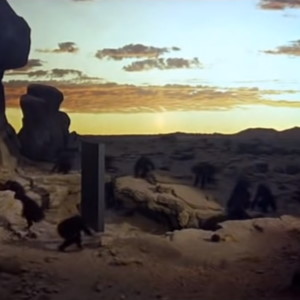
Tom Howard was part of the team that worked on 2001: A Space Odyssey (along with titans of the field Douglas Trumbull and Wally Veevers). In particular, the “Dawn of Man” scenes used front projection. Like all the effects in that film, it still looks great:
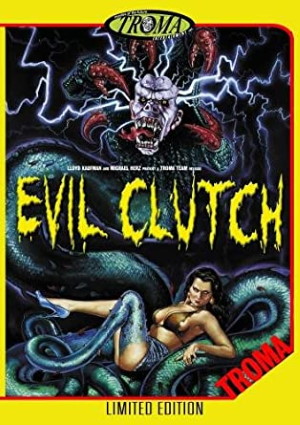
On this day, 26 March, in 1988, the Italian horror film Evil Clutch was released. It was writer-director Andreas Marfori’s first feature film. He’s a very interesting guy, which may explain why he’s only made six features. Some of them I’ve never found like Energy!!! The Movie, which features Timothy Leary.
But you can find other films that are worth checking out like Desperate Crimes (featuring Denise Crosby and Traci Lords) and Soviet Zombie Invasion. Evil Clutch sets the stage for Marfori’s idiosyncratic career.
Synopsis
The film starts with a young man going to a remote building where a beautiful woman is sitting. They start to make-out but then a claw appears and she rips off a bunch of flesh from his groin. He slowly dies and she now has white skin and fangs and laughs maniacally.
Not long after… The woman flags down a couple in a jeep. She says she was attacked and they give her a ride to a nearby town where they are vacationing. Once there, the woman sees a motorcyclist with a voice box and runs away.
The motorcyclist then tells the young couple a horror story about the zombies. They don’t like it and run away. But he follows and tells them that it is dangerous. Nonetheless, they stay and camp, disregarding one of the primary rules of horror films: always listen to cryptic warnings offered by people with unusual physical disabilities.
They soon run into the evil woman from before and follow her to the same building she was in at the start of the film. There’s a zombie roaming around (the victim at the beginning). Some goop splashes on the guy and he becomes sick and then homicidal.
Then it gets weird…
Analysis
Really! This is a seriously weird film. It does, however, have a flaw that makes it a bit hard to really submerge yourself into: it’s such a rip-off of Evil Dead II including tons of Sam Raimi’s two-by-four camera work. But if you can get past this, Evil Clutch has much to offer!
Andrea Marfori has a more interesting visual sense than Raimi. And much of the gore is gloriously over-the-top — yes, even more than Evil Dead II.
The film stars Coralina Cataldi-Tassoni (Terror At The Opera), Diego Ribon (Apnea), Luciano Crovato (Family Scandal), and Elena Cantarone.
I loved this film! For me, the Raimi stuff was part of the fun. And it’s not like the filmmakers are being coy. One of the characters refers to the zombie creatures as the “evil dead”!
You can get Evil Clutch on a Troma DVD. You can also find it around the internet, but generally in very bad shape. Much of the film is very dark and it’s hard to see much of anything at times. But knowing Troma, the disc isn’t that much better.
On this day, 25 March, back in 2010, the Indian comedy-horror film In Ghost House Inn was released. I haven’t seen it. I don’t even know how to see it at the moment. So all I have to go on is Wikipedia and the trailer, which is in Malayalam with no English subtitles.
I’m afraid this is going to be the way it has to be. I’m trying out something new here and just finding films and people to write about will be hard. In this case, my other option was The Outsiders, Francis Coppola’s filmed version of SE Hinton’s beloved book. It had the advantage of my having read the book and seen the film. But it didn’t seem nearly as much fun!
The Narihar Nagar Trilogy
This was the third film in a series and despite the fact the films span 20 years, they all feature the same principal actors.
It started with In Harihar Nagar (1990), a film about four friends who become attracted to a young woman who is trying to figure out why her brother was murdered. Soon they are kidnapped by the bad guy. But it all works out because this is an Indian film.
Next came 2 Harihar Nagar (2009). Now the four friends are older in established in life, married except for one of them who is about to be married. They again get embroiled into a plot but everything turns out fine because this is an Indian film.
In Ghost House Inn
In Ghost House Inn adds horror to the hilarity. The story is pretty much the same as any episode of Scooby-Doo, Where Are You! The guy who got married in the last film buys a house only to find that it is haunted. He finally gives up and sells the house at a loss only to find out that it was all a scam and get his money back because… This is an Indian film! Except…
Since the reviews for In Ghost House Inn were lukewarm and the box office only reasonable, it was the last in the series. Check out this trailer to get an idea of why I want to know more about it:
Another month of unique movie watching. I finally got past a bunch of arty “horror” films, which, as much as I liked them made me long for the simple pleasures of straight horror. But I didn’t watch as much stuff as usual because I had guests and lots of work.
There’s a lot that’s been sitting around. I just got a collection of blaxploitation films (one of which is below). I also got a collection of monster movies. I should probably avoid these because most of the films in these low-cost collections are usually available online for free. But I also think I should reward people who go to the trouble of putting worthy films on disk.
The Big Boss(1971): My brother was a huge martial arts film fan. The main thing I remember from those days was the over-the-top sound effects — a punch sounding like two-by-fours colliding. That’s mostly what I notice now.
The Black Gestapo(1975): This film could really use a bit more second-unit coverage. But overall, it’s pretty fun and has something to say. And that’s a pretty awesome title.
Blood of Dracula(1957): Don’t mistake this for the Warhol film. This is a 1950s teen horror film. And it’s quite good! If you’ve seen I Was a Teenage Werewolf, you know the plot.
Clownado(2019): this one was recommended to me by a friend as one of the worst films ever made. I liked it. It’s low budget and campy with some of the most disgusting gore around. The filmmakers seem to think the insides of humans look like a shepherd’s pie.
Curse of the Crimson Altar(1968): This one is a lot of fun in the way those 1960s British horror films usually are. Although they are supposedly the stars, Boris Karloff and Christopher Lee aren’t in the film that much. But that’s okay.
Dead & Rotting(2002): This is the only film David Barton ever directed. And it’s pretty good! Personally, I identified more the “bad guys.” But it still works. It has some decent make-up effects but little gore.
Demolition Man(1993): Films like this are always a problem because at base they push a very reactionary political theory. But the first half of this is incredibly clever and worth checking out. The end is by-the-numbers action.
The Fearless Vampire Killers(1967): Roman Polanski’s vampire film spoof. It’s okay but I didn’t find it amusing at all. I’d love to hear from someone who did. I’m sure some do. It’s really well made regardless.
The Fuzz(2014): A surprisingly good cop comedy with puppets. If you like silly movies with puppets, I don’t see how you can go wrong.
I Am Not a Serial Killer(2015): All my life I’ve believed that Christopher Lloyd was a space alien serial killer and now I have proof! When it comes to arty horror films, you can’t go wrong with this one. And it’s very sweet. This film ages well in the mind.
Jug Face(2013): This film shows how much you can do with a limited budget, but my main takeaway is just, “That was Sean Young?!” It’s a film where you feel sorry for pretty much everyone.
Knights of Badassdom(2013): Here is a silly one. It’s about a group of LARPs (live-action role players) who accidentally unleash an evil creature into the world. It’s my kind of film but I like The Last Lovecrafta lot more.
Let Us Prey(2014): International horror has exploded over the last decade or so. This Irish film (set in Scotland) has echos of about a dozen past horror films. It’s really serious for an hour and then goes completely crazy for a half-hour.
The Mummy(1932): I’ve loved this film for a long time. It’s rare a horror film manages to make the villain just positive enough that you really aren’t sure who you want to win. This is also Karloff at his best.
Night Moves(1975): This is one of those great 1970s paranoia films — as a PI film. The first time I saw this film, the ending lost me. So watch closely, but do watch!
Night of the Demon(1957): They really like their occult films in the UK, don’t they? This one isn’t really scary, but you do care about the main character and the way he gets out of his trap is clever.
A Nightmare on Elm Street(1984): although I have problems with the ending, this is one of the best horror films ever made. You simply must watch it.
Nina Forever(2015): Now that I think about it, this is kind of like the prototype of Her Name Was Christa. The film is a lot of fun even with all the young angst. But if you can’t make it through it, don’t attempt Christa.
Summing Up
Slow month, I suppose. I’ve been disorganized because I know I watched some new films that I didn’t get around to writing about. Unfortunately, I have no memory at all. I had to look up some of the films in this list just to remember what they were.
Films like Blood of Dracula really highlight just how hard it is to even begin to cover all the low-budget films that have been made. And it only gets worse. The number of movies that deserve to be seen is only accelerating.
There are three films that everyone should see if they haven’t already: The Mummy, Night Moves, and A Nightmare on Elm Street. Of the recent films, I think I Am Not a Serial Killer and Let Us Prey deserve attention even though they have a few problems.
Quentin Tarantino is probably the biggest plagiarist in mainstream cinema. And I do mean plagiarist. There is a great tradition of artistic allusion. Simply lifting dialog, scenes, and whole plots is different.
The way allusion works is that the writer and reader share a common vocabulary. But in the case of Tarantino, the viewer has almost certainly not seen the films he has. And that’s a shame given that they are usually remarkable films — often better than his.
Quentin Tarantino: Movie Thief
Tarantino gets away with this for two reasons, I think. First, he creates compelling films that are distinctly more than the sum of its many ripped-off parts. Second, he’s so shameless about it. It’s hard to do anything to an artist who has absolutely no sense of ethics.
The worst example of this is with Reservoir Dogs where he lifts major plot elements from the Hong Kong crime drama City on Fire. And note: that wasn’t some classic film from decades before but rather a recent film starring Chow Yun-fat and Danny Lee.
What’s more, people around Tarantino have claimed he’s stolen work from then. This claim was most notably made by Roger Avary. And it’s hard to escape the conclusion that Tarantino doesn’t even understand the issue or believes all the world is simply fodder for his genius.
Charley Varrick
If you’re like me, you really liked the phrase “a pair of pliers and a blowtorch” in Pulp Fiction. It isn’t that I’m into torture; it is just that it’s a great phrase, “I’m gonna call up a couple hard pipe-hitting niggas to go to work on the homes here with a pair of pliers and a blowtorch.”
Robert Altman used to say that if you looked at the 5 best bits in any of his films, you’d find they were the results of accidents. This isn’t true, but he apparently liked to think it. But I’ve come to believe that anything I really like in a Quentin Tarantino film is actually by someone else.
About a year after seeing Pulp Fiction, I was watching TV late one night and Charley Varrick came on. It is about a bank robbery that goes wrong for unusual reasons and the consequences of them. It stars Walter Matthau in an unusual kind of star role. It’s a great film that you should really check out.
Two-thirds into the film, we get this very short bit:
That’s John Vernon delivering the line, “You know what kind of people they are. They’re gonna strip you naked and go to work on you with a pair of pliers and a blowtorch.”
Truthfully, I don’t know if the line is original to this movie; it may have been a common turn of phrase. I doubt it though; I’ve never heard it elsewhere.
The one thing I do know is that Tarantino got it from this film. Just watch the film; it is his kind of movie. And there’s nothing else in Pulp Fiction that references the line. He isn’t making a sly allusion to it. He’s just ripping it off.
Watch Beyond Quentin Tarantino
It’s actually kind of sad. Quentin Tarantino wants to make psychotronic films. But he doesn’t. He makes a particular kind of art film that is clever and easily digestible by his upper-middle-class audience. Part of that process is carving off notable moments from the psychotronic films he loves.
So his fans get to smirk at “My name’s Buck and I’m here to fuck.” But they’ll never get the experience of seeing Eaten Aliveor Charley Varrickor City on Fire. Why would they need to when Tarantino rips it off for them in such a stylish package?
Quentin Tarantino at the 2010 Academy Awards by Sgt Michael Connors. It is in the public domain.
I just received Her Name Was Christa— the first film that James L Edwards has directed. I know Edwards as part of what I call the Ohio Gang — people who have worked with JR Bookwalter over the years. He played three parts, for example, in Ozone. But the two things I think are most remarkable about him is his performance in Matthew Jason Walsh’s Bloodlettingand his excellent script for Bookwalter’s Polymorph.
No Ordinary Film
Based on the artwork, I figured Her Name Was Christa would be another “girlfriend back from the dead” story like in My Dead Girlfriendor Nina Forever. But it’s not.
My primary interest in psychotronic film is the desire to see things I’ve never seen before — the kinds of things that just can’t (or at least shouldn’t) attract big money. Her Name Was Christa delivers on this in spades.
The first 80 minutes of the film is relatively straightforward with an awkward middle-aged man becoming more and more involved with a prostitute. The last 40 minutes of the film makes you rethink just how reliable the narrator had been throughout.
(There is one clue in the last couple of minutes that indicates that at least the primary relationship story was real. Other parts of it are established as delusions. It’s a nice foggy mix and I think it’s best not to over-think it.)
Technical Stuff
The acting in the film is excellent. This is probably Edwards’ best performance. Newcomer Shianne Daye is shockingly good as Christa. She manages to convince me that this relationship could exist.
The whole supporting case was good too. Drew Fortier pulled off the difficult feat of being the obnoxious yet good-hearted friend. And Rick Jermain played several of my past bosses perfectly! Also: JR Bookwalter has a cameo.
Edwards directs like a writer. But I don’t mean that as an insult at all. He, cinematographer (and cameraman?) Gordon Cameron, and art director David Lange created a beautiful film with realistic but uncluttered sets, effective lighting, well-chosen shots with effective camera moves. But nothing is gratuitous. Every shot is natural with a focus on character point-of-view.
In addition, the special make-up effects by Alan Tuskes were transcendent — enough to make any old psychotronic fan believe in a loving God.
I’m divided on the editing. I thought the deliberate pacing worked great and set up what was for me a very emotional denouement. But I also think that the film could be cut down by a half-hour and that might find it’s own audience.
Impact
Of particular note is that Her Name Was Christa is fearless. Although much of it is very funny, it is never camp. James L Edwards presents this tragic and disturbing story with an unfaltering heart. There is not a hit of irony here — something both unusual and badly needed in this moment of “edgy” popular art.
At the same time, it’s clear why this film is not playing at the multiplex. It demands of the viewer. Some of the scenes are hard to watch. I don’t mean they are disgusting. (Since when was that a problem for me?) I mean they were sad. Her Name Was Christa is simultaneously uplifting and heartbreaking.
DVD Release
The film comes with two discs: a Blu-ray and DVD. The Blu-ray has the film along with a commentary track with James L Edwards. The DVD has the same as well as these extras:
Indiegogo campaign video
A video ad looking for someone to play Christa
Rehearsal footage
Original (30+ minute) video of the institutional sections
One deleted scene and two extended scenes
An on-set marriage proposal from Drew Fortier to one of the extras
The “haunted attraction” scene with different music
The full video projected at Stephen’s work.
It’s a nice package. It’s a bit weird that the extras are not on the Blu-ray, but I’m not complaining. I recommend getting the film and since it isn’t available on Amazon, I get no associates fee, so I must be honest. You can get it at Makeflix either in the 2-disc package with the Blu-ray or just on DVD for $5.00 less.
Image taken from the Her Name Is Christa Facebook page.
We have a lot of films this month — partly because I finally finished off all of the films of JR Bookwalter. But I’ve also been trying to watch more films. There are so many that I feel ignorant even though I’ve watched way more films than a reasonable person has.
As you will see, I’ve gone back to films that I liked in the past. But I’ve been watching a lot more recent films. It’s easy to miss adding them to Short Takes because it’s harder to put them into any kind of perspective. It feels better to just let them marinate in my subconsciousness.
But for now, I have 31 films that were added this month with some final thoughts on them.
The 7th Voyage of Sinbad(1958): probably my favorite Ray Harryhausen film. This one tells a compelling story and really would work without all the animation.
Bless the Beasts and Children(1971): the perfect film for teenaged boys then and now. It holds up remarkably well. I still think Teft is cool and my heart bleeds for Cotton.
Bride of the Monster (1955): probably my least favorite Ed Wood film, it still has its moments. It could be the perfect film to introduce people to Wood because it’s only up from here!
The Briefcase(2011): the first feature film of Jason Krawczyk, it’s quite engaging and clever. It’s also funny. But it’s only a warm-up for Krawczyk’s masterpiece (see below).
Buffy the Vampire Slayer(1992): a film I love even though it is very uneven. The denouement is particularly disappointing. But the clever dialog and excellent performances make it irresistible.
Clash of the Titans(1981): another Harryhausen film. For some reason, I just don’t like it that much. But I suspect that says rather more about me than it does the film. It has everything you’d expect.
Don’t Look in the Cellar(2008): a surprisingly good no-budget with good acting. And with such a cheeky title, how can you not love it?
The Eyes of My Mother(2016): a Netflix production that proves death is not the worst thing that can happen to you. It features an amazing central performance by Kika Magalhaes and a simple, horrifying story.
Future War(1997): the result of a troubled production, I still rather like this film. At worst, it’s good to keep your film appreciation skills exercised.
He Never Died(2015): the best film I’ve seen in a long time. Jason Krawczyk makes everything work with a brilliant script and some idiosyncratic shooting techniques. The casting it great too — from Rollins on down.
Koreatown(2007): from another of my favorite writer-directors who toils in obscurity, Michael Kallio. Although not as good as Hatred of a Minute, it’s still a solid story well rendered.
El Mariachi(1992): the legendary $7,000 feature film. It’s just superb, regardless of its budget. I really like Robert Rodriguez’s work, and this film is as good as anything he’s done.
Maximum Impact(1992): a surprisingly good no-budget action film. It’s things like this that give JR Bookwalter his mystique. How did he do this?!
Mystery of the Wax Museum(1933): this is so much better than the Vincent Price remake — good though it is. I especially love Glenda Farrell’s fast-talking reporter.
Orgy of the Dead(1965): a softcore fetish film with Ed Wood’s usual obsessions. This is a really enjoyable and beautiful film.
Ozone(1995): JR Bookwalter’s masterpiece. Drugs are turning people into zombies and a cop tries to figure it all out before he too becomes a zombie.
Phantasm(1979): pure horror mixed with male bonding. It’s no wonder this film spawned 4 further films — all of them good.
Pietà(2012): if you’re into art films with torture and incest, this is the film for you! It’s really good with some great moments. But it’s not for everyone.
Plan 9 from Outer Space (1959): according to many, the worst film ever made. In fact, it isn’t even Ed Wood’s worst film. It has some interesting parts although I never feel the need to put it on.
Polymorph(1996): this is a really good film that combines science fiction and crime drama. Excellent script by James L Edwards.
Rated X(2000): a surprisingly good bio-pic about the notorious Mitchell brothers. Stylishly directed by Emilio Estevez.
Robot Ninja (1989): this is JR Bookwalter’s bloodiest film, and that’s saying something. The new release is far better than the original release, so if you haven’t seen it recently, you should do so.
Rosemary’s Baby(1968): Polanski’s classic about a woman impregnated by Satan is as effective as always. Watching it recently, I was particularly struck by the exceptional body horror.
Rounders(1998): although a standard melodrama, this film is just a lot of fun with all its details about the world of cards and con artists.
Rubber(2010): the only film I know about a tire that comes to life. This is such a clever film, I never tire (haha) of it.
The Rubber Gun (1977): this Allan Moyle and Stephen Lack collaboration is really compelling. It is very much like hanging out with a bunch of drug addicts for 90 minutes.
The Sandman(1995): a lot of people really like this film. Although there are some things I really like about it (eg, Matthew Jason Walsh’s performance), I’m not that fond of it — at least relative to other Bookwalter films.
The Sinister Urge(1961): one of Ed Wood’s lesser-known and better films. I prefer Jail Bait.
Spring(2014): this is a weird combination of horror and coming-of-age stories. It has some excellent horror moments.
Starry Eyes(2014): stardom presented as horror transformation. This film works well. I suspect it is also very funny for the right audience.
Zombie Cop(1991): my least favorite Bookwalter film. But like all of them, it has its champions.
Summing Up
Some art films have been appearing in my recent viewing with films like Pietà and Spring. That’s okay. But I’ll get back on more pure genre stuff soon, I’m sure.