Category Archives: Anniversaries

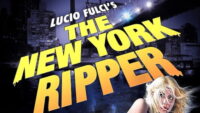
The New York Ripper (1982)

“The New York Ripper” and Rough Films

The New York Ripper (1982)

77 Cinematografica released The New York Ripper in Italy on 4 March 1982.

Have you ever wondered if you are a psychotronic fan? Do you have doubts that maybe you just like the occasional odd film but that you aren’t a true psychotronic fan? Well, I have a test for you! Watch The New York Ripper!

Here’s the thing. This film is rough! Okay. It is not rough the way I Spit on Your Grave is! But in some ways, it’s worse. We see events through the perspective of the murderer. And the murder turns out to be rather too much like the kind of people who enjoy psychotronic films!

I mean no offense! I am one of the biggest fans of these difficult films. But part of that is realizing that I too contain multitudes. I am non-violent. But films like this bring up disturbing ideas. And I like grappling with them.

This may sound horrible. But I think it is not. And that’s even more true today when films commonly present torturers in a positive light. I never see them this way. And in watching The New York Ripper, I never think of the killer as anything but a fiend. And we aren’t left with the killer roaming the streets because “there are still horrible people in the world.” The police kill him. Shot in the face, in fact. (Not before his girlfriend fatally stabs him in anything but a horror film!)

Most people find the sex in the film disturbing I don’t. Human sexuality continues to be odd to me. So I’m not judgmental. Whatever works for people in fine by me. And in this film, strange sexual habits have nothing to do with the violence on screen. In fact, you might say a healthy attitude toward sex pushes against violence.

Regardless, The New York Ripper is a great film. It’s not close to my favorite film from Lucio Fulci. But it is essential viewing!


The New York Ripper (1982) via Google Play Store under Fair Use.

Absentia (2011)

“Absentia” and Low-Budget Brilliance

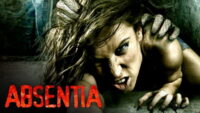
Absentia (2011) poster

The Fargo Film Festival presented Absentia for the first time on 3 March 2011. It continued to make the festival rounds before Phase 4 Films acquired the streaming and DVD rights on 1 July 2011.

Today, people know this film because Mike Flanagan has become a big deal. He is now a horror icon. He has written some of the best horror series ever produced. These include The Haunting of Hill House, The Haunting of Bly Manor, Midnight Mass, The Midnight Club, and The Fall of the House of Usher. Every one of them is great. Psychotronic fans should search them all out.

But Absentia shows that Flanagan doesn’t need a big budget to do great work. It blew me away when I first saw it. So many filmmakers only succeed with big budgets. This is why every movie star makes passable films when they direct. I think there should be a law. We should force them to make a feature with a hundred grand first. That would stop most of them from wasting our time!

And the film is heartbreaking at its very base. When the husband is barfed back it takes a sad situation and turns it into tragedy. I also find the terrible police response to be very believable. The sister has a drug problem? That certainly explains what’s going on. The husband comes back emaciated after seven years, and so he’s suspect. Even in a world of supernatural horrors, humans are horrifying.

If you haven’t seen it, I highly recommend spending 90 minutes with it. Absentia is great!


Absentia (2011) poster via Wikipedia under Fair Use.
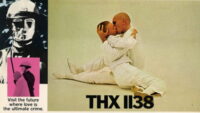
Mighty Joe Young - Willis H O'Brien

Willis H O’Brien and Stop-Motion Animation

Willis H O'Brien

Willis H O’Brien was born on 2 March 1886.

Before there was Ray Harryhausen, there was O’Brien. In fact, the two men worked together. And if you look at Harryhausen’s work, it isn’t any better. The main difference is that there is more of it.

He got his start on a silent short in 1915, The Dinosaur and the Missing Link: A Prehistoric Tragedy. It’s a silly comedy using stop-motion animation. He made several others, including The Ghost of Slumber Mountain in 1918. It was the first film to combine stop-motion animation and live action footage.

O’Brien became something of a star with the release of The Lost World in 1925. It is a silent film with animation that isn’t any better than his earlier work. But there is far more of it. It is way more detailed. And it is crystal clear. It is available at full length for free on Wikipedia.

And then, of course, came King Kong. And then the silly but fun Son of Kong. After these, he didn’t get the opportunity to do much similar work. For the next 15 years, he did other kinds of special effects — especially matte painting. And that’s cool! That stuff allowed people to present stories they simply could not afford to otherwise.

But 1949 was a big year. He was Technical Creator of Mighty Joe Young. O’Brien hired Ray Harryhausen as First Technician. ARKO Productions got the Academy Award for Best Special Effects for the film. O’Brien certainly would have won for King Kong but the catagory didn’t exist at that time.

So, let’s celebrate Willis H O’Brien’s birthday by watching Mighty Joe Young. It’s a good film and the special effects stand up really well today. Harryhausen used some of the same techniques almost two decades later in One Million Years BC.


Willis H O’Brien via Oakland Library under Fair Use.

Laserblast (1978)

“Laserblast” Is Better Than You “Know”

Laserblast (1978) poster

Irwin Yablans Company released Laserblast to the world on 1 March 1978.

It was one of Charles Band’s first productions. And it shows that he came out of the gate knowing what the kids would like. In this case, young kids — tweens even.

Everyone knows this film sucks. That’s because the people on Mystery Science Theater 3000 told them so! They mock Leonard Maltin throughout for giving the film 2.5 out of 4 stars. Don’t get me wrong. Maltin is an idiot. But I don’t find that rating out of order. Despite the vitriol, the film is quite watchable.

The film gets the standard complaints. The acting is bad! The film features professional and even great actors. But I’ve come to see complaints about acting as almost always useless. Can you tell me how the acting is bad? If not, who cares? And critics are particularly harsh with poor Kim Milford. But that isn’t the acting. That’s people not liking the character. The character is immature. He’s a middle-school kid. Don’t let him being in his mid-20s confuse you!

But the main thing that really works in this film is the special effects. David Allen did the main stop-motion effects as he did in much better Charles Band productions like Puppet Master, Dolls, and Oblivion. And these alone make the film worth watching.

The film has a major problem. The script is a comedy. But it isn’t directed that way. Much of the first act is funny as written. But it just lays there on the screen. And I say this knowing full well that it is overall well-directed.

So as usual in situations like this, I’m not saying Laserblast is a great film. And it certainly isn’t a film that is aimed at me. But I suspect there were a lot of 13-year-old boys in 1978 who would enjoy a film about a soft-spoken young man getting revenge on all the people who were mean to him. And the science fiction stuff just makes it that much better.

What I hate is the way people equate a film made for others with a bad film. There is much to like in Laserblast. You can dismiss it all you like. But it doesn’t make you smart or cool to recycle old and mostly invalid criticisms as if you came up with them.

So here are the options. You can watch Dolls, which features even more David Allen stop-motion work in a perfect and ridiculously fun film. Click here! Or you can watch Laserblast with an open mind and try to find what’s good in it.


Laserblast (1978) poster via Wikipedia under Fair Use.

Barton Fink - John Turturro

John Turturro and His Crazy Roles

John Turturro

John Turturro is 69 years old today. He was born on 28 February 1957.

Turturro is one of the best actors alive. I feel a little strange highlighting him. But he also takes really interesting roles in really interesting films.

A good example is the character Pino Frangione in Do The Right Thing. The character is as racist as can be. During the filming of it, one of the young crew members had a near-breakdown because his racist rants were so real. He was also in three other Spike Lee films.

And then there is Brain Donors. In it, Turturro plays Roland T Flakfizer, an unscrupulous attorney who literally chases ambulances. It is a crazy film where he does an excellent Groucho Marx without doing an impression. It is tons of fun!

There are so many other interesting films with Turturro. He gets cast as some fairly crazy characters. For example, there’s The Search for One-Eye Jimmy (1994). And his creepy neighbor character in Secret Window. Or his insane turn as a chess master in The Luzhin Defence. And there is him playing a fairly normal character in the excellent Fear X.

John Turturro is probably most associated with the Coen Brothers. For example, he plays a shockingly believable psychopath in Miller’s Crossing. And he plays The Jesus in The Big Lebowski and the difficult Pete in O Brother, Where Art Thou?

But the film I want to highlight is Barton Fink. It is a horror comedy classic. Turturro plays an understandable but extremely annoying young writer with his first job in Hollywood. He kind of hooks up with a serial killer, which is only one of the many things that go wrong for him. It’s similar to my worst nightmares!


Image cropped from John Turturro by PhilipRomanoPhoto under CC BY 4.0.

Birdemic

“Birdemic” and Directors Who Don’t Like Film

Birdemic poster

The Silent Movie Theatre presented Birdemic: Shock and Terror to the world on 27 February 2010. Soon after, Severin Films picked up the film and toured it around the country before releasing it on disc.

The film is the brainchild of auteur James Nguyen. And given my writing, you might think I admire him. But he soils the very idea of independent filmmaking. He has no concept of drama or even basic storytelling. And he produces films with no care for the audience. He should not be allowed within 2,000 feet of a camera.

Let’s contrast him with Chris Seaver. I don’t really like his films. But they are well-made. And he makes themfor a particular audience that does like them. What’s more, he is better today than he was 30 years ago. As far as I can tell, Nguyen thinks filmmaking is a joke. And more important, he doesn’t think his films need to get better.

I just watched Birdemic 2: The Resurrection. He is slightly more competent than before. The film is very slightly more polished than the first. But it is filled with what killed the first film: pointless scenes with no dramatic momentum.

I understand! Most people think the first film was bad because of the absurd digital birds. We could look past that. But it’s hard to get past pointless scenes that go on and on like the “stock options” scene in the first film. (We endure the same scene this time but it’s the same actor giving a director a million dollars for his film project.)

The end of the film is the group driving around in an RV stopping periodically for “adventures.” Look: Some zombies! Look: some cavemen! The only thing that has changed is that now Nguyen is winking at the audience. But he’s not fooling anyone. Everyone knows he still has no interest in making a good film.

I admire people who make any kind of art without many resources. But I expect them to at least try to do good work. I don’t think that James Nguyen likes film. According to IMDb, he is in pre-production for “Birdemic: the Musical.” Normally, that kind of thing means an artist has run out of creativity. In Nguyen’s case, it just means more of the same.

Here’s the film if you dare. It isn’t fun — not even in an MST3K way.


Birdemic poster via Amazon under Fair Use.

El Mariachi (1993)

El Mariachi Was a $7,000 Miracle

El Mariachi (1993) poster

Columbia Pictures released El Mariachi throughout the United States on 26 February 1993.

Robert Rodriguez made this film for $7,000. When Columbia bought the film, they spent a couple hundred grand on it to improve the sound (a common problem with low-budget films) and to transfer the 16mm negative to a 35mm print. But the bottom line is that he really did make this remarkable film for almost no money.

I recommend watching El Mariachi at least once with the director’s commentary. Normally, these are useless. But Rodriguez really does present his many tricks for producing and shooting on a budget. Of course, they are all easier said than done. But aspiring filmmakers will eat it up!

I saw this film at the time at Cinema 21 in Portland, Oregon. And I was shocked. How did he do it?! This is the case throughout the film, but especially when the main character repels down a wire and lands on a moving bus. (Rodriguez explains how he did this in the commentary but it doesn’t make it any less impressive!)

But you don’t have to watch El Mriachi as an aspiring (or failed) filmmaker. It is just a very entertaining mistaken-identity film. I think it’s better than anything Hitchcock did with the form. (Are you surprised?!)

Sadly, I cannot find a good copy to embed. Almost all lack English subtitles. That isn’t too big a deal. It isn’t a dialogue-heavy film! Archive does have an English dub. And I’m all for that! The Spanish-language version is dubbed too! But this print is from a VHS so it is cropped from the 1:85:1 aspect ratio. But it still works!


El Mariachi (1993) poster via Wikipedia under Fair Use.
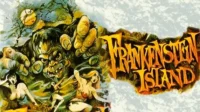
City of the Living Dead (1980)

Christopher George: TV Actor Made Great in Psychotronic Film

Christopher George

Christopher George was born on 25 February 1931.

Look at that face! George was meant to star in westerns. And he did appear in a few. But he got a late start. He joined the Marines at the age of 17. And he stayed in for four years. After that, he went to college. So he was pushing 30 before he even started acting. His first screen credit was “George the Warlock” on the first season of Bewitched. He was 34 at that time. And it’s an impressive debut. He plays George, an ex-boyfriend of Samantha.

His feature film debut was the lead in The Gentle Rain, although he is better known for the following year’s El Dorado. But his main credit during the 1960s was as the lead in the TV series The Rat Patrol. He later starred in the short-lived TV series The Immortal.

Not that I care. By the mid-1970s, he was reduced to guest star roles on TV shows and supporting roles in TV movies. And that’s when he started taking more interesting roles. This started with Grizzly. But it led to other roles in lower-budget films.

Part of his revitalized career was his casting as the lead in City of the Living Dead. It is arguably my favorite Lucio Fulci film, which is saying a lot since I love his films in general. But sadly, the two men did not get along and never worked together again. (I blame it on the 20 pounds of live maggots!) He did make another European film, Pieces, which is worth checking out.

Sadly, Christopher George died of a heartattack at the age of 52 in 1983. I do wish he had stayed around because he really should have left us more psychotronic delights. Still, what he did leave is pretty good. Now we are going to watch City of the Living Dead.


Christopher George via the City of the Living Dead trailer. It is in the public domain.

Megaforce (1982) - Barry Bostwick

Barry Bostwick Looks Great in a Skin-Tight Gold Spandex Jumpsuit

Barry Bostwick

Barry Bostwick is 81 years old today. He was born on 24 February 1945. And we are so much better off for it!

Everyone knows Bostwick because of The Rocky Horror Picture Show. But if that’s all you know about him, you are misinformed. For one thing, he works constantly. You’ve seen him in a lot of stuff without knowing it. And the part of Brad Majors is the opposite of the kinds of roles he normally plays. Brad is the lamest character in the film. The criminologist (Charles Gray) and Dr Everett V Scott (Jonathan Adams) are way cooler than he is!

Bostwick is a great actor. He also seems to be a crazy man. Or maybe he is just that good an actor. Over the last few decades, he’s an actor I’m pleased to see popping up in small roles in interesting films. The man has good taste in film! He had small but (typically) unhinged roles in two Diani & Devine films The Selling and Diani & Devine Meet the Apocalypse.

Tales of Halloween (2015) is a great example of why I love Barry Bostwick. He stars in “The Night Billy Raised Hell.” In it, a little boy tries to egg the house of an old man played by Bostwick. But the old man stops him and apparently takes the kid on a night of serious pranks (actually, more felonies). As usual, Bostwick doesn’t hold back. And it works brilliantly.

But in order to truly appreciate Barry Bostwick, you need to watch Megaforce. It is a rare film where he gets top billing. And it is something else. It answers the age-old question, “Can right-wing reactionary politics co-exist with homoerotic spandex?” And the answer is clear: not yet!


Barry Bostwick via Wikimedia under CC BY 2.0.

The Curse of the Werewolf (1961)

Terence Fisher and Hammer Horror

Terrence Fisher

Terence Fisher was born on 23 February 1904.

He worked his way up in the London film industry of the 1930s — starting as a clapper. From there, he became an assistant editor. And he worked as an editor for about a decade for Warner Brothers.

I think editing is the best preparation you can have for directing films — especially modest-budget films. Because editing is the key to film syntax. Having a good eye is great. But if you don’t have a good idea of how what you shoot will cut together, you (or your editor) will have a lot of trouble!

He directed films for a couple of independent production companies before landing at Hammer Film Productions in 1951. From its founding to the mid-1950s, Hammer produced low-budget crime and mystery dramas. So Fisher made those kinds of films for them. For several years, he worked about half-time for Hammer and half-time for other independent companies like Association of Cinema Technicians and Cybex Film Productions.

In 1957, Terence Fisher’s career took a turn. Hammer had been experimenting with science fiction. In fact, Fisher directed one of these, Spaceways (1953). But the turning point for Hammer was 1955 when they produced the science fiction horror film The Quatermass Xperiment. Fisher wasn’t involved with that, but Hammer picked him to direct their first true horror film, The Curse of Frankenstein.

Fisher ultimately directed five of the seven Frankenstein films, the first three of the nine Dracula films, the first of four Mummy films, and its only werewolf film, The Curse of the Werewolf. He also directed The Devil Rides Out — a much loved film that I’ve never connected with (but the issue is Matheson’s script, not Fisher’s direction). Overall, he directed about twice as many films as Hammer mainstays Roy Ward Baker, Freddie Francis, and Jimmy Sangster combined.

Since I’ve recently written articles on the Frankenstein and Dracula series, let’s watch The Curse of the Werewolf to celebrate Terence Fisher — primarily because I haven’t seen it before.


Terrence Fisher via Dracula Fandom under Fair Use.