Author Archives: Frank Moraes

Frank Moraes is a freelance writer and editor online and in print. He is educated as a scientist with a PhD in Atmospheric Physics. He has worked in climate science, remote sensing, throughout the computer industry, and as a college physics instructor. Find out more at About Frank Moraes.
Megaforce (1982) - Barry Bostwick

Barry Bostwick Looks Great in a Skin-Tight Gold Spandex Jumpsuit

Barry Bostwick

Barry Bostwick is 81 years old today. He was born on 24 February 1945. And we are so much better off for it!

Everyone knows Bostwick because of The Rocky Horror Picture Show. But if that’s all you know about him, you are misinformed. For one thing, he works constantly. You’ve seen him in a lot of stuff without knowing it. And the part of Brad Majors is the opposite of the kinds of roles he normally plays. Brad is the lamest character in the film. The criminologist (Charles Gray) and Dr Everett V Scott (Jonathan Adams) are way cooler than he is!

Bostwick is a great actor. He also seems to be a crazy man. Or maybe he is just that good an actor. Over the last few decades, he’s an actor I’m pleased to see popping up in small roles in interesting films. The man has good taste in film! He had small but (typically) unhinged roles in two Diani & Devine films The Selling and Diani & Devine Meet the Apocalypse.

Tales of Halloween (2015) is a great example of why I love Barry Bostwick. He stars in “The Night Billy Raised Hell.” In it, a little boy tries to egg the house of an old man played by Bostwick. But the old man stops him and apparently takes the kid on a night of serious pranks (actually, more felonies). As usual, Bostwick doesn’t hold back. And it works brilliantly.

But in order to truly appreciate Barry Bostwick, you need to watch Megaforce. It is a rare film where he gets top billing. And it is something else. It answers the age-old question, “Can right-wing reactionary politics co-exist with homoerotic spandex?” And the answer is clear: not yet!


Barry Bostwick via Wikimedia under CC BY 2.0.

The Curse of the Werewolf (1961)

Terence Fisher and Hammer Horror

Terrence Fisher

Terence Fisher was born on 23 February 1904.

He worked his way up in the London film industry of the 1930s — starting as a clapper. From there, he became an assistant editor. And he worked as an editor for about a decade for Warner Brothers.

I think editing is the best preparation you can have for directing films — especially modest-budget films. Because editing is the key to film syntax. Having a good eye is great. But if you don’t have a good idea of how what you shoot will cut together, you (or your editor) will have a lot of trouble!

He directed films for a couple of independent production companies before landing at Hammer Film Productions in 1951. From its founding to the mid-1950s, Hammer produced low-budget crime and mystery dramas. So Fisher made those kinds of films for them. For several years, he worked about half-time for Hammer and half-time for other independent companies like Association of Cinema Technicians and Cybex Film Productions.

In 1957, Terence Fisher’s career took a turn. Hammer had been experimenting with science fiction. In fact, Fisher directed one of these, Spaceways (1953). But the turning point for Hammer was 1955 when they produced the science fiction horror film The Quatermass Xperiment. Fisher wasn’t involved with that, but Hammer picked him to direct their first true horror film, The Curse of Frankenstein.

Fisher ultimately directed five of the seven Frankenstein films, the first three of the nine Dracula films, the first of four Mummy films, and its only werewolf film, The Curse of the Werewolf. He also directed The Devil Rides Out — a much loved film that I’ve never connected with (but the issue is Matheson’s script, not Fisher’s direction). Overall, he directed about twice as many films as Hammer mainstays Roy Ward Baker, Freddie Francis, and Jimmy Sangster combined.

Since I’ve recently written articles on the Frankenstein and Dracula series, let’s watch The Curse of the Werewolf to celebrate Terence Fisher — primarily because I haven’t seen it before.


Terrence Fisher via Dracula Fandom under Fair Use.

The Hidden (1987) - Kyle MacLachlan

Kyle MacLachlan and “Odd” Actors

Kyle MacLachlan

Kyle MacLachlan is 67 years old today. He was born on 22 February 1959.

MacLachlan is an interesting actor. He is a skilled actor. But we know him because he played odd characters. And sure, any professional actor can play weirdos. But some actors just click in such roles. Steve Buscemi comes to mind. But he is odd-looking. And he didn’t get his teeth fixed. MacLachlan is arguably attractive enough to be a star. But the weird trumps it for some reason.

I always associate MacLachlan with David Lynch. And not just any David Lynch. I associate him with the most accessible David Lynch. I first noticed him in Dune. And I became a fan with Blue Velvet. He charmed the world in Twin Peaks, before people realized that Lynch had again bitten off more than he could chew. The show was the ur-Lost — but it didn’t even try to make sense after the first season.

But Kyle MacLachlan starred in the perfect film in 1987, The Hidden. And by “perfect,” I mean perfect for him. The character is so much odder than anything else he got to do. The only real exception is Zack Carey in Showgirls. The problem there is that the film is so high-brow, you don’t even notice it!

(That was a joke about Showgirls. I am not a fan of the film. It isn’t bad. It’s just not my thing. Had a giant space alien insect climbed out of Elizabeth Berkley’s mouth, I would have loved it — naked or fully clothed!)

Since those days, MacLachlan has worked primarily as a character actor. So there aren’t a lot of great options for a film to watch right now. And frankly, it doesn’t matter. There’s really only one of his films I care about deeply. And I don’t care if I highlighted it four months ago. Not enough people have seen The Hidden. So watch it now!


Image cropped from Kyle MacLachlan by Georges Biard under CC BY-SA 3.0.

Murders in the Rue Morgue (1932)

Murders in the Rue Morgue

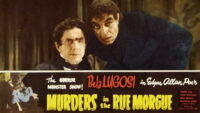
Murders in the Rue Morgue (1932) poster

Universal Pictures released Murders in the Rue Morgue on 21 February 1932. It premiered at the RKO-Mayfair Theatre a week and a half earlier.

The title of this film is a reference to the Edgar Allan Poe short story. But it isn’t the same story at all. The “corpse in the chimney” is about the only thing they share. The reason is simple. This film was produced right after Dracula. But it wasn’t released until Frankenstein had its run.

Bela Lugosi was riding high and Universal had high hopes for Rue Morgue. But it was not to be. It did well at the RKO-Mayfair but wider audiences weren’t especially eager. And why would they be? The title isn’t especially exciting. It referenced a 90-year-old short story. More importantly, people were probably a bit bored with horror at that point. The Mummy, released later that year, also underperformed. But it is likely that Universal was responsible. United Artists released White Zombie the same year and it did pretty well. And then it went on to do great over the following years.

Murders in the Rue Morgue is a good film, though. It is what would become common for Lugosi: a mad scientist film. In fact, it’s quite a lot like White Zombie. But the production values are so much better here. The production started with about double the budget. But after the success of Dracula, the budget was doubled.

And OK has a good print of Murders in the Rue Morgue. So let’s give a watch now!


Murders in the Rue Morgue (1932) poster via Wikimedia. It is in the public domain.

Duel (1971) - Richard Matheson

Richard Matheson Was a Psychotronic Master

Richard Matheson

Richard Matheson was born on 20 February 1926.

No writer is more iconic than Matheson in the world of psychotronic film. He’s also one of those guys who I wish I knew less about. He whined and bitched his way through every interview I’ve ever read. And I get it. The world respected and loved him. But the world didn’t pay a lot for the pleasure. He did okay. But he wasn’t rich. And as he got older, that annoyed him. He would have done better if he were coming up now. Of course, the competition is way worse!

He wrote the novel I Am Legend. It’s good. But I’m more interested in it because it is the basis for The Last Man on Earth — one of my favorite movies. The Shrinking Man was his other big novel. It was the basis of the films The Incredible Shrinking Man (1957) and The Incredible Shrinking Woman (1981).

But he is iconic because of his work for television and American International Pictures (AIP). For example, 16 episodes of the original run of The Twilight Zone were written by him or based on his stories. These included some of the best-loved episodes like “A World of His Own” (Keenan Wynn can write people into existence), “The Invaders” (Agnes Moorehead is menaced by tiny space aliens), and “Nightmare at 20,000 Feet” (William Shatner has a very bad flight).

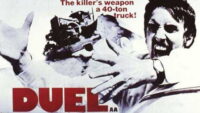
He also wrote the screenplays for a number of great TV movies. These include Duel (1971), The Night Stalker (1972), and The Night Strangler (1973). As for the AIP films, Richard Matheson wrote half of the Roger Corman Poe cycle. And he wrote the fantastic The Comedy of Terrors.

Since I haven’t talked much about Duel around here, let’s watch it to celebrate Richard Matheson’s birthday. It’s one of those films that I saw as a young boy that works just as well today as it did back then.


Image cropped from Richard Matheson by JaSunni at PicasaWeb under CC BY-SA 3.0.

Army of Darkness (1993)

“Army of Darkness” and the Disintegration of “The Evil Dead”

Army of Darkness (1993) poster

Universal Pictures released Army of Darkness on 19 February 1993.

Critics initially disliked this film. Over time, they’ve been more positive toward it. And audiences tend to like it. I think it is a hoot. But I do have broader problems with it.

For one thing, The Evil Dead, Evil Dead II, and Army of Darkness is not a trilogy! The first film is a psychotronic classic. The second film is a parody of the first. It is quite good but it exists in an entirely different universe. And in that universe, Ash is an idiotic narcissist.

Army of Darkness continues this plot. And it is sad that the original post-apocalyptic ending was scrapped because that would have set up a third film that could have finished a reasonable trilogy. Instead, we had to wait 22 years for Ash vs Evil Dead. I’m not complaining. I love that series. In terms of raw entertainment, it is the best thing to come out of The Evil Dead.

The film looks great. Sam Raimi is a master of modern filmmaking. So, it’s no wonder he would go on to make massive budgeted Marvel films. And the special effects work really well. That’s especially true of the recreation of tearing a man in two found in The Manster. The film even uses the same set design.

But Army isn’t really a horror film. It’s a comedy with horror elements. And that’s fine! But it (and Evil Dead II) are not immersive the way the original film was. As such, I can see why it is more popular today. But it’s curious how things have changed. The original film was by far the most financially successful. We must have had it too good in the 1980s and 1990. By the second decade of the millennium, we needed Ash vs Evil Dead. And in that regard, it’s great that we already had Army of Darkness to work from.


Army of Darkness (1993) poster via Wikipedia under Fair Use.

Death Ship - George Kennedy

George Kennedy and His Weird Career

George Kennedy

George Kennedy was born on 18 February 1925.

I’ll be honest. I’m not a fan of Kennedy. If I come upon a film he’s in, I am less likely to watch it. But this is not a dig at him. He was a great actor. And he was in a lot of great films. But as far as I could tell, he’d act in anything! And even if the films were okay, he usually played a pretty boring character. He was like Donald Pleasence in that way. But Pleasence got better roles.

George Kennedy was a big guy. He was 6-foot and 4-inches tall at a time when that was pretty good for the NBA. As a result, he usually played roles with authority. But they were rarely heroic. Had he been smaller, he likely would have been cast in more varied roles.

We remember him for his Academy Award-winning performance in Cool Hand Luke. I don’t generally think much of awards, but this happens to be the best performance I’ve seen from him. But I don’t think that was him. I think that was the kind of roles he was given. But on the plus side, he was in more psychotronic films than he would have been in otherwise.

It’s a bit weird, but the film I most associate with George Kennedy is Death Ship. This may be because Kennedy plays an unlikeable ship captain. But later in the film, he is taken over by the ghost of a Nazi captain. And he really isn’t that much worse! If you’d rather watch Cool Hand Luke, I’m providing a link. But Death Ship is our official choice!


George Kennedy via Wikimedia. It is in the public domain.

Don Coscarelli

Don Coscarelli and Cool Guy-Culture

Don Coscarelli

Don Coscarelli is 72 years old today. He was born on 17 February 1954.

I’ve been meaning to write a long article about Coscarelli’s career. There is one thing about his films that I have never seen discussed. He focused a lot on big brothers. His films are filled with guys doing the kinds of things they learned from their big brothers. He understands what young guys find cool (or at least did until the internet turned most of them into incels and right-wing trolls).

Phantasm includes a great example of this. Jody locks Mike in his room in an effort to protect him. But Mike wants out so he can join the fight. So Mike uses a shotgun shell, a thumbtack, Scotch tape, and a hammer to blow the door open. In my experience, that’s what big brothers do. It’s almost definitional.

We see this in Coscarelli’s first two films, Jim, the World’s Greatest (with Craig Mitchell) and Kenny & Company. But films like John Dies at the End also include it. For example, John creates a baseball bat covered in Old Testament verses with large nails sticking out.

As far as I know, Coscarelli has no brothers. But I’m not talking here about literal brothers. I’m talking about a kind of male culture and bonding between men — a kind people rarely talk about but that is mostly very positive. As it is, Reggie in the Phantasm franchise plays the role of Mike’s brother even though he technically isn’t.

To celebrate Don Coscarelli’s 72nd birthday, let’s watch Kenny & Company. Other than being a low-budget independent film, it isn’t especially psychotronic. But you can see clearly how this film leads to Phantasm. And it is full of the kind of “cool guy-culture” that I’ve been talking about. It also happens to be a very enjoyable film.


Don Coscarelli by Kevin Winter via Entertainment under Fair Use.

Hot Fuzz (2007)

Hot Fuzz Is Pure Fun

Hot Fuzz (2007) poster

Universal Pictures released Hot Fuzz in the United Kingdom on 16 February 2007. Rogue Pictures released it on 20 April 2007.

This film doesn’t get the love it deserves. Everyone talks about Shaun of the Dead. And it’s really good! But I’m pretty bored with zombie films. And frankly, Dead Snow 2: Red vs Dead is better.

Why do I so love Hot Fuzz? It certainly isn’t because it is a parody of Point Break and Bad Boys II. Because here’s the thing: it references those films but it really isn’t a parody of them. Instead, it is a parody of British folk horror. More specifically, the film is a parody of The Wicker Man.

Of course, what makes it great is that Edgar Wright doesn’t stick to this. Most of the direction is much more interesting than anything in its source material. And it goes full action at the end.

What’s more, Hot Fuzz features an amazing cast! These include the likes of Jim Broadbent, Timothy Dalton, Bill Nighy, Edward Woodward, Billie Whitelaw, Paul Freeman, Lucy Punch, Bill Bailey, and Olivia Colman. I could go on! Fun fact: Peter Jackson plays the man dressed as Father Christmas who stabs Simon Pegg in the hand.

Hot Fuzz is one of those films I don’t even like talking about. You just put it on and enjoy! So let’s do that now!


Hot Fuzz (2007) poster via Movie Poster via Fair Use.

Piranha - Kevin McCarthy

Kevin McCarthy Was the Distinguished Gentleman of B Movies

Kevin McCarthy

Kevin McCarthy was born on 15 February 1914 in Seattle, Washington. But at the age of 4, he moved to Minnesota after his parents died in the flu pandemic of 1918.

He starred in a lot of psychotronic films. But he is most remembered for Invasion of the Body Snatchers (1956). And then, he starred in the best scene in the film’s remake.

He starred in The Twilight Zone episode “Long Live Walter Jameson.” He played an apparently respectable guy with a disturbing secret. And he makes the episode supremely creepy with his performance. But it shows that he could have had a very boring career as a stock leading man. By the early 1970s, he was a classic “distinguished gentleman.” You can see it a lot in his TV work. I’m kind of surprised he wasn’t offered something like Knots Landing or Falcon Crest. But McCarthy was a serious actor and that may have been his choice.

Kevin McCarthy was a favorite of Joe Dante. Mostly, he performed small roles like General Ankrum in “Mant” in Matinee. “Would you let that fit you in a pump?!” He plays a bigger part in the generally disappointing Innerspace. But he had a big role in Piranha.

With that in mind, let’s watch Piranha. You can watch it equally well as a standard monster movie or as a parody. If you are very clever, you can watch it as both!


Kevin McCarthy via Wikimedia. It is in the public domain.