Author Archives: Frank Moraes

Frank Moraes is a freelance writer and editor online and in print. He is educated as a scientist with a PhD in Atmospheric Physics. He has worked in climate science, remote sensing, throughout the computer industry, and as a college physics instructor. Find out more at About Frank Moraes.
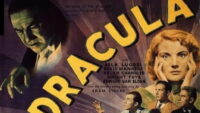
Dracula (1931) poster

Dracula and Bela Lugosi

Dracula (1931) poster

Universal Pictures released Dracula on 14 December 1931.

I think of Dracula as the first of the Universal horror films. But it isn’t. It isn’t even close. Lon Cheney was making Universal horror iconic during the silent era! But it was definitely the first of what we think of as the Universal monster movies. It is iconic.

But I’ll admit something. I’m not a huge fan of Dracula. And it isn’t just that I’m not a big fan of vampire films. I prefer the Spanish-language Drácula. And you can trust me! It’s way longer than the English-language version. And if you know anything about me, it’s that I think films are usually too long. And the Spanish-language film is 70 percent longer!

But it was a huge hit. And it justified later big-budget horror films. And for that reason, I love the film.

Then there is Bela Lugosi. Most people only think of Dracula when he comes up. I don’t. I tend to like his later films. When I was younger, I made the mistake of reading Robert Cremer’s Béla Lugosi: The Man Behind the Cape. And I came away thinking that the man was much too full of himself in those early years. He needed a fall. And his work got better — even if the films didn’t!

I do think it is a shame that Universal didn’t produce a series of films like Hammer. Not that Legosi would have starred in them. Universal lost interest in him immediately. And as I’ve noted, he was largely to blame. But it wasn’t like Universal treated Boris Karloff well either!

Having said all that, I fear that not enough people have seen Dracula. And it is important to do so. You really can’t understand modern horror without understanding this film. The film stays pretty close to the novel. And most Dracula films since are pretty close.

So let’s watch it! But if you’ve already seen it, I recommend watching the Spanish-language version. I think you will like it!


Dracula (1931) poster via Wikimedia. It is in the public domain.

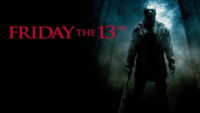
Friday the 13th (2009)

“Friday the 13th” on Friday the 13th

Friday the 13th (2009) poster

Warner Bros Pictures released the last Friday the 13th on 13 February 2009.

I’m not much of a fan of the franchise. Or of slashers, generally. But I do like that this film was released on the date of its title. And of the 12 films, five of them were released on a day like this. But I also find it disappointing since it could have been true with every installment.

Here are the five films:

  • 3. Friday the 13th Part III (13 August 1982)
  • 4. Friday the 13th: The Final Chapter (13 April 1984)
  • 7. Friday the 13th Part VII: The New Blood (13 May 1988)
  • 9. Jason Goes to Hell: The Final Friday (13 August 1993)
  • 12. Friday the 13th (13 February 2009).

So, what are these films about? Well, the first one involves the mother of Jason killing all the camp counselors to stop Crystal Lake from reopening. But the second film breaks continuity with the first and introduces an adult Jason. The plot of this and the next two films is simple: Jason returns to Crystal Lake and kills everyone.

A New Beginning introduces a new killer pretending to be Jason with a new focus for the killing. The next five films follow the Hammer Dracula formula of reanimating Jason at the start of each film. In the first two of these films, Jason returns to Crystal Lake and kills everyone. They get even more absurd from there.

The last film was a reboot. And largely due to copyright threats and legal proceedings, nothing has happened since. This is really for the best. The first film was fine. But they got worse — first slowly and then quickly. And like most such series, when even the worst ideas had been exhausted, they just started over!

Let’s pray that Cunningham and Miller die, their heirs aren’t so desperate for money that we get more of these.

It would make sense to watch the last film. This is its anniversary! But I haven’t been able to find it for free online. Plus, there are so many better films to watch! Just go through our Blog and you will find many. But here’s the trailer!


Friday the 13th (2009) poster via Wikipedia under Fair Use.

Fleshpot on 42nd Street (1973)

Andy Milligan and More Bad Reviews

Andy Milligan

Andy Milligan was born on 12 February 1929.

Milligan was an important exploitation filmmaker in the 1960s and 1970s. He certainly put some interesting things in his films. But I don’t know a single one that really works. I’ve tried to like his work. Most people dislike his films for the content. They are extremely abrasive. But I can take all that. My problem is that they are mostly pretty boring.

His films were a good indication of who he was. He clearly had mental problems. And despite working a lot, he was awful to his collaborators. He isn’t distinct in this way. Exploitation filmmakers tend to be horrible people. But they generally make films I want to watch. So I didn’t try all that long to appreciate Milligan’s work.

I’m not alone! Michael Weldon really disliked Andy Milligan’s films. So I figured I’d do another round-up of his complaints as I did for Larry Buchanan. But let me be clear: Buchanan was way more talented and a much better person. So I feel a lot better doing this to Milligan.

  • The Ghastly Ones (1969): “The gore effects are so laughably bad that you can see a rubber leg bounce… If you’re an Andy Milligan fan there’s no hope for you…”
  • Bloodthirsty Butchers (1970): “Pathetic remake of The Demon Barber of Fleet Street…”
  • Torture Dungeon (1970): “Cheap gore film from Staten Island.”
  • The Body Beneath (1970): “More terrible junk from Staten Island’s Andy Milligan…”
  • Guru, the Mad Monk (1970): “Sixty-two minutes that only seem like hours.”
  • The Man With Two Heads (1972): “[A] terrible version of the Dr Jekyll and Mr Hyde story made by Staten Island’s Milligan in England.”
  • The Rats Are Coming! The Werewolves Are Here! (1972): “Awful cheapie about a family of werewolves in 19th-century England.”
  • Blood! (1974): “Horrible horrors from Staten Island.”
  • Legacy of Horror (1978): “The trouble is that you have to sit through one of the worst written, acted, and directed films to reach the gory climax, where people get sawed, knifed, axed, and punctured.”
  • Carnage (1983): “It is a typically senseless Milligan movie.”

Weldon said nice things about one Milligan film, Fleshpot on 42nd Street (1973). “I like this color drama better than most of Milligan’s horror movies. The acting isn’t bad, parts are funny…” Unfortunately, I could only find a complete copy that is badly cropped. But this is a Milligan film. It’s not like it looks great regardless!


Andy Milligan via The Movie DB under Fair Use.

The Sentinel (1977) poster

“The Sentinel” and Catholic Horror

The Sentinel (1977) poster

Universal Pictures released The Sentinel in the US market on 11 February 1977.

The film is part of what I call “Catholic horror.” And it’s one of my favorite subgenres. I was raised Catholic and that probably explains this.

As a child, I found church to mostly be simply boring. That was true for Baptist churches as well as Catholic churches. But Catholic churches had something special: They were terrifying. Today, I find them lovely. I love old buildings. I love stained glass. And I really love quiet! But as a child? It freaked me out!

But it’s more than the buildings! The dress of priests and nuns are oppressive. And I get it! I was born right at the time of Vatican II. And while I was a teen, our local church introduced the Folk Mass. And everyone associated with the church took on a friendlier feel. But it was too late! I remembered the nun who ran my First Communion!

It’s not just Catholicism, though. The Orthodox churches are the same. So are some forms of Judeism. I’d probably think the same of Islamic faiths, too. But I don’t have much experience. The only Islamic horror I remember is Tobe Hooper’s last film, Djinn. It is excellent but none of it directly deals with the religion or takes place in a mosque.

But I don’t mean to give protestant faiths a pass. Most protestant churches make me think of The Stepford Wives. Pagan faiths make me think of The Wicker Man. Whereas I find horror in a Unitarian Universalist Church absurd on its face, even though I could come up with some things.

The point isn’t that religions of all kinds aren’t creepy in their way. It is that the Catholic Church is a great backdrop for the kind of supernatural horror I most love.

And with that in mind, let’s watch The Sentinel.


The Sentinel (1977) poster via Wikipedia under Fair Use.
Hazel Court

Hazel Court’s Great But Short Career

Hazel Court

Hazel Court was born on 10 February 1926.

She was a British actor. But by about 1960, she seems to have moved full-time to the United States and worked mostly in television. Psychotronic fans know her best for three of the Corman Poe Cycle films.

In England, she starred in two Hammer horror films. She starred with Peter Cushing in The Curse of Frankenstein. And then she starred with Anton Diffring and Christopher Lee in The Man Who Could Cheat Death. Both those roles are pretty boring. She is a pretty woman with bad taste in men.

Court appeared in four episodes of Alfred Hitchcock Presents. These definitely expanded her roles from the previous ones. In the last of these, “The Pearl Necklace,” she plays a conniving cougar. She’s way too smart to be relegated to “good girl” roles.

Around this time, she also starred in the American International Pictures films. First was The Premature Burial, the only non-Vincent Price Poe film. She’s evil but not with joie de vivre she shows in the follow-up, The Raven. Finally, she’s a satanist in The Masque of the Red Death. That one is not a well-written part but she performs it well.

Court starred in other psychotronic films. If you get the chance, you should definitely see Ghost Ship (1952), Devil Girl from Mars, and Doctor Blood’s Coffin (1961).

By the late 1960s, she slowed her work. And at the start of the 1970s, she stopped acting completely, except for a brief appearance in Omen III: The Final Conflict. Interestingly, her husband, Don Taylor, directed Damien: Omen II.

There is really only one choice to celebrate Hazel Court’s birthday: The Raven. I’ve watched the film far too many times. So much of it kind of annoys me now. But I never tire of her scenes. But for most viewers, the whole thing is a joy.


Hazel Court via IMDb under Fair Use.

The Haunting of Julia - Mia Farrow

Mia Farrow and Two Slow Psychotronic Classics

Mia Farrow

Mia Farrow is 81 years old today. She was born on 9 February 1945.

I really like Farrow. But I don’t like highlighting her here. She hasn’t been in many psychotronic films. Her younger sister, Tisa, is actually much more interesting to psychotronic fans. But some days are like this. And two of the psychotronic films she starred in are iconic.

Farrow is Hollywood royalty. She was the third child of writer-director John Farrow and actor Maureen O’Sullivan. She starred in the prime-time soap opera Peyton Place despite her lack of experience. And audiences loved her in it. So much so, the show never really recovered from her departure even though the show struggled on for a few more seasons.

After this, she starred in a few films. And then she was cast in the title role of Rosemary’s Baby. She is a great actor. But she tends to be typecast as fragile women. That’s definitely the case here. But the the film wouldn’t work without her performance. Almost everyone else in the film comes off as sterile. They’re almost pod-people!

Anyway, I don’t really want to talk about Roman Polanski. My position is that it is a William Castle film with Polanski providing the star power to get a big budget. Regardless, I figure everyone here has seen the film.

So let’s move on to the second big psychotronic film featuring Mia Farrow: The Haunting of Julia (also known as Full Circle). It’s based on a Peter Straub novel and is exactly the kind of thing you expect from him. It’s a classic ghost story. It takes forever to get going. You have to go into it with intention. But it’s great and Farrow is (again) well cast in the title role.

She also starred in Secret Ceremony and See No Evil. Both are worth checking out if you come upon them. But I wouldn’t search.

Let’s celebrate Mia Farrow by watching The Haunting of Julia:


Mia Farrow by Andrew Lih under CC BY-SA 4.0.

Lifeforce (1985) - Mathilda May

Mathilda May and Sexy Vampires

Mathilda May

Mathilda May is 62 years old today. She was born on 8 February 1965.

I know what you’re thinking. “Why is Frank talking about an actor who was only in one psychotronic film?!

Well, first, it isn’t true that she was only in one psychotronic film. And second, the one you’re thinking of isn’t just any psychotronic film. And she walked around naked in it, draining the life force out of humans!

I know very little about May. She’s a French actor. And most of her roles are in French films. I actually learned of her initially for the film Isabelle Eberhardt. I was shocked when I found out the naked lady in Lifeforce was played by the same woman!

But back to psychotronic films. Lifeforce was one of her first films. Sadly, I can’t find much information about her casting. The film is a classic. But people don’t tend to report on financially unsuccessful films — at least until they’ve been cult classics for many decades. Tom Weaver has really been slacking! (That was a joke. He’s still pounding out great books!)

But since Lifeforce, Mathilda May has made a few psychotronic films. She starred in the thriller The Cry of the Owl (1987). There are two other later versions, so be careful. David Cronenberg could have directed this film!

She made Scream of Stone with Werner Herzog. She was also in The Tit and the Moon, which is another Cronenberg-like film. And she was in the English-language thriller The Jackal.

Not that I care much about any of those films. She’s an excellent actor. But mostly, producers cast her because she’s beautiful. And that’s true for her even at 62! But I do wish I saw her more in the movies. Her whole career, she’s been limited to films that play at art houses. And there are few of those still around!

But there was never any doubt what film we were going to watch. Lifeforce is great! And far too few people have seen it. That’s especially true in these days when boring “sexy vampires” films are the norm.


Image cropped from Mathilda May by Georges Biard under CC BY-SA 3.0.

Cannibal Holocaust

“Cannibal Holocaust” and Animal Cruelty

Cannibal Holocaust (1980) poster

United Artists Europa released Cannibal Holocaust in Italy on 7 February 1980. The film did not make it to the United States for over 5 years.

This is a difficult film. It is magnificent. It is probably the best cannibal film ever. Surprisingly, it’s also funny with real things to say that matter. And then there is the animal cruelty.

Most people focus on the unnecessary killing of animals. I’m not happy about that. But it isn’t the real problem here. For example, the actors butcher a turtle. It’s an intense scene. It is hard to watch. But they don’t torture the turtle. They kill it about as painlessly as hunters ever kill them.

But there is an unforgivable scene. An actor slowly tortures a “muskrat” (it is apparently a coati) to death with a knife. That is the scene that really made me wonder about the filmmakers. How do you do that?!

What’s worse, the filmmakers didn’t need any of these scenes. Like the human violence, they could have faked it all. But even that wasn’t necessary. As I’ve written before, they may have needed the turtle scene — but I don’t even think it was necessary.

Grindhouse Releasing put out a Blu-ray of Cannibal Holocaust that includes a cruelty-free version of the film. It simply takes out the scenes that involve animal killing. I haven’t seen it. I admire the film but I’m not interested in owning it. Even if this fixes the film, I still know how the film was made.

But I expect that the cruelty-free version works fine. Because the scenes are unnecessary. Yes, they establish that the four principals are horrible people. But the film provides more than enough proof of that without the animal cruelty.

I looked for the cruelty-free version of the film online. It isn’t available. But here is a version of the film you can watch for free, knowing that the filmmakers won’t receive any money.


Cannibal Holocaust (1980) poster via Wikipedia under Fair Use.

Duck Amuck - Michael Maltese

Michael Maltese Is the Unsung Hero of Looney Tunes

Michael Maltese

Michael Maltese was born on 6 February 1908.

You’ve probably never heard of him. I hadn’t! Why would anyone? He wrote most of the best Merrie Melodies and Looney Tunes cartoons. And, you know, he was a writer.

I have a long history of criticizing Stan Lee. He was actually a good guy. I like his politics! But he was also a shit when it came to taking credit for things. Jack Kirby is what made the golden age of Marvel great. My point is that comic books are a visual art form and we should hold up artists and not writers.

There is a major problem with Stan Lee “writing” the comics. He didn’t. Kirby created the stories and Lee (and later, others) wrote the dialogue. That isn’t writing!

Anyway, Michael Maltese wrote the stories for literally hundreds of Warner Bros cartoons. And yes! I understand that the animation is critical. But I also know that these films wouldn’t be remembered if the stories didn’t work. Writing these stories — with the gags they include — is essential.

Perhaps most important: Maltese brought opera to people who never would have encountered it. The opera-oriented cartoons are now something of a trope. And the truth is, Warner Bros didn’t release nearly as many as most of us remember.

But Maltese wrote the three most important of these:

  1. Herr Meets Hare: Bugs ends up in Germany in 1945 while trying to make his way to Las Vegas. He engages with a German in a very operatic way. It isn’t what we now expect but it was the first move in this direction. It’s a great example of anti-Nazi propaganda. It also establishes Bugs as a genderfluid character. The current US administration would probably have Maltese arrested for both!
  2. Rabbit of Seville: This one establishes the formula. Bugs tricks Elmer Fudd into a theater and the two perform The Barber of Seville.
  3. What’s Opera, Doc?: Finally, we get the ultimate rendering of the opera plot. This isn’t due to Maltese though. It’s really the animation. “Rabbit of Seville” fully established the writing.

But let me leave you with one of the most iconic Merrie Melodies, “Duck Amuck.” Like almost every Warner Bros cartoon you love, it was written by Michael Maltese:


Michael Maltese via Wikipedia under Fair Use.

Bluebeard (1944) - John Carradine

John Carradine Was Rarely a Star

John Carradine

John Carradine was born on 5 February 1906.

Carradine is about as iconic in psychotron film as you can get. But there is a problem. He rarely starred in anything. He and Vincent Price worked a similar amount. But Price was the star of dozens of films. Carradine seemed to be everywhere. But he usually didn’t work more than a day or two on the films he appeared in.

What’s more, he aged badly. He lived to be 82 years old. But even by the 1960s, he appeared fragile and cadaverous. That made him great for some of roles. But it really limited what he could do — especially one he was notable enough to lead a film.

Carradine’s best role was not in a psychotronic film. He plays the mystic Jim Casy in The Grapes of Wrath. The role shows how varied his talent was. He seems to have been more interested in theater, which I totally get. And you can see his love of Shakespeare in many of his roles. But we aren’t here to discuss that!

But as a result of this, he played Dracula a few times. The character is about as theatrical as anything in horror. This includes the Universal films House of Frankenstein and House of Dracula. (I discussed both of them last year.) He also plays a geriatric version of the character in Billy the Kid Versus Dracula and then especially in the horror-comedy Nocturna: Granddaughter of Dracula.

But John Carradine is a pretty small part of all those films, despite his character’s name being the title of three of them. However, Carradine does star in a true psychotronic film that shows him in peak form: Bluebeard. In it, he plays a puppeteer and painter who is also a homicidal maniac. The film has been copied a lot. I like to think Color Me Blood Red is a remake. That’s a stretch, but it clearly influenced Retro Puppet Master.


John Carradine taken from a frame of Bluebeard via Archive.org. It is in the public domain.