Author Archives: Frank Moraes

Frank Moraes is a freelance writer and editor online and in print. He is educated as a scientist with a PhD in Atmospheric Physics. He has worked in climate science, remote sensing, throughout the computer industry, and as a college physics instructor. Find out more at About Frank Moraes.
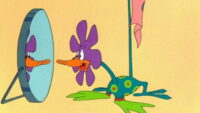
Duck Amuck - Michael Maltese

Michael Maltese Is the Unsung Hero of Looney Tunes

Michael Maltese

Michael Maltese was born on 6 February 1908.

You’ve probably never heard of him. I hadn’t! Why would anyone? He wrote most of the best Merrie Melodies and Looney Tunes cartoons. And, you know, he was a writer.

I have a long history of criticizing Stan Lee. He was actually a good guy. I like his politics! But he was also a shit when it came to taking credit for things. Jack Kirby is what made the golden age of Marvel great. My point is that comic books are a visual art form and we should hold up artists and not writers.

There is a major problem with Stan Lee “writing” the comics. He didn’t. Kirby created the stories and Lee (and later, others) wrote the dialogue. That isn’t writing!

Anyway, Michael Maltese wrote the stories for literally hundreds of Warner Bros cartoons. And yes! I understand that the animation is critical. But I also know that these films wouldn’t be remembered if the stories didn’t work. Writing these stories — with the gags they include — is essential.

Perhaps most important: Maltese brought opera to people who never would have encountered it. The opera-oriented cartoons are now something of a trope. And the truth is, Warner Bros didn’t release nearly as many as most of us remember.

But Maltese wrote the three most important of these:

  1. Herr Meets Hare: Bugs ends up in Germany in 1945 while trying to make his way to Las Vegas. He engages with a German in a very operatic way. It isn’t what we now expect but it was the first move in this direction. It’s a great example of anti-Nazi propaganda. It also establishes Bugs as a genderfluid character. The current US administration would probably have Maltese arrested for both!
  2. Rabbit of Seville: This one establishes the formula. Bugs tricks Elmer Fudd into a theater and the two perform The Barber of Seville.
  3. What’s Opera, Doc?: Finally, we get the ultimate rendering of the opera plot. This isn’t due to Maltese though. It’s really the animation. “Rabbit of Seville” fully established the writing.

But let me leave you with one of the most iconic Merrie Melodies, “Duck Amuck.” Like almost every Warner Bros cartoon you love, it was written by Michael Maltese:


Michael Maltese via Wikipedia under Fair Use.

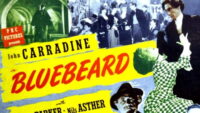
Bluebeard (1944) - John Carradine

John Carradine Was Rarely a Star

John Carradine

John Carradine was born on 5 February 1906.

Carradine is about as iconic in psychotron film as you can get. But there is a problem. He rarely starred in anything. He and Vincent Price worked a similar amount. But Price was the star of dozens of films. Carradine seemed to be everywhere. But he usually didn’t work more than a day or two on the films he appeared in.

What’s more, he aged badly. He lived to be 82 years old. But even by the 1960s, he appeared fragile and cadaverous. That made him great for some of roles. But it really limited what he could do — especially one he was notable enough to lead a film.

Carradine’s best role was not in a psychotronic film. He plays the mystic Jim Casy in The Grapes of Wrath. The role shows how varied his talent was. He seems to have been more interested in theater, which I totally get. And you can see his love of Shakespeare in many of his roles. But we aren’t here to discuss that!

But as a result of this, he played Dracula a few times. The character is about as theatrical as anything in horror. This includes the Universal films House of Frankenstein and House of Dracula. (I discussed both of them last year.) He also plays a geriatric version of the character in Billy the Kid Versus Dracula and then especially in the horror-comedy Nocturna: Granddaughter of Dracula.

But John Carradine is a pretty small part of all those films, despite his character’s name being the title of three of them. However, Carradine does star in a true psychotronic film that shows him in peak form: Bluebeard. In it, he plays a puppeteer and painter who is also a homicidal maniac. The film has been copied a lot. I like to think Color Me Blood Red is a remake. That’s a stretch, but it clearly influenced Retro Puppet Master.


John Carradine taken from a frame of Bluebeard via Archive.org. It is in the public domain.

Martin (1977) - George Romero

George Romero Beyond “Night of the Living Dead”

George Romero

George Romero was born on 4 February 1940. He is almost always referred to as George A Romero. I have no idea why. No one is confused!

Romero needs no introduction. He’s probably the best-known horror director in the world. He started his career making industrial films. Then he hooked up with John Russo and others to make Night of the Living Dead. It is one of those films that I love but never want to see again. I’m sure most psychotronic fans know what I mean.

I do think he had something of a tragic career. He made so many sequels to Night. In fact, his last three films were sequels. He made a total of six films in the series. I’m not complaining. They are all quite watchable. I’m pretty fond of Land of the Dead (the fourth film). Of all the films, Dawn of the Dead is probably the most loved. I’m not a big fan of it but I understand why others are.

Romero did a lot of good things with these Night sequels. But it does get a little boring. Still, I should probably create a page on the series.

I thought I had seen every George Romero film. But I was wrong! He made a romantic comedy (There’s Always Vanilla) and a dysfunctional family drama (Season of the Witch). And he made a couple of non-horror films too: a preachy drama about art or authenticity or something (Knightriders) and an excellent PSA about the treatment of the elderly in our society (The Amusement Park).

Bearing in mind that I haven’t seen a couple of his films, I think Romero’s masterpiece is Martin. I am pretty done with traditional vampire films. I still like them — especially the Hammer Dracula films. But other than make vampires “cool” and “sexy,” few filmmakers do anything with the concept.

In Martin, Romero does something new. And it’s really good! But few people have seen it. Here’s your chance!


Image cropped from George Romero by Nicolas Genin under CC BY-SA 2.0.

In the Mouth of Madness (1994)

“In the Mouth of Madness” and Lovecraft on Film

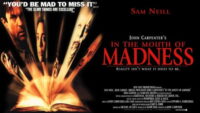
In the Mouth of Madness (1994) poster

New Line Cinema released In the Mouth of Madness on 3 February 1995. It was first released in late-1994 in Italy. I’m not sure why. But the film did not perform particularly well. And I find this amazing. It’s one of my very favorite films!

I’m not a huge Lovecraft fan. His fiction is pretty boring. I think he is a lot like Philip K Dick. The movie industry took a man with relatively limited talent and created great art — far beyond what the original could ever imagine much less render.

What am I saying? Re-Animator is better than anything Lovecraft ever did. And so is The Last Lovecraft: Relic of Cthulhu. But In the Mouth of Madness may well be the best ever.

But what I love is not the Lovecraft aspects of Madness. All that works. But it works because it is in the background. Whenever the Old Ones are presented clearly on film, they just come off as angry cephalopods.

What makes In the Mouth of Madness great is the unreliable narrator. Even better: the unreliable narrator is a rationalist. He thinks he has a clear view of the universe. So he doesn’t deal well with learning that he’s just a character in someone else’s story.

There are other things to like. John Carpenter is a great director. A big part of that is that he lacks pretense. His films are directed clearly. And he works great with actors, who almost always give exceptional performances. Sam Neill has never been better than he is here. And the supporting actors are equally good.

And what about that ending?! Some people would hate it. But as John Trent sits there laughing himself to insanity, we are with him. What did we just see? We’ve thought about the Apocalypse. And now that we’ve been through it, we know we never had any chance to understand. Laugh until you cry!


In the Mouth of Madness (1994) poster via Wikipedia under Fair Use.

Winchester (2018)

“Winchester” and the Jump Scare

Winchester (2018) poster

Lionsgate released Winchester on 2 February 2018.

It tells the fictionalized story of Sarah Winchester and her crazy house. The legend claims that she kept building to appease the ghosts of people killed by her husband’s guns. I’ve always thought that kind of hard to believe. The filmmakers take this idea and make it real. That works much better!

The critics hated this movie! I read a lot of reviews to understand why. I still find it hard to say. Mostly, they don’t like it because they wanted it to be a different film. In particular, they wanted it to be surprising in some way they can’t articulate. And they are mad about it! I get it. A superhero film can just be a superhero film. But a ghost story much somehow be more than a ghost story. Or something.

But this is a very good film! I love haunted house films. This isn’t as good as The Awakening but it is better than The Haunting.

Some people would not like this film because it has a lot of jump scares. I assume this is what people are talking about when they tell me they don’t like horror.

Truth is, I don’t especially like jump scares. They are very effective on me! But they are also kind of a cheat. They always come with a loud music cue. As though the visual is not enough.

At the same time, jump scares allow filmmakers to mess with the audience. You should know that the scare never comes when you expect it. Films build up to it and then don’t deliver. When you relax, the jump scare is released.

But jump scares really aren’t that important to horror. Most of David Cronenberg’s horror films are devoid of them. And even Night of the Living Dead foregoes them. I think they tend to appear in films out of desperation.

The film really doesn’t need them. But the producers used everything they had in this film. That turned out to be a bad idea — at least in terms of the critics. I don’t think they take anything away from the film. They are used effectively.

I recommend watching Winchester. It is an effective and engaging film.


Winchester (2018) poster via IMDb under Fair Use.

Maniac (1980) - William Lustig

William Lustig and Various Maniacs

William Lustig

William Lustig was born on 1 February 1955.

He directed a number of psychotronic delights and that’s why I’m highlighting him now. But I could also have highlighted him for a different reason. Back in 2002, he founded Blue Underground. It is one of the best home video distributors. I have many discs from them. It is kind of like an American Arrow Video.

I don’t really know anything about Lustig. But he worked as a crewmember on a number of films in the late 1970s. And he apparently worked as production manager on a couple of Dario Argento films shot in New York.

William Lustig started directing porn films. So his first two films were The Violation of Claudia (1977) and Hot Honey (1978). But he directed them under the name Billy Bagg. In 1980, he used the money made from these films to produce and direct Maniac, his first “legitimate” feature film.

Maniac was very successful as was the follow-up, Vigilante. Lustig didn’t direct any films for a few years after that. But in 1988, he teamed up with New York independent filmmaking legend Larry Cohen. Cohen produced and wrote Maniac Cop and had Lustig direct. He made two sequels, the first is excellent.

After the first Maniac Cop, Lustig made Hit List and Relentless, two action films with a lot of violence. And he made Uncle Sam in 1996, his only since the last Maniac Cop film.

You can’t miss with any William Lustig film. Even the third Maniac Cop is worth watching. But I think we should go back to Maniac itself. It’s a remarkable film.


William Lustig via Slasher Trash under Fair Use.

The Naked Witch - Larry Buchanan

Larry Buchanan Featuring Michael Weldon’s Complaints!

Larry Buchanan

Larry Buchanan was born on 31 January 1923.

I always mix up Buchanan with Larry Cohen. They both wrote and directed a film called It’s Alive. Cohen made the one with the iconic TV commercial. It’s also far better. Buchanan made a pretty standard “I have a monster that must be fed” film. It’s okay. The monster is ridiculous, though!

I’m not much of a fan of Buchanan. Like Andy Milligan, I admire him. But it’s hard to get through most of his films. I’m not alone! Michael Weldon had a few choice words. I thought it might be fun to grab them from his reviews:

  • The Eye Creatures (1965): “If you’ve seen Invasion of the Saucermen and happen to catch this awful uncredited remake on TV while you’re falling asleep, you’ll probably doubt your sanity. The story is the same, but instead of scary little aliens, there are full-sized men in ill-fitting lumpy costumes with a lot of eyes, and John Ashley is the hero! Headlights make the creatures blow up real good. Add some voyeur army personnel and you’re got the worst of the worst.”
  • Curse of the Swamp Creature (1966): “An all-time favorite of American insomniacs.”
  • In the Year 2889 (1966): An “uncredited remake of Corman’s The Day the World Ended. The people hiding out from postnuclear mutants have a nicer house in this version, but wait’ll you see the monsters. Wow!”
  • Mars Needs Women (1966): “You’ll love [Tommy Kirk] in this made-for-television travesty.”
  • Zontar: The Thing From Venus (1966): “This inept hit is so popular that SCTV did a takeoff and there’s a Boston-based magazine named after it.”
  • Creature of Destruction (1967): “Buchanan made four uncredited remakes of AIP ’50s science-fiction movies. They all belong on anybody’s top ten worst list. This isn’t the worst of them, but it’s still rotten to the core.”
  • It’s Alive (1968): “One of Buchanan’s legendary awful quickie television movies.”
  • Sex and the Animals (1969): “It opens with turkeys mating to Ravi Shankar music. This ‘adult’ documentary is nothing but footage of wild animals mating.”
  • Mistress of the Apes (1981): “Important social statements from the director of Zontar: The Thing From Venus.” [Weldon is being sarcastic but Buchanan really was socially conscious. You see it especially in many of the films I did not list here.]
  • The Loch Ness Horror (1982): “Characters spend a lot of time talking, and when the Loch Ness monster shows up it’s really unconvincing.”
  • Beyond the Doors (1983): “A lot of time is spent showing actor clones of the rock stars live in concert. Each one of them performs three whole songs that sound sort of like songs made famous by the originals. You might recognize bits of familiar lyrics but not enough for Larry to have to pay any copyright fees.”

Weldon didn’t hate Larry Buchanan. He said of High Yellow, “This Dallas production shows how good Buchanan was before those AIP-TV movies.” But of more interest to psychotronic fans is his first film, The Naked Witch. So let’s watch that!


Larry Buchanan via Fort Worth Magazine under Fair Use.

Prey (2007)

“Prey” and Unsurprising Films

Prey (2007) poster

Lionsgate Home Entertainment released Prey on DVD on 30 January 2007. It premiered a couple of months earlier at the American Film Market. Otherwise, it had no theatrical release in the US.

People hate this film! But it isn’t for the usual nonsense reasons. Overall, critics found it pat. It tells the story of a family visiting South Africa. Dad has to work so the rest of the family go on a wildlife tour and things go horribly wrong. It’s kind of like Cujo.

I think the film is fine. But the critics are not wrong. The screenplay is shockingly generic. It could have been made in the 1930s without changing anything. But is this a problem?

I love when a script surprises me. The reveal at the end of The Power of the Dog blew me away. But this is rare. I learned one thing from my misspent youth. I guess plots very well. As a result, I don’t expect clever plots. And I’ve come to the conclusion that audiences don’t need them as much as they think they do in order to enjoy a film.

I wrote about this recently, Scanners and Great Movie Endings. There just aren’t many great plot ideas. We enjoy the journey, not the destination.

Each year, Hollywood releases roughly 500 films into US movie theaters. If you consider the world and all venues, the number jumps close to 10,000. And this is in an environment in which there are roughly half a million films ever made! We would all have more than enough filmed entertainment for the rest of our lives with no new films.

I’m not saying Prey is a great film. It isn’t even a particularly good film. I especially hate the angry daughter trope. But it tells a compelling story. It is engaging. Many people would enjoy it if critics didn’t tell them they wouldn’t.


Prey (2007) poster via Wikpedia under Fair Use.

Garth Marenghi's Darkplace

Garth Marenghi’s Darkplace

Garth Marenghi's Darkplace

Channel 4 first presented Garth Marenghi’s Darkplace on UK TV in 29 January 2004. They released it on the internet the day before to US viewers.

Garth Marenghi (Matthew Holness) is a highly successful horror writer of titles such as Juggers, Afterbirth, and, of course, the Slicer series. According to him, “I’m one of the few people you’ll meet who’s written more books than they’ve read.” He is very ignorant but he makes up for it by being even more arrogant. In the 1980s, Channel 4 paid for this TV series about a hospital where horrific things happen. But Channel 4 didn’t air it owing to how “dangerous” it was. Two decades later, TV was “suffering through the worst artistic drought in broadcast history.” So the channel came crawling back.

Garth stars in the show. He is joined by his publisher, Dean Learner (Richard Ayoade). He is loyal but even more of an idiot than Garth. The series also includes Todd Rivers (Matt Berry) and Madeleine Wool (Alice Lowe). Of course, those are the names of the actors. They have different names in the series.

It is a parody of 1980s horror TV. This includes the kind of ridiculous special effects we all love from shows like Star Wars Holiday Special (1978) and Chuck E Cheese in the Galaxy 5000 (1999). The show is very funny. But it would probably be more funny if it weren’t so true to its conceit. Holness and Ayoade co-wrote it with the latter directing all six episodes.

All the principals are of note for psychotronic fans:

  • Matthew Holness: In general, he’s a comedian. But he wrote and directed the exceptional horror film Possum.
  • Richard Ayoade: He’s hard to miss. As an actor, he was in The Watch and The IT Crowd. Darkplace was the first time he directed but he’s done it a lot since then.
  • Matt Berry: He seems to be everywhere these days. He too was in The IT Crowd. And most recently, he was in What We Do in the Shadows.
  • Alice Lowe: She probably works more than the others. And starting with the excellent Prevenge, she has been writing and directing.

Garth Marenghi’s Darkplace is great from top to bottom. Here are all the episodes via Archive:


Garth Marenghi’s Darkplace front cover via Wikipedia under Fair Use.

Coffy 1973 - Jack Hill

Jack Hill and Blaxploitation

Jack Hill

Jack Hill turns 93 today. He was born on 28 January 1933.

He was an incredibly successful exploitation filmmaker from the late 1960s into the early 1980s. Also, he worked on the side as a screenwriter for films like City on Fire and Death Ship.

Today, he is probably best known for writing and directing Spider Baby: or, the Maddest Story Ever Told. But I don’t want to talk about it. It’s a favorite of mine. But I’ve watched it dozens of times. And I wrote an article about star Jill Banner, which is the most popular page on this site.

Hill directed almost a dozen films — most well worth watching. And as I think about it now, I should probably do a complete article on all of them, as I have for Bert I Gordon, Christopher R Mihm, and JR Bookwalter. It would be a good time! And since he hasn’t made any films since 1982, it would be complete.

One very interesting Jack Hill film is Blood Bath. It’s a pretty strange film that owes a lot to Mystery of the Wax Museum and A Bucket of Blood. But even stranger is the film’s production history. It all started with a Yugoslavian spy thriller, Portrait in Terror. Roger Corman hired Hill to use the footage to create a new, more commercial film. So Hill turned it into a horror film. Corman didn’t like it either. So he hired Stephanie Rothman to use Hill’s footage. Thus a film was born after only 3 years with as many directors!

In the early 1970s, he wrote and directed two blaxploitation films, Coffy and Foxy Brown. Pam Grier starred in both. Hill cast her in his previous two “women in cages” films. I think Coffy is the better of these. But you really can’t miss with any of Jack Hill’s films.


Image cropped from Jack Hill in 1968 by The Los Angeles Times via UCLA Archive under CC BY 4.0.