Author Archives: Frank Moraes

Frank Moraes is a freelance writer and editor online and in print. He is educated as a scientist with a PhD in Atmospheric Physics. He has worked in climate science, remote sensing, throughout the computer industry, and as a college physics instructor. Find out more at About Frank Moraes.
Spontaneous Combustion - Tobe Hooper

Tobe Hooper and His Films You Haven’t Seen

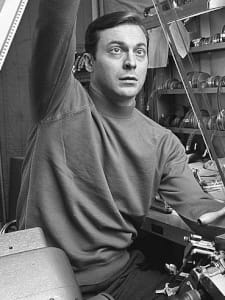
Tobe Hooper

Tobe Hooper was born on 25 January 1943.

Hooper is one of the Big Five horror directors, along with Wes Craven, George Romero, John Carpenter, and David Cronenberg. (Yes! It is all North America. Sometimes people substitute Dario Argento for Cronenberg.)

I love Tobe Hooper. He is the American Lucio Fulci. And that’s not entirely good. Hooper’s highs were very high. But his lows are pretty bad. For example, Night Terrors is an incomprehensible mess. But I think Hooper was just trying to make a living. He did manage to work almost exclusively in horror and science fiction. But that could be because no one imagined he could do anything else.

Regardless, I don’t like the way most people see his career. The Texas Chain Saw Massacre colored everything he did. It is a great film. See my discussion of the meathook scene. But the film is more a miracle of production than direction. And I am so tired of it — especially given his many other great films!

Hooper worked a lot in TV. He made notable TV movies like Salem’s Lot and Body Bags. But mostly, he directed TV episodes. And I’ll admit, I’ve never seen any of those. Maybe someday, I will write a thorough analysis of his work.

My favorite Tobe Hooper films are The Funhouse, Lifeforce, and Spontaneous Combustion. Critics didn’t much like any of them. But by the last of them, most critics didn’t even bother reviewing his films. That’s what critics are for: adding to the advertising budgets of already well-advertised films!

But since even Tobe Hooper fans tend to dismiss Spontaneous Combustion, let’s watch it! It is a trashy film. But that’s what it’s supposed to be. And there’s nothing wrong with that! Also, it is so demented from start to finish that I never get bored with it!


Image cropped from Tobe Hooper by Lionel Allorge licensed under CC BY-SA 3.0.

The Wild Bunch (1969 - Ernest Borgnine

Ernest Borgnine Also Won an Oscar

Ernest Borgnine

Ernest Borgnine was born on 24 January 1917.

The man won a Best Actor Academy Award for Marty. How can he be psychotronic?! Well, he worked a lot! He has 210 acting credits on IMDb — and one of those credits is 138 episodes of McHale’s Navy! He was in a number of psychotronic films.

Let me present one in particular: Willard. Borgnine plays the evil Al Martin. I cheer every time he dies! But Roger Ebert wrote something about this that I think is rather good. Ebert was a terrible film “critic.” But he was often an amusing writer:

“What is it in this film that touches some deep-buried nerve in the public psyche? Why does wholesome family entertainment fade away, while rats make millions? I’ve thought long and deeply on this subject, believe me, and I’ve reached a conclusion at last. People have waited a long time to see Ernest Borgnine eaten alive by rats, and now that they have their chance they aren’t going to blow it.”

This is, of course, a pretty standard catty comment by a film “critic.” I don’t think Ebert had a problem with Borgnine. It was just something funny to say. But it is clear that what Ebert wanted to see him in is not what I did. For example, I’m really not that fond of Marty. It’s fine. But it’s hard for me to understand what the big deal was.

Obviously, all psychotronic fans should watch Willard. But there are others. You have to see him as a Satanic cult leader in The Devil’s Rain. And he’s great as Dutch in The Wild Bunch. He plays a different religious leader in Wes Craven’s Deadly Blessing. And, of course, he was the best thing in John Carpenter’s Escape from New York. He was also in a few international films including two Italian ones: Super Fuzz (1980) and Code Name: Wild Geese (1984).

I started this figuring I would highlight Willard. But I’m just not in the mood for watching Ernest Borgnine eaten by rats. So let’s watch The Wild Bunch instead!


Ernest Borgnine via Wikimedia. It is in the public domain.

Blind Fury (1989) - Rutger Hauer

Rutger Hauer Starred in Many Fun Movies

Rutger Hauer

Rutger Hauer was born on 23 January 1944.

Hauer is one of those actors who I really like but don’t think much of. He’s a great professional actor. But he was an actor of limited breadth. I don’t think it matters too much. Especially for a leading man, there are more than enough roles.

I only recall one film where he gave a poor performance. That was Buffy the Vampire Slayer. But I don’t blame him. It seems he was brought in for a very short period of time. The editing shows there was not enough coverage. And the final fight scene is pathetic.

Most people know Hauer from Blade Runner. And he is especially great in an extremely demanding role. He manages to go from a psychopath torturing Deckard to an empath who saves him. It seems natural the way he plays it.

But I’m highlighting Hauer for different reasons. The man worked a lot! And he was in a lot of psychotronic films. A good example is Omega Doom. It is a post-apocalyptic Yojimbo (Or A Firstful of Dollars, if you prefer). Other psychotronic delights include The Blood of Heroes, Split Second, and Hobo with a Shotgun. Critics hated all these films (except Hobo, which they tolerated).

But I want to highlight a Rutger Hauer film that few have seen, Blind Fury. Critics also disliked it. He plays an American soldier in Vietnam who is blinded in a battle. The locals save him. They also teach him to be a samurai badass. He returns to the US and helps the son of an army buddy. It is a very fun film despite involving a kid.


Image cropped from Rutger Hauer and Monique van de Ven by Rob Mieremet / Anefo via Nationaal Archief 925-6530 under CC BY-SA 3.0 nl.

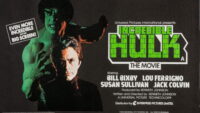
The Incredible Hulk - Bill Bixby

Bill Bixby: Titan of Psychotronic TV

Bill Bixby

Bill Bixby was born on 22 January 1934. He died at the age of 59 from prostate cancer. But you’d never know it based on the amount of work he left.

Like many actors, Bixby started his career making industrial film. From there, he broke into TV. And he worked in TV almost exclusively, although there are a handful of notable exceptions.

We know him primarily from four TV series:

  1. My Favorite Martian (1963-1966 — 107 episodes): A great example of the amazing being that the world cannot know about. Other examples are Mr Ed, Small Wonder, ALF, Harry and the Hendersons. Of course, Ray Walston gets all the best lines.
  2. The Courtship of Eddie’s Father (1969-1972 — 73 episodes): This is a sweet comedy that I liked a lot as a child. Everyone loves the openings with father and son talking. I’m a total sucker for father-son stories!
  3. The Magician (1973-1974 — 22 episodes): During the first half of the series, he lived in a converted (and working) jet airplane. The hour-long mysteries aren’t bad. Bixby gets to do a little magic now and then.
  4. The Incredible Hulk (1977-1982 — 82 episodes): This is a surprisingly compelling story. It’s basically the same as Kung Fu: a peaceful man on a mission who has to go badass two times per episode. “The Lonely Man” theme song is perfect for it. It’s a more serious show than you’d think.

And, of course, he starred in three Hulk films from 1988 through 1990.

One thing I only just learned is that Bill Bixby was a very successful TV director. I could make a case that I might highlight him here simply as a director and producer. It wouldn’t be terribly strong. He did direct a lot of psychotronic TV. But it is mostly piecemeal. Still, he did far more as a director than I would normally think possible given his productivity as an actor.

There is so much we could watch to celebrate Bill Bixby’s birthday. Most of it can easly be found online. But let’s watch the pilot for The Incredible Hulk.


Bill Bixby vis Wikimedia. It is in the public domain.

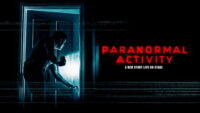
Paranormal Activity - Oren Peli

Oren Peli and the Power/Limits of Found Footage

Paranormal Activity (2007) poster - Oren Peli

Oren Peli was born on 21 January 1970 in Israel. He moved to the United States in his teens.

Everyone knows Peli for Paranormal Activity. He wrote, directed, and co-produced the film. But since then, he has been a successful producer. He co-produced Insidious and The Lords of Salem. He also co-created the short-lived but well-loved TV series The River.

On the negative side, Oren is also responsible for us having 7 Paranormal Activity and 6 Insidious films.

Until today, I had never seen Paranormal Activity. I had one experience with the film. I was on the bus. And this older gentleman was speaking animatedly to two young women. He explained that while The Blair Witch Project was obviously fake, Paranormal Activity was the real thing. I rolled my eyes and continued doing Sudoku.

That is the main appeal of these films. Some faction of the audience believe it is real and want to talk about it. And much of the rest find it amusing to argue about.

Let me set the record straight. The film ends with, “Micah’s body was discovered…” And then we get, “The characters and events depicted in this photoplay are fictitious.”

But there is no doubt that this film feels real. And this is part of the power of found footage films. It is also a big part of their problems. Much of the film is tedious — the way real life usually is.

But for all this, the film is remarkably effective — even going in two decades later. And the last 15 minutes are fabulous. In this film and others, Oren Peli shows himself to be an unassuming expert at creating supernatural horror. That doesn’t mean you should watch everything he’s done. As I’ve noted, neither Salem nor Insidious are worth seeking out.

But I think all psychotronic fans should watch Paranormal Activity. It’s an effective film and it shows what filmmakers can do with almost no resources.


Paranormal Activity (2007) poster via Wikipedia under Fair Use.

The Ghost and Mr Chicken (1966)

“The Ghost and Mr Chicken” and the Return of Universal Horror

The Ghost and Mr Chicken (1966) poster

Universal Pictures released The Ghost and Mr Chicken on 20 January 1966.

Universal, of course, pretty much defined horror throughout the 1930s and 1940s. They produced many horror films throughout the 1950s. But few were especially good. Creature from the Black Lagoon (along with its two sequels) was the end of the classic creature features. By the 1960s, they produced very little horror. Instead, they depended on other studios (eg, Hammer) to produce and they simply distributed in the US.

And then came The Ghost and Mr Chicken. I’m not sure how Universal got involved. Warner Bros produced The Incredible Mr Limpet, Don Knotts’ previous feature film. And Desilu produced The Andy Griffith Show, Knotts’ current TV gig (and what made him a star).

Even stranger, the idea for the film came from one of the show’s episodes, “Haunted House.” Plus, the writers and director worked on the show. Regardless, the film is not only a Universal picture, it is also arguably Universal’s best of the decade. And it showed that Universal could make a good film withoutt a lot of money. It could have produced Hammer-quality films instead of just distributing them.

I don’t have a lot to say about Mr Chicken. When I was a kid, I watched it whenever it was on TV. It’s a great horror film for kids! But it also has a lot of atmosphere and genuinely scary moments. It’s also just as sweet as can be. I think we all want to live in a world where Don Knotts beats out Skip Homeier and marries Joan Staley.


The Ghost and Mr Chicken (1966) poster via Wikipedia under Fair Use.

An Evening of Edgar Allan Poe

Edgar Allan Poe and the Art of Horror

Edgar Allan Poe

Edgar Allan Poe was born on 19 January 1809.

How can a man born roughly 80 years before the invention of the motion picture be a psychotronic icon? I think you know the answer to that! Psychotronic filmmakers have made so many films based on his work. And a number of films include him as a character.

Poe exemplifies something interesting about horror. It works as the basis for art in a way that other genres do not. And he definitely saw himself as an artist — a literary critic and poet. So horror allowed him (and many others) to be very creative.

Poe coined the term “unity of effect.” By it, he meant that a work of art should have one overall effect on the reader. Horror is great for doing this. And I think this is what made Poe’s best work so powerful. But he didn’t put the idea into print until later in his career. I don’t know if this explains why I most admire his later work.

“The Pit and the Pendulum” is an amazing example of pure horror. There isn’t much of a plot. It’s just an intense series of horrific experiences. But without a doubt, my favorite Poe story is “The Tell-Tale Heart.” It offers that same intensity told by a deeply disturbed narrator.

Poe reminds me of Philip K Dick. Both men inspire many films. But the films have to deviate strongly from their sources. In Poe’s case, his work is so internal. Consider “The Black Cat.” The main plot element is walling off the wife and (accidentally) the cat. It’s great! But that’s not why the story works. Its brilliance is experiencing a man slowly going crazy.

Rather than present one of the many films based on his work, I want to introduce you all to a TV show Vincent Price made, An Evening Of Edgar Allan Poe. It is just a series of scenes where he performs the stories (1) “The Tell-Tale Heart”; (2) “The Sphinx”; (3) “The Cask of Amontillado”; and (4) “The Pit and the Pendulum.” I highly recommend it. It’s great fun listening to these dense stories told dramatically.


Edgar Allan Poe via Wikipedia. It is in the public domain.

Swamp Thing (1982) - Dick Durock

Dick Durock Is Swamp Thing

Dick Durock

Dick Durock was born in South Bend, Indiana, on 18 January 1937.

Durock was a big man — as tall as 6 feet 6 inches. He was pretty much a glorified extra early on in his career. You know the kind of roles. He was Guard #1 in the Star Trek episode “Elaan of Troyius.”

But he was also very active as a stuntman. He was a stunt double for Max Baer Jr on The Beverly Hillbillies. (Baer played Jethro Bodine and is a psychotronic icon for other reasons. He was also 6 feet 4 inches tall.) He also doubled for Guy Williams (also very tall) on Lost in Space. Quickly, he seems to have been the go-to choice for stunts featuring big men.

From the late 1960s through the early 1980s, Durock’s career went like that. Gradually, he did get better parts. And in 1981, the producers of The Incredible Hulk cast him as Frye’s Creature. It was a two-part episode and the character was basically the evil twin of Lou Ferrigno’s Hulk.

But Durock got his big break after this. Wes Craven cast him as the title character in Swamp Thing. He surprised a lot of people who didn’t know he could act — maybe as well as Ray Wise. He also starred in The Return of Swamp Thing with the great Jim Wynorski taking over for Craven as director. It is more or less a comedic remake of the first film. And Dick Durock adjusts perfectly.

After this, Durock starred in the TV series Swamp Thing. It ran for 3 seasons and 72 episodes. Even by the standards of Return, it’s a bizarre series. Personally, I think the show would have worked better as an hour-long drama. But from a modern perspective, each episode is a bite-sized package of fun. But don’t expect drama. They are very silly!

Durock continued to work in small roles for most of the rest of the 1990s, and then he retired. (Frankly, I wish more actors would retire!)

Here is Swamp Thing:

And Here is The Return of Swamp Thing:

You can also find most episodes of the Swamp Thing TV show online. Just look up the epsiode title and do a Google search. I’d list them all here with links but I have no confidence these will be valid after a couple of months.


Dick Durock via Wikipedia under Fair Use.

Tillie's Punctured Romance (1914) - Mack Sennett

Mack Sennett and the Modern Comedy

Mack Sennett

Mack Sennett was born on 17 January 1880.

He was the “King of Comedy.” That is a moniker he richly deserved! Because he didn’t just produce a ridiculous number of comedy films. (IMDb lists over 1,100 films he produced.) He gave a start to pretty much every film comedian you’ve ever heard of. Just some of the people who began with him: Marie Dressler, Charlie Chaplin, Fatty Arbuckle, Harold Lloyd, Carole Lombard, and WC Fields.

He founded Keystone Studios in 1912. That’s where we get the name of the Keystone Cops. Even more than Chaplin, they define silent era comedy. (Chaplin made his most famous silent films during the sound era.) Surprisingly, there were only about a dozen films that focus on them. Much more commonly, Mack Sennett just put the idiots in blue into other films — usually at the climax, which is where we see their best-known bits.

Sennett approached the sound era with gusto. But he didn’t have a lot of success. He produced a number of films — over 100. But they are almost all shorts. He attempted to break into feature films with Hypnotized (1932). But it was a commercial failure and effectively the end of his career.

I don’t think you can hold this against him. Few of us are ever successful at even one thing. And Mack Sennett pretty much invented the modern comedy film. And those old films are still pretty funny!

With this in mind, I present Tillie’s Punctured Romance starring Marie Dressler and Charlie Chaplin. It is generally considered the first feature-length comedy. The first comedy was an 1895 45-second bit involving a boy pranking an old man with a garden hose called L’Arroseur Arrosé. And comedy didn’t progress much for the next two decades. Sure, they got longer and more complex. But not to this point.

Here is the UCLA-produced restored version of the film. It’s quite good. But it is silent. Not even any music here!


Mack Sennett via History. It is in the public domain.

John Carpenter - Body Bags (1993)

John Carpenter Is So Much Better Than Directors I Like More

John Carpenter

John Carpenter turns 78 today. He was born on 16 January 1948. But I apparently have a problem with him.

If you asked me who my favorite director was, I would definitely not say, “John Carpenter.” That’s not a criticism; just a fact. I know I admire him and his work greatly. But I don’t have the passion for his work the way I do for a half-dozen other directors who disappoint far more often.

What’s with that?

I don’t know. But going through the data, I think John Carpenter is my favorite director. And that’s hard to say! The truth is, the competition is fierce. And I would say “Samuel Fuller” on a different day. (Maybe his birthday!)

I was planning to put a ranking of his films. But that would doubtless bias the list by genre. And how do you compare Starman to, well, anything else Carpenter ever did?

Consider my favorite Carpenter film, In the Mouth of Madness. It is such a fun film! But it’s also pretty intellectual. That’s certainly the level on which it delights me.

But The City of the Living Dead (or any of Lucio Fulci’s better films) affects me on a much deeper level. So does Tobe Hooper’s Spontaneous Combustion. Neither of these films are as well-made as In the Mouth of Madness.

But I think the issue is that in a certain way, John Carpenter plays it safe. He works in well-established areas. And he does an amazing job! Memoirs of an Invisible Man is the only one of his films that I think shouldn’t have been made.

So I think this all comes down to my wish to be shocked out of my analytical mode. But I can hear people say, “What about David Cronenberg?” And that’s a good point. He’s far more intellectual than Carpenter. But Cronenberg’s mind might as well come from another planet.

All this is to say: damn the data! John Carpenter is probably the best horror director of the last 50 years. I love his work! But for me and what I most love about films, he’s no Dario Argento. Or Don Coscarelli. Or Larry Cohen. What about Wes Craven? Carpenter is more like George Romero (but better). So this isn’t about quality. And I am always up to watch one of his films.

I don’t want to highlight In the Mouth of Madness, even though it is criminally under-viewed. (I’ll do an entire post about it next month.) Instead, let’s watch Body Bags. There is much to recommend it. First, all three of the shorts work. Tobe Hooper pitches in with the best of the three. Second, the connective narrative is great. And third, we get to see Carpenter in a wonderfully over-the-top performance.


Portrait of John Carpenter by Kyle Cassidy under CC BY-SA 4.0.