Author Archives: Frank Moraes

Frank Moraes is a freelance writer and editor online and in print. He is educated as a scientist with a PhD in Atmospheric Physics. He has worked in climate science, remote sensing, throughout the computer industry, and as a college physics instructor. Find out more at About Frank Moraes.
The Ghost and Mr Chicken (1966)

“The Ghost and Mr Chicken” and the Return of Universal Horror

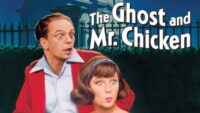
The Ghost and Mr Chicken (1966) poster

Universal Pictures released The Ghost and Mr Chicken on 20 January 1966.

Universal, of course, pretty much defined horror throughout the 1930s and 1940s. They produced many horror films throughout the 1950s. But few were especially good. Creature from the Black Lagoon (along with its two sequels) was the end of the classic creature features. By the 1960s, they produced very little horror. Instead, they depended on other studios (eg, Hammer) to produce and they simply distributed in the US.

And then came The Ghost and Mr Chicken. I’m not sure how Universal got involved. Warner Bros produced The Incredible Mr Limpet, Don Knotts’ previous feature film. And Desilu produced The Andy Griffith Show, Knotts’ current TV gig (and what made him a star).

Even stranger, the idea for the film came from one of the show’s episodes, “Haunted House.” Plus, the writers and director worked on the show. Regardless, the film is not only a Universal picture, it is also arguably Universal’s best of the decade. And it showed that Universal could make a good film withoutt a lot of money. It could have produced Hammer-quality films instead of just distributing them.

I don’t have a lot to say about Mr Chicken. When I was a kid, I watched it whenever it was on TV. It’s a great horror film for kids! But it also has a lot of atmosphere and genuinely scary moments. It’s also just as sweet as can be. I think we all want to live in a world where Don Knotts beats out Skip Homeier and marries Joan Staley.


The Ghost and Mr Chicken (1966) poster via Wikipedia under Fair Use.

An Evening of Edgar Allan Poe

Edgar Allan Poe and the Art of Horror

Edgar Allan Poe

Edgar Allan Poe was born on 19 January 1809.

How can a man born roughly 80 years before the invention of the motion picture be a psychotronic icon? I think you know the answer to that! Psychotronic filmmakers have made so many films based on his work. And a number of films include him as a character.

Poe exemplifies something interesting about horror. It works as the basis for art in a way that other genres do not. And he definitely saw himself as an artist — a literary critic and poet. So horror allowed him (and many others) to be very creative.

Poe coined the term “unity of effect.” By it, he meant that a work of art should have one overall effect on the reader. Horror is great for doing this. And I think this is what made Poe’s best work so powerful. But he didn’t put the idea into print until later in his career. I don’t know if this explains why I most admire his later work.

“The Pit and the Pendulum” is an amazing example of pure horror. There isn’t much of a plot. It’s just an intense series of horrific experiences. But without a doubt, my favorite Poe story is “The Tell-Tale Heart.” It offers that same intensity told by a deeply disturbed narrator.

Poe reminds me of Philip K Dick. Both men inspire many films. But the films have to deviate strongly from their sources. In Poe’s case, his work is so internal. Consider “The Black Cat.” The main plot element is walling off the wife and (accidentally) the cat. It’s great! But that’s not why the story works. Its brilliance is experiencing a man slowly going crazy.

Rather than present one of the many films based on his work, I want to introduce you all to a TV show Vincent Price made, An Evening Of Edgar Allan Poe. It is just a series of scenes where he performs the stories (1) “The Tell-Tale Heart”; (2) “The Sphinx”; (3) “The Cask of Amontillado”; and (4) “The Pit and the Pendulum.” I highly recommend it. It’s great fun listening to these dense stories told dramatically.


Edgar Allan Poe via Wikipedia. It is in the public domain.

Swamp Thing (1982) - Dick Durock

Dick Durock Is Swamp Thing

Dick Durock

Dick Durock was born in South Bend, Indiana, on 18 January 1937.

Durock was a big man — as tall as 6 feet 6 inches. He was pretty much a glorified extra early on in his career. You know the kind of roles. He was Guard #1 in the Star Trek episode “Elaan of Troyius.”

But he was also very active as a stuntman. He was a stunt double for Max Baer Jr on The Beverly Hillbillies. (Baer played Jethro Bodine and is a psychotronic icon for other reasons. He was also 6 feet 4 inches tall.) He also doubled for Guy Williams (also very tall) on Lost in Space. Quickly, he seems to have been the go-to choice for stunts featuring big men.

From the late 1960s through the early 1980s, Durock’s career went like that. Gradually, he did get better parts. And in 1981, the producers of The Incredible Hulk cast him as Frye’s Creature. It was a two-part episode and the character was basically the evil twin of Lou Ferrigno’s Hulk.

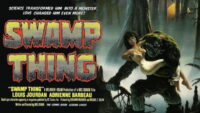
But Durock got his big break after this. Wes Craven cast him as the title character in Swamp Thing. He surprised a lot of people who didn’t know he could act — maybe as well as Ray Wise. He also starred in The Return of Swamp Thing with the great Jim Wynorski taking over for Craven as director. It is more or less a comedic remake of the first film. And Dick Durock adjusts perfectly.

After this, Durock starred in the TV series Swamp Thing. It ran for 3 seasons and 72 episodes. Even by the standards of Return, it’s a bizarre series. Personally, I think the show would have worked better as an hour-long drama. But from a modern perspective, each episode is a bite-sized package of fun. But don’t expect drama. They are very silly!

Durock continued to work in small roles for most of the rest of the 1990s, and then he retired. (Frankly, I wish more actors would retire!)

Here is Swamp Thing:

And Here is The Return of Swamp Thing:

You can also find most episodes of the Swamp Thing TV show online. Just look up the epsiode title and do a Google search. I’d list them all here with links but I have no confidence these will be valid after a couple of months.


Dick Durock via Wikipedia under Fair Use.

Tillie's Punctured Romance (1914) - Mack Sennett

Mack Sennett and the Modern Comedy

Mack Sennett

Mack Sennett was born on 17 January 1880.

He was the “King of Comedy.” That is a moniker he richly deserved! Because he didn’t just produce a ridiculous number of comedy films. (IMDb lists over 1,100 films he produced.) He gave a start to pretty much every film comedian you’ve ever heard of. Just some of the people who began with him: Marie Dressler, Charlie Chaplin, Fatty Arbuckle, Harold Lloyd, Carole Lombard, and WC Fields.

He founded Keystone Studios in 1912. That’s where we get the name of the Keystone Cops. Even more than Chaplin, they define silent era comedy. (Chaplin made his most famous silent films during the sound era.) Surprisingly, there were only about a dozen films that focus on them. Much more commonly, Mack Sennett just put the idiots in blue into other films — usually at the climax, which is where we see their best-known bits.

Sennett approached the sound era with gusto. But he didn’t have a lot of success. He produced a number of films — over 100. But they are almost all shorts. He attempted to break into feature films with Hypnotized (1932). But it was a commercial failure and effectively the end of his career.

I don’t think you can hold this against him. Few of us are ever successful at even one thing. And Mack Sennett pretty much invented the modern comedy film. And those old films are still pretty funny!

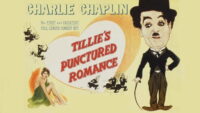
With this in mind, I present Tillie’s Punctured Romance starring Marie Dressler and Charlie Chaplin. It is generally considered the first feature-length comedy. The first comedy was an 1895 45-second bit involving a boy pranking an old man with a garden hose called L’Arroseur Arrosé. And comedy didn’t progress much for the next two decades. Sure, they got longer and more complex. But not to this point.

Here is the UCLA-produced restored version of the film. It’s quite good. But it is silent. Not even any music here!


Mack Sennett via History. It is in the public domain.

John Carpenter - Body Bags (1993)

John Carpenter Is So Much Better Than Directors I Like More

John Carpenter

John Carpenter turns 78 today. He was born on 16 January 1948. But I apparently have a problem with him.

If you asked me who my favorite director was, I would definitely not say, “John Carpenter.” That’s not a criticism; just a fact. I know I admire him and his work greatly. But I don’t have the passion for his work the way I do for a half-dozen other directors who disappoint far more often.

What’s with that?

I don’t know. But going through the data, I think John Carpenter is my favorite director. And that’s hard to say! The truth is, the competition is fierce. And I would say “Samuel Fuller” on a different day. (Maybe his birthday!)

I was planning to put a ranking of his films. But that would doubtless bias the list by genre. And how do you compare Starman to, well, anything else Carpenter ever did?

Consider my favorite Carpenter film, In the Mouth of Madness. It is such a fun film! But it’s also pretty intellectual. That’s certainly the level on which it delights me.

But The City of the Living Dead (or any of Lucio Fulci’s better films) affects me on a much deeper level. So does Tobe Hooper’s Spontaneous Combustion. Neither of these films are as well-made as In the Mouth of Madness.

But I think the issue is that in a certain way, John Carpenter plays it safe. He works in well-established areas. And he does an amazing job! Memoirs of an Invisible Man is the only one of his films that I think shouldn’t have been made.

So I think this all comes down to my wish to be shocked out of my analytical mode. But I can hear people say, “What about David Cronenberg?” And that’s a good point. He’s far more intellectual than Carpenter. But Cronenberg’s mind might as well come from another planet.

All this is to say: damn the data! John Carpenter is probably the best horror director of the last 50 years. I love his work! But for me and what I most love about films, he’s no Dario Argento. Or Don Coscarelli. Or Larry Cohen. What about Wes Craven? Carpenter is more like George Romero (but better). So this isn’t about quality. And I am always up to watch one of his films.

I don’t want to highlight In the Mouth of Madness, even though it is criminally under-viewed. (I’ll do an entire post about it next month.) Instead, let’s watch Body Bags. There is much to recommend it. First, all three of the shorts work. Tobe Hooper pitches in with the best of the three. Second, the connective narrative is great. And third, we get to see Carpenter in a wonderfully over-the-top performance.


Portrait of John Carpenter by Kyle Cassidy under CC BY-SA 4.0.

Jesus Christ Vampire Hunter (2001)

“Jesus Christ Vampire Hunter” Is as Good as It Sounds

Jesus Christ Vampire Hunter (2001) poster

Odessa Filmworks released Jesus Christ Vampire Hunter on 15 January 2002 in Canada. It made the film festival rounds the previous year. So technically, they released it in 2001.

Lee Demarbre produced and directed it. It was his first feature film. Ian Driscoll wrote it as he did many of Demarbre’s films. They seem to be a good team. The ideas, story, dialogue, and production are all equally bizarre.

Graham Collins provides an eclectic and compelling score. He also wrote the music for the big song.

Jesus Christ Vampire Hunter tells a fairly simple story. Ottawa is experiencing a critical lesbian shortage. It is so bad that even the clerics have noticed. The vampires, it seems, are attacking lesbians, thinking no one will care. So they go get Jesus, who has been baptizing people in the river. He jumps into action. He gets a haircut and new clothes. Then he starts smiting some vampire ass!

A few things worth noting:

  1. Most of the fights are classic martial arts parodies — including the great “smack” sound.
  2. Jesus defeats about 30 atheists before he really gets going with the vampires.
  3. The film includes one musical number.
  4. A mad scientist gives vampires skin transplants so that they can go out during the day.
  5. Jesus seems to fall in love with a female vampire hunter, but it turns out that she’s into girls — one girl in particular.
  6. He talks to his dad via a cherries jubilee puppet.
  7. God tells Jesus to hook up with El Santo.
  8. He talks to his mom via a little Virgin Mary lamp.

Some kinds of Christians would love this film. It presents a very liberal Jesus who wants people to think for themselves. You might say he is more like Brian. Or the Jesus of Godspell. But I do understand that many Christians here in the USA are more into the Revelation Jesus who kicks ass and takes names.

Regardless, all psychotronic fans should watch Jesus Christ Vampire Hunter. It’s fun from beginning to end!

The DVD comes with a 14-minute video of a get-together with cast and crew and an audio commentary. Normally, I’d buy it but I’ve already gotten rid of the vast majority of my disc collection in preparation for a major move. But I probably will get it eventually. A Blu-ray was released in Germany. You can also watch it on Tubi and Plex.

If you like this, check out Monster from Bikini Beach.


Jesus Christ Vampire Hunter (2001) poster via Wikipedia under Fair Use.

Scanners (1981)

Scanners and Great Movie Endings

Scanners (1981) poster

AVCO Embassy Pictures released Scanners on 14 January 1981. It made people’s heads explode!

Scanners is one of my top five David Cronenberg films. It is arguably his most commercial film. It’s one of his most straightforward films even while still being totally on brand.

If you haven’t seen it, you must! And if you have seen it, you must again! It is so much fun! And in addition to a great cast including Stephen Lack, Jennifer O’Neill, and Michael Ironside, there is… Patrick McGoohan!

But I want to talk about film endings. Because many good films die because of bad endings. I don’t mean negative endings. I mean disappointing endings. Consider Constantine as an example.

Most of Constantine is really good. It doesn’t manage transitions well. But it includes so many great scenes (and some clunkers) that it’s hard not to like. And the ending with Peter Stormare as Lucifer is delicious. And then…

John (Keanu Reeves) escapes hell with the standard sacrifice. There are two major problems here. First, it’s boring. Everyone has seen this used again and again in fiction. Second, it is such a well-known loophole that there is no way anyone could make such a sacrifice altruistically. And John is such a cynical character that especially wouldn’t apply to him. And what?! Lucifer would have forgotten about it? He lives in hell! You mean he’s never seen Fantasy Island or Bedazzled?!

A story like this needs a great ending. And Cronenberg nails it in Scanners. I won’t give it away in case anyone wants to see it cold. But the whole film moves toward a final confrontation. And the plot is resolved in a clever way that few see ahead of time. (But now that you are looking for it, you may!)

Here’s a great print of the film. Enjoy!


Scanners (1981) poster via Wikipedia under Fair Use.
Two on a Guillotine (1965)

“Two on a Guillotine” and TV Directors

Two on a Guillotine (1965)

Warner Bros released Two on a Guillotine on 13 January 1965.

In 1964, Warner Bros announced that it was investing in a number of directors. But it did not work out as planned. For example, the company hired Hugh Griffith and Maximilian Schell to direct films. But they never did. But Warner did manage to get three TV directors to make films for them. They hired Jack Smight and William Conrad.

You probably know Conrad as an actor. He starred in Cannon (1971-1976) and Jake and the Fatman (1987-1992). But he was a highly successful and productive TV director starting in the late 1950s through the 1960s. But in the middle of this, he made three films for the company. They were all released in 1965. After Two on a Guillotine, he produced and directed the two neo-noir films My Blood Runs Cold and Brainstorm.

Guillotine is a haunted house film. It stars Connie Stevens and Dean Jones. And much of it could pass as a live-action Disney film (except that it is in black and white). As a result, most of the middle section of the film feels a lot like 13 Ghosts. But this is mixed with some excellent horror sequences. And then the whole last act is pure horror/thriller.

In this film, Conrad directs creatively with great clarity. This is no surprise. TV directors don’t get the respect they deserve. They are given little time and few resources. They need to shoot quickly without being boring. And Conrad used the extra resources very effectively. (So did Jack Smight. One of his films for Warner was the excellent Harper.)

It’s not clear to me why TV directors aren’t grabbed by film producers more often. Nor is it clear why Warner didn’t continue to experiment. But let’s take the opportunity to appreciate the first of these, Two on a Guillotine.


Two on a Guillotine (1965) via Wikipedia via Fair Use.

Night Moves (1975) - Alan Sharp

Alan Sharp and Two of My Favorite Films

Night Moves (1975) poster - Alan Sharp

Alan Sharp was born on 12 January 1934. He was Scottish but by the end of his life, he had homes in Scotland, New Zealand, and the US. Otherwise, I don’t know much about his personal life.

Sharp was a very successful screenwriter. He went through phases. He started in TV, moved on to feature films, and went back to TV. In the middle of his later TV work, he penned his best-known film, Rob Roy. He also wrote a few well-reviewed novels early in his career. But I haven’t read any of them.

He wrote (or co-wrote) two films I’m really not fond of. But I don’t think the problem was his scripts. The first is Damnation Alley. Sharp was brought in to rewrite the script to keep the budget under control. It was still expensive for its time and it’s just horrible to even look at. The second is The Osterman Weekend. It suffers from two problems: Robert Ludlum’s ridiculously complicated novel and Sam Peckinpah’s bad direction.

My favorite of Alan Sharp’s films is Dean Spanley. It is based on Lord Dunsany’s novella. But Sharp only took the basic idea. His script is so much richer than the book. I highly recommend watching it. There’s a good print on OK.RU. But it isn’t psychotronic. (Not that I couldn’t make the case. It’s about a guy getting a priest drunk because he remembers being a dog when drunk.)

But a close second is Night Moves. It is another of those great 1970s paranoia films that I love so much. But it is far deeper and more disturbing than other films of this type. The takeaway of the film is that there is no ultimate truth — just another layer of reality. And idiotic is he who expects an explanation.

Alan Sharp wrote a lot of other great screenplays. Pyschotronic fans may want to check out his first three features: The Last Run, The Hired Hand, Ulzana’s Raid. But for now, watch Night Moves.


Night Moves (1975) poster via Wikipedia under Fair Use.

Monster from Bikini Beach (2008)

“Monster from Bikini Beach” Is Psychotronic Gold

Monster from Bikini Beach (2008) poster

TFO Productions released Monster from Bikini Beach on 11 January 2008. I assume they released it direct-to-video. But the only version I can find is from its 2013 release.

Christy Savage & Amy Slockbower produced the film with Darin Wood writing and directing. I need to look into him more. He has made a handful of features. And they seem to all be similar. But the production values have definitely improved.

That’s not to say that this film lacks production value. It features weak video quality. But that’s about the only complaint. The lighting is better than competent. And Wood and his wife Christy Savage’s editing is excellent. It is well-used to cover over some of the issues that come with a micro-budget production like a lack of extras.

Then there are the things that are a joy to witness. First, Wood wrote a solid screenplay. I’ve never quite understood why low-budget films so often suffer from poor scripts. It’s the one thing you can get right without spending any money! But it is what it is. And Monster from Bikini Beach features a good script with more than enough content for its 95-minute runtime.

The gore here is also excellent. Wood uses it a lot in the last half-hour of the film. And the monster itself is awesome. Yes, it is more Sigmund and the Sea Monsters than Alien. But that is intentional. The film isn’t meant to be frightening. It is a monster that wants to mate with go-go dancers!

The acting is also way better than you would expect. It features Stephanie Hyden and Galen Howard as journalists and romantic leads. Stephen Vargo plays the bad cop and Laura Megan Stahl is his girlfriend. Keith Letl and Liesel Hanson as a redneck conspiracy couple.

I highly recommend checking out this film. It is a hoot! This print isn’t great but it will do. You really should get the film on DVD if you can.


Monster from Bikini Beach (2008) poster via IMDb under Fair Use.